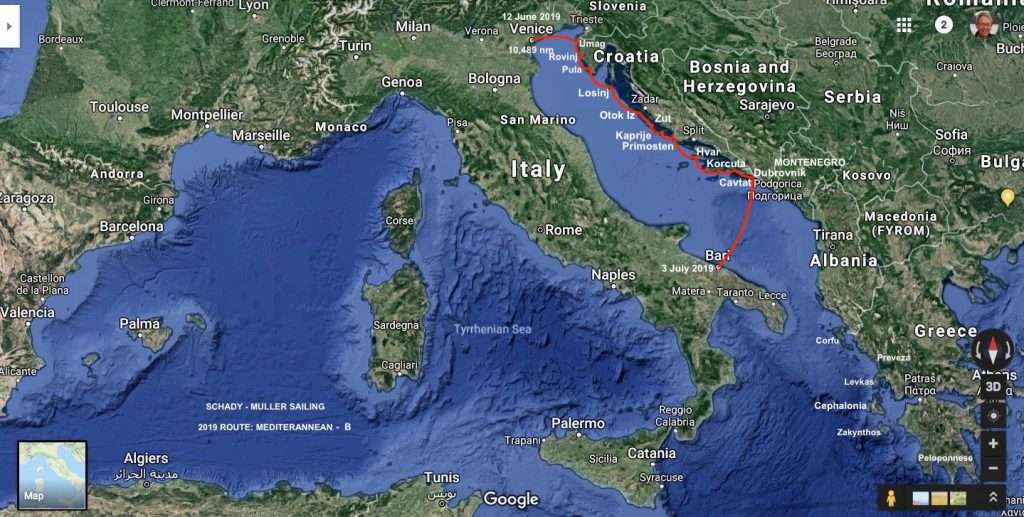
We left Cavtat in Croatia at 4 pm on Tuesday 2nd July 2019 and motored for two hours before we reached the forecasted northeaster. With the wind building, we soon had to tuck in two reefs in the mainsail and furl the jib to 50%. The sea was flat and we covered the 105 nm in 15 hours to arrive in Bari, Italy at 7 am, averaging 7 knots – a most satisfactory crossing. As we were now entering the European areas with costly marina charges, we will record these charges to aid our fellow sailors who follow our blog and plan to sail in these areas.
Bari to Palermo.
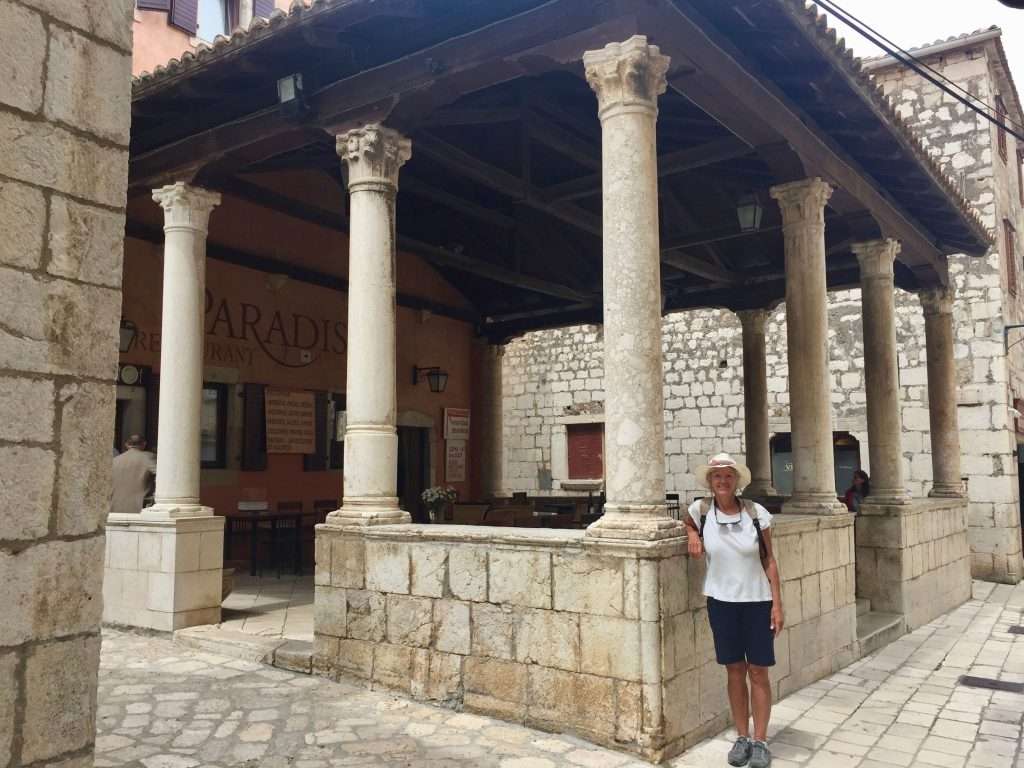
The marina in Bari, Nautica Ranieri, offered us a berth for two nights at EU 50 a night. We did the laundry and cleaned the boat, before David and Patricia Bruce form Cape Town arrived the following day. We then explored the old town of Bari, stocked up with groceries, filled the diesel tank and sailed the 27 nm south to Monopoli, which is quite an old and attractive town.
Dave, Pat and Annie at Strada del Dottula, Bari.
A wedding on the Vico la Trulla.
The colourful Vico la Trulla area in Bari.
Meeting SA expats who are living in Germany, in Monopoli. Notice the ” ‘n Boer maak ‘n Plan” T-shirt.
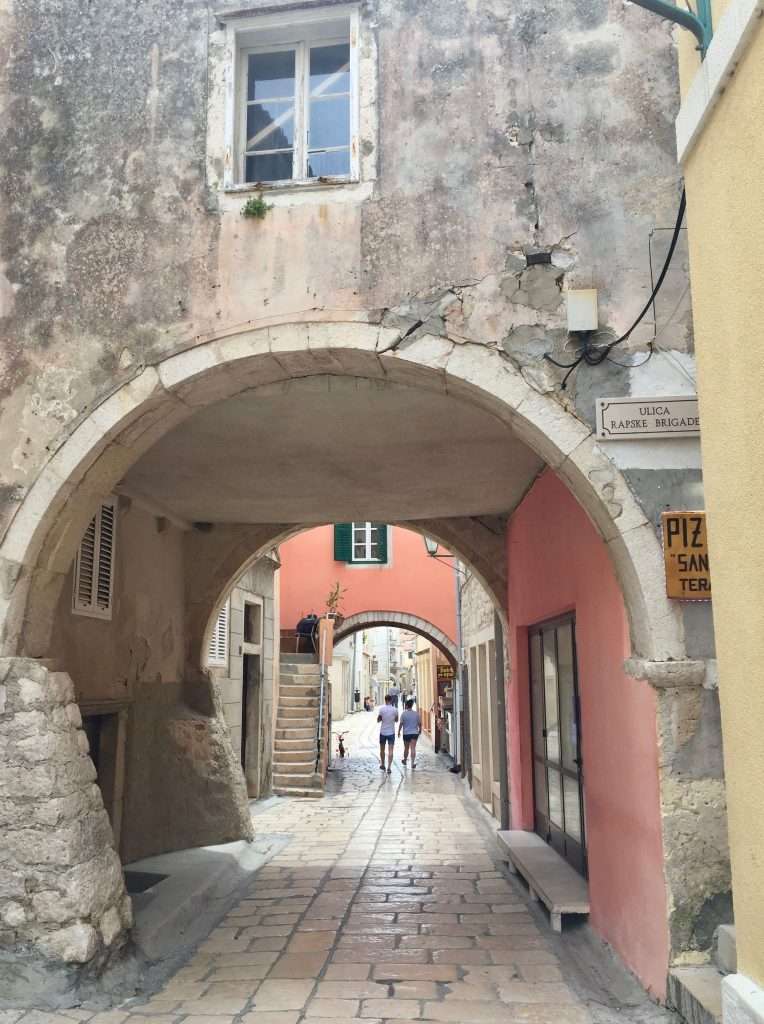
Street scene in Monopoli.
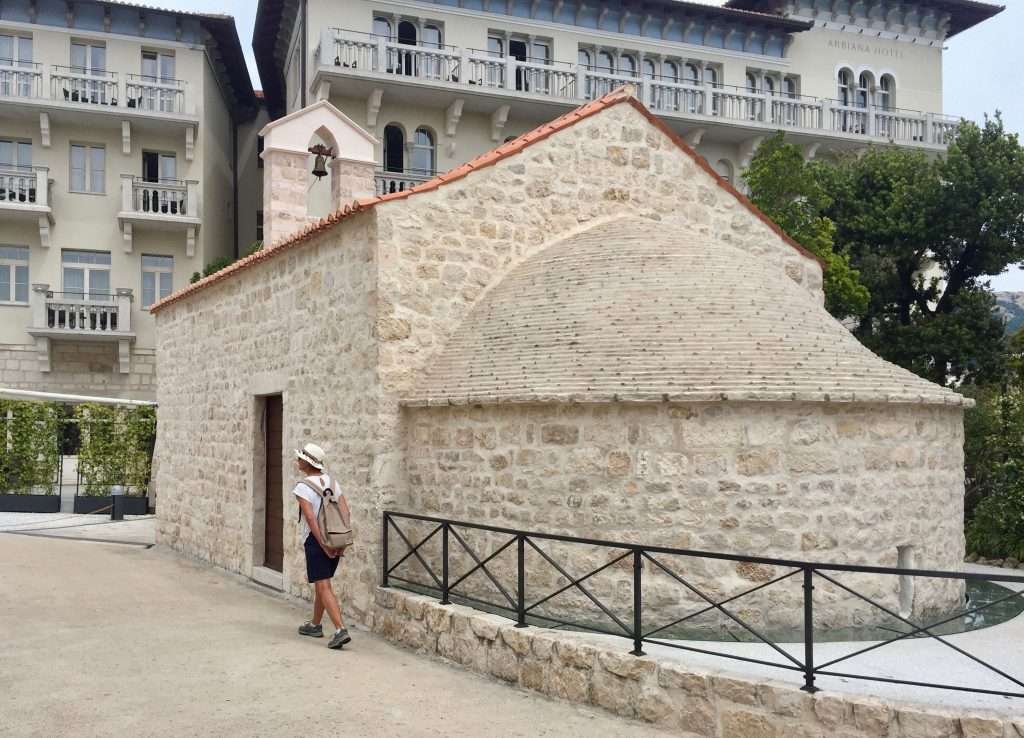
Colourful Baroque church in Monopoli.
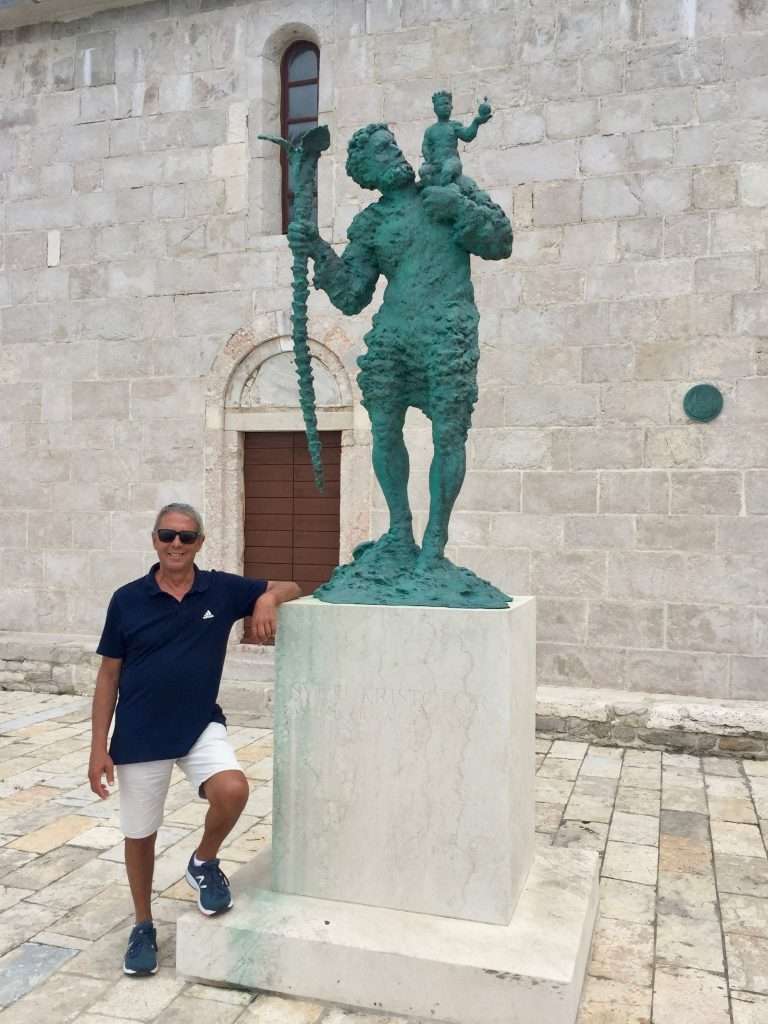
Poor man’s copy of Michelangelo’s David found in Monopoli.
From here we called in at Brindisi and then Otranto, before rounding the heel of Italy to Santa Maria de Leuca, where we spent two days. We left early on the 10th July to do the 75 nm crossing of the Gulf of Taranto in winds of between 5 and 25 knots, with rain and thunder. It was a relief to tie up in Ciro Marina where we were bunkered down for two days while a 25 knot northerly raged.
Brindisi old town with the Via Appia steps.
Annie and Patricia at the steps.
A Mussolini era monument in Brindisi.
Otranto anchorage.
An entrance into Otranto old town.
Otranto square.
Argentinians, Leo and Carla and their dog, cycling the world.
Otranto taxi.
Otranto beach.
I was fortunate to locate a reinforced water pipe in Ciro to replace the leaking pipe on the hot water cylinder, while we waited for the wind to abate. We had a good sail to La Castella, 40 nm to the south west, where a too shallow entry to the inner harbour, as well as the outer harbour packed with fishing boats, forced us to raft up on an abandoned, rusty yacht.
Mussolini’s steps into Italy at Santa Maria de Leuca.
Outdoor dancing in St Maria de Leuca.
Tied up to a wreck in La Castella.
The next day started with me diving to clear the propellor from a birds nest of fishing buoy ropes, before we set sail for the 53 nm crossing of the Gulf of Squillace to tie up late afternoon in Roccella Ionica at the marina. The marina staff was most helpful and charged EU 60 for the night.
An early start the next morning with a good following wind, had us poled out to cover the 77 nm across the Strait of Messina, to anchor in Naxos by 6 pm. (Naxos was colonised by the Greeks – hence the name) A heavy swell early the next morning, forced us to leave Naxos and motor through a big sea to look for shelter and tie up NIC Marina in Catania at EU 40 for the night. Catania has a big harbour and is quite run down, but we had a lovely dinner in town – in the rain.
Walking past the Bellini theatre on our way to dinner.
After dinner – Grappa and Limoncello.
We motor sailed the 30 nm to Siracusa to be welcomed by a storm with pelting rain as we entered the harbour. The marina quoted us EU 90/night, but a French couple tied up to the town quay, told us we should go and see the Guardia Costiera (Coast Guard) for a berth. If there is one available, they will allow you to stay for five nights for free! No power or electricity available – which we don’t require, as we are self sufficient. Annie went to their office and managed to get us a berth.
The entrance into Siracusa harbour when it’s not raining.
Archimedes, Siracusa’s favourite son of 23 centuries ago.
Dave and Patricia were due to fly out from Catania in five days, so we decided to stay put, as we were all knackered after some hectic sailing. Apart from that, Siracusa is an attractive place, with a beautiful old town. We spent five relaxed days exploring the town, fixed the lazy jacks, broken during our dramatic entry into the bay and having our main and jib sheets washed at a laundry.
Amazing plasterwork on the Chamber of Commerce building.
The famous Sea Shepherd in the harbour.
Even an alley can be a restaurant
A chandlery supplied us with Dyneema non-stretch rope for a new main halyard and pre-stretched polyester rope for our worn-out reefing lines, at a reasonable price. These and the washed sheets (now a lot softer) were installed and other maintenance items done, while visiting the markets and having relaxed breakfasts and dinners in between with Dave and Patricia.
The fish market.
Not only fruit and veg, but spices too.
Walking to dinner.
The cathedral square.
We also attended a concert by a brilliant duo from the Netherlands, Bobby Rootveld and Sanna van Elst, called Duo NIHZ.
Bobby and Sanna.
Our ladies, Patricia and Annie.
Fountain in the town square of Siracusa.
On Saturday the 20th July, Dave and Pat caught the bus to the airport for their flight back to Cape Town. We checked out with the Frontier Police, filled the tank and jerry cans with diesel and motored to Capo Passero, 31 nm to the south where we anchored in crystal clear water. It was great to swim off the back of the boat in privacy, after five days in a goldfish bowl, on the town quay.
Capo Passero anchorage.
To crown it all, a splendid jazz quartet in the style of George Benson, played at a restaurant on shore, while we grooved in the cockpit with a litre of wine and barbecued our fish, bought at the market that morning. We made water and filled the water tanks the following day. The anchorage was pleasant enough for us to stay another day and night, before motor sailing 50 nm to Scoglitti, further west. The beaches along the south coast are sandy and attracts many tourists. It appears this area is also the fruit and veg basket of Italy, judging by the thousands of tunnel hothouses.
Leaving Capo Passero.
Scoglitti.
Our next anchorage was San Leone which was holiday central for tourists, with blaring doof-doof music and over excited DJ’s shouting at the top of their voices. The mozzies decided they couldn’t handle the noise and came to join us on Esprit – what a night! The next anchorage at Sciacca was a lot quieter and prettier, before we reached the island of Favignana, off the west Sicilian coast.
Sciacca.
We anchored in the bay Cala Rossa on the north coast as a strong southerly was predicted for the following day. A remarkable spot with dozens of yachts and boats on moorings or at anchor in crystal clear water – we stayed for two nights before a building northwesterly forced us to motor to the south side and anchor in Scindo Passo.
Intense blue, but clear water.
Here, the wind started blowing hard, reaching 25 – 30 knots overnight, with a hideous swell on the beam for a sleepless night. To crown it all, on leaving the bay the next morning, we struck an uncharted sandbank and got stuck. A friendly Frenchman came to our aid with his dinghy, sporting a 20 hp motor. With our Yanmar and his Honda at full revs, we couldn’t budge Esprit.
We won’t forget Scindo Passo!
Our main and jib were hoisted and with the 15 knot wind and the two motors, we eventually sailed Esprit off the sandbank. Quite a relief, so while the going was good we carried on in the 15 knot wind and sailed all the way to Capo San Vito, 31 nm to the N-E, where we anchored for the night.
Capo San Vito.
Our last anchorage before Palermo was Baia di Mondello. A short hop to Palermo followed, where we booked a berth at the Salpancore Marina in order to pick up Marty and Sue, our friends from Perth.
Baia di Mondello.
Look out for our next post, probably from Naples, or a bit further north along the Italian coast.
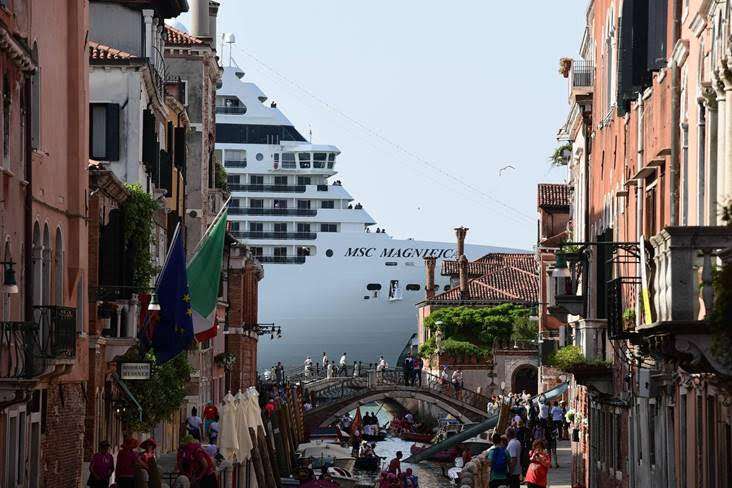
Apropos our previous post on Venice, an American friend sent me an article from the Washington Post about “The age of the overtourist”. It included examples of how to ruin a perfectly beautiful city for everyone. She concluded: “These have to be some of the saddest photographs of Venice I’ve ever seen”. I second that Trena!
The number of passengers and crew on this ship is almost the same as the permanent population of Venice.
Nice vista down this canal?
Unlike the lack of wind while crossing to Venice, the Scirocco from the south kicked in for our return journey to Umag in Hrvatska, as the Croatians call their country. We had an exciting 50 nm sail averaging 8-9 knots in a 20 knot wind, getting us to Umag in a record time, but salt encrusted.
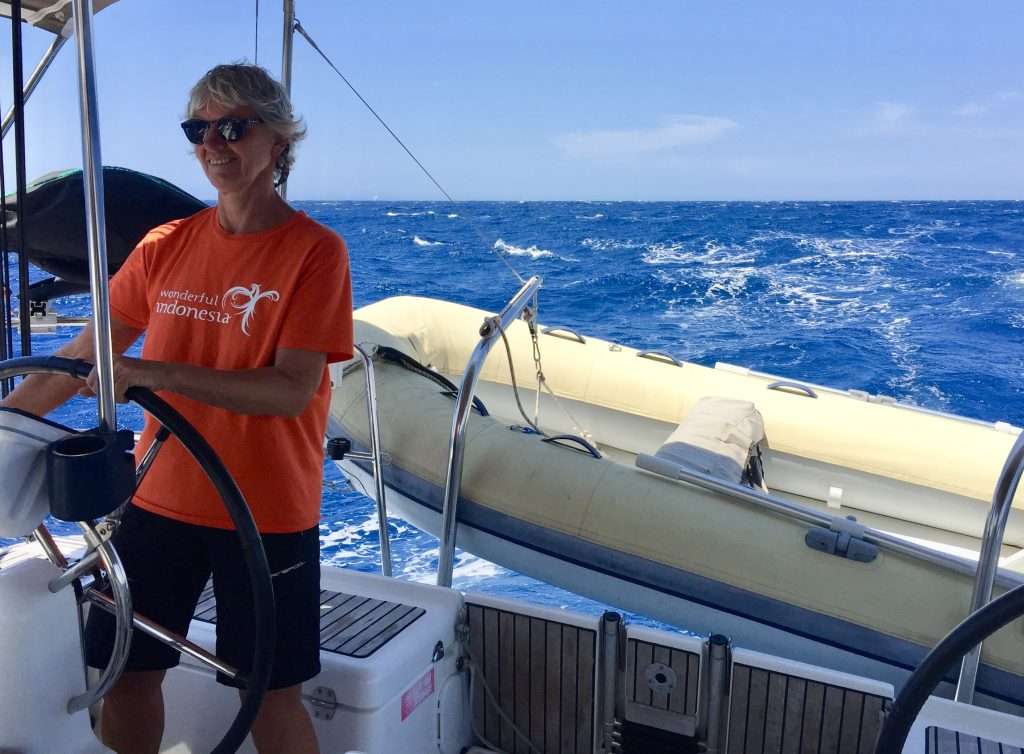
Annie at the helm.
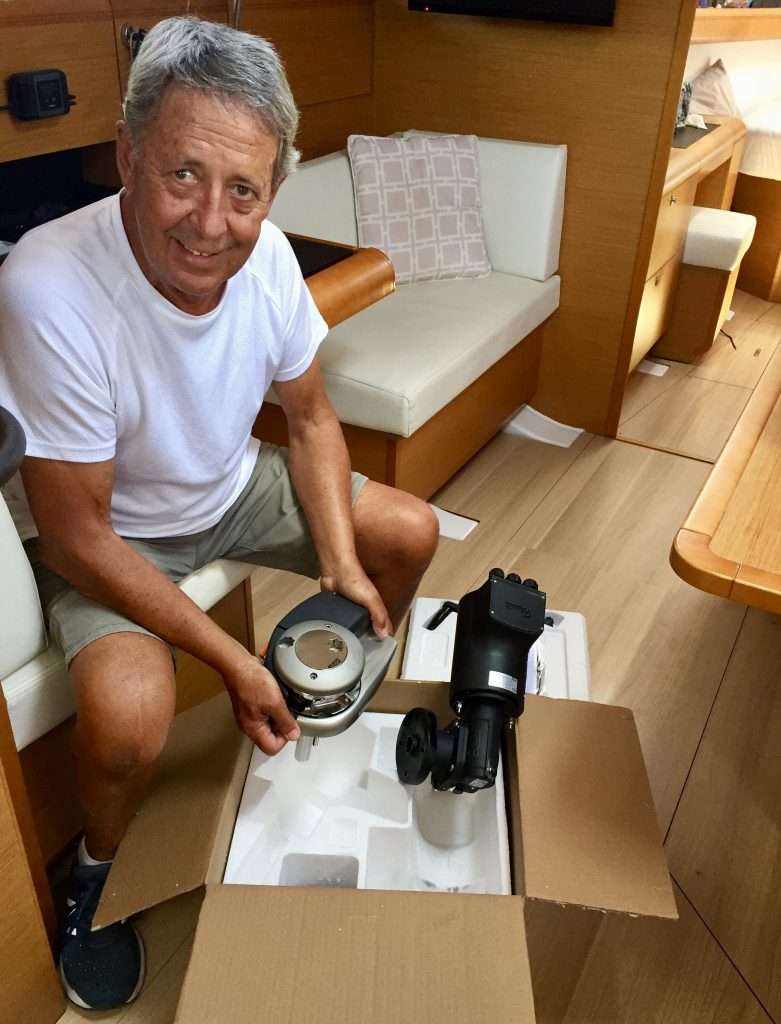
Having checked in at customs and immigration and paying another AUD 300 for a 21 day cruising permit, we enjoyed relaxed sailing south to Rovinj and Pula. In Pula we collected a new anchor windlass for AUD 1,451 which the Quick agent had ordered for us, 10 days earlier from Italy..
The new windlass, motor and gearbox.
Two days of good sailing in a following wind took us first to Losinj island where we anchored in Artatori bay with 23 other yachts and then to Iz island where we anchored in Soline Bay with a yacht from Austria. The summer charter fleets were out in force and we often saw up to 50 yachts on the water around us, mostly with crews from Germany and Italy.
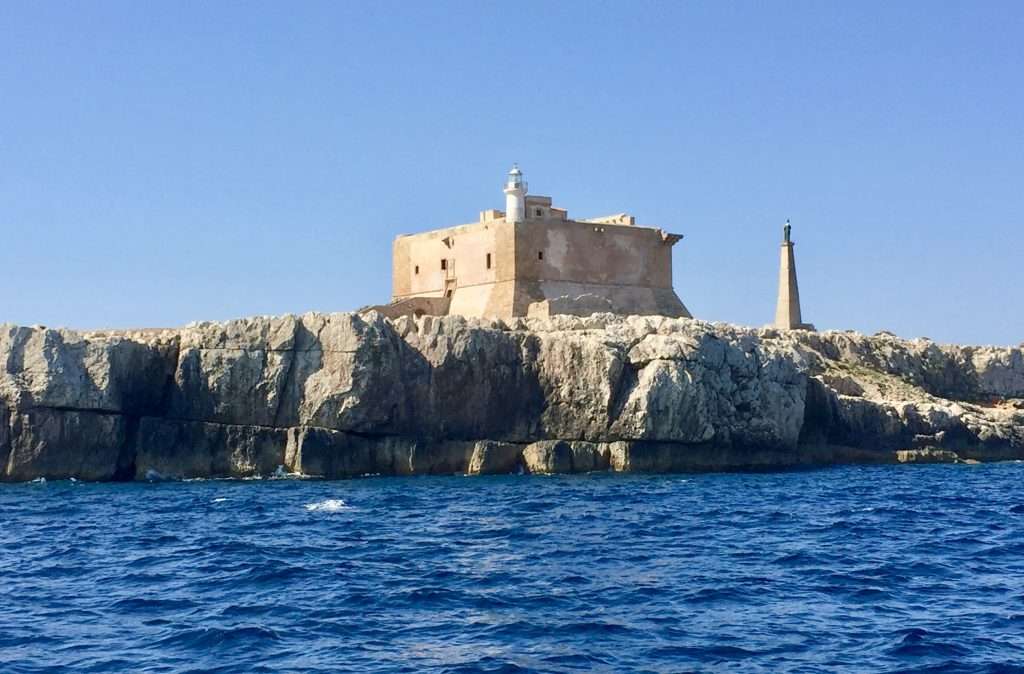
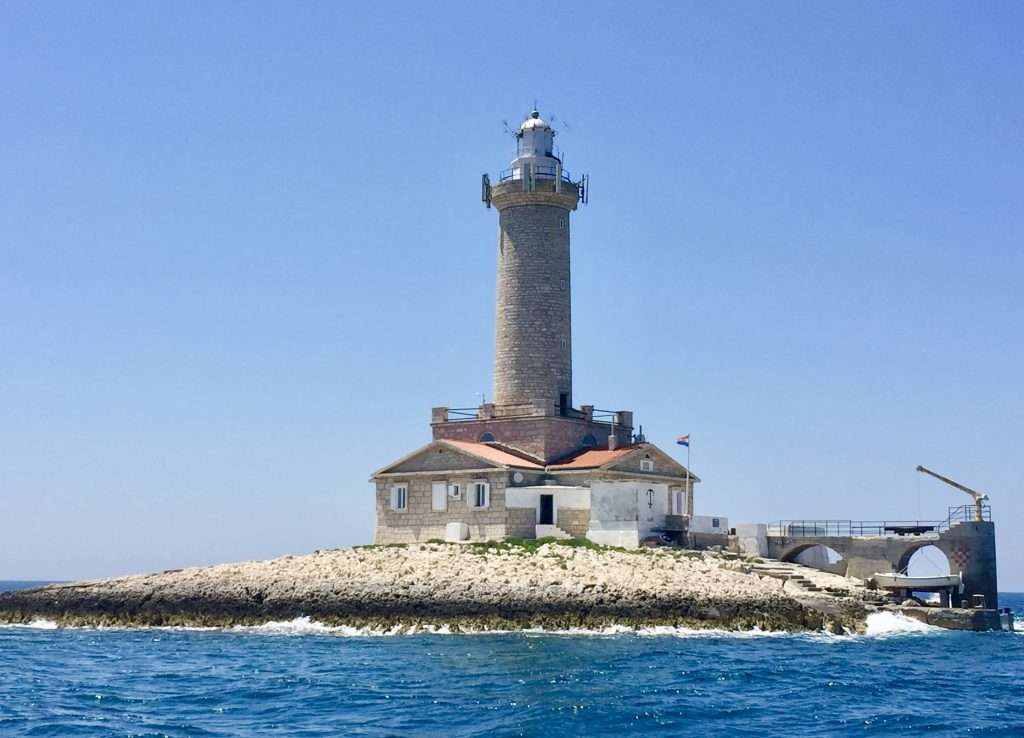
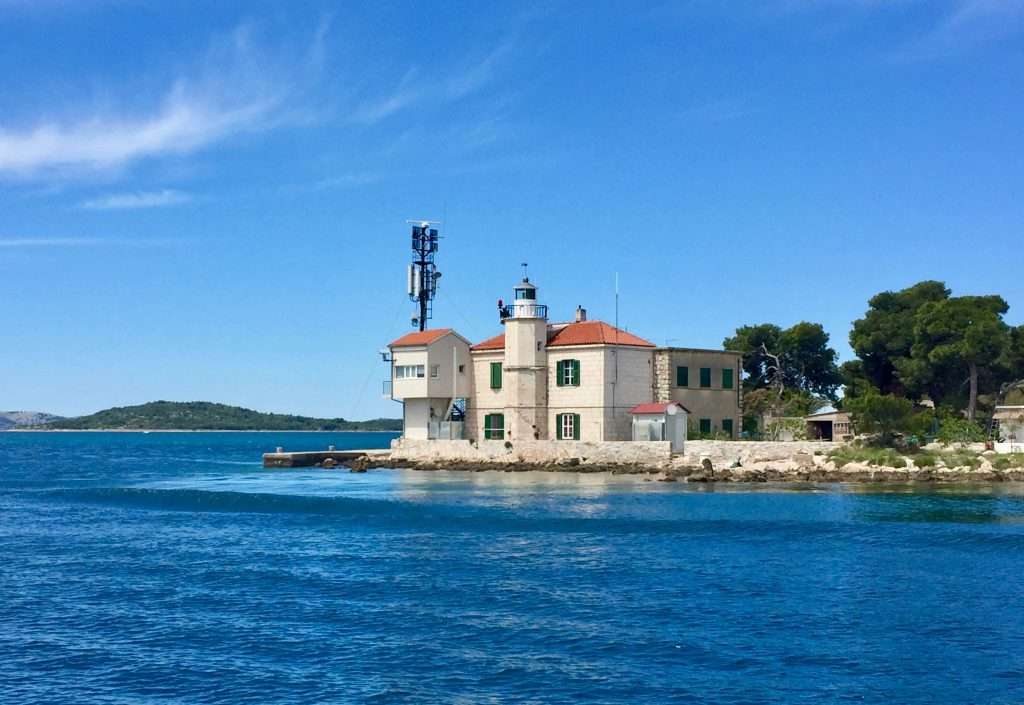
Passing a lighthouse on the way south.
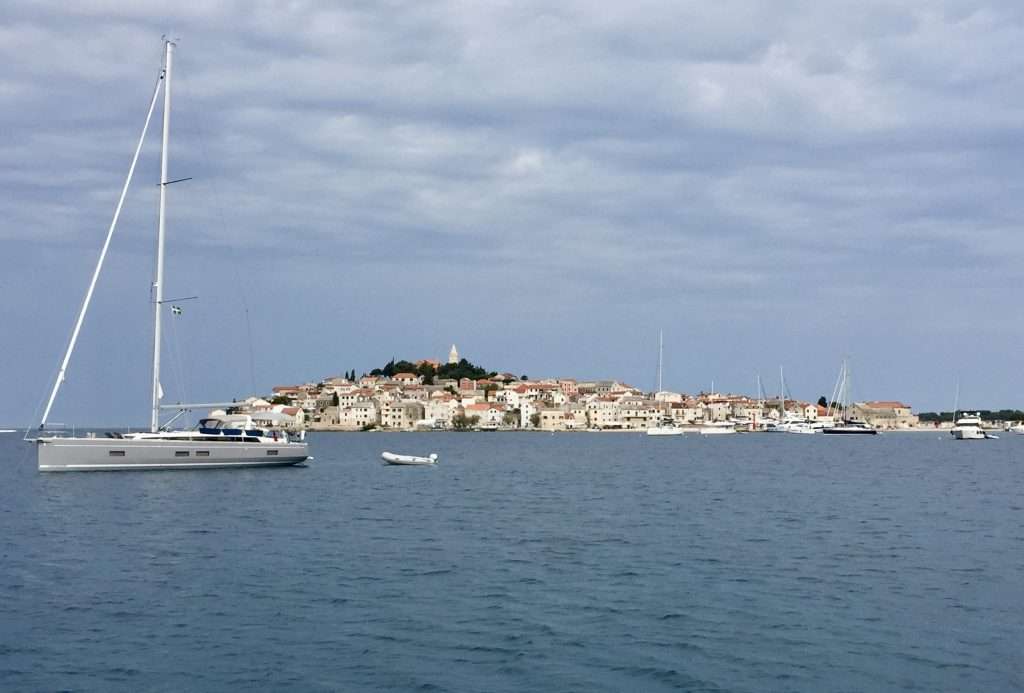
Our next stop was Zut for two days. After Zut followed Kaprije island, and then we spent two days in the pleasant town of Primosten, waiting for the southerly Scirocco to abate.
Primosten.
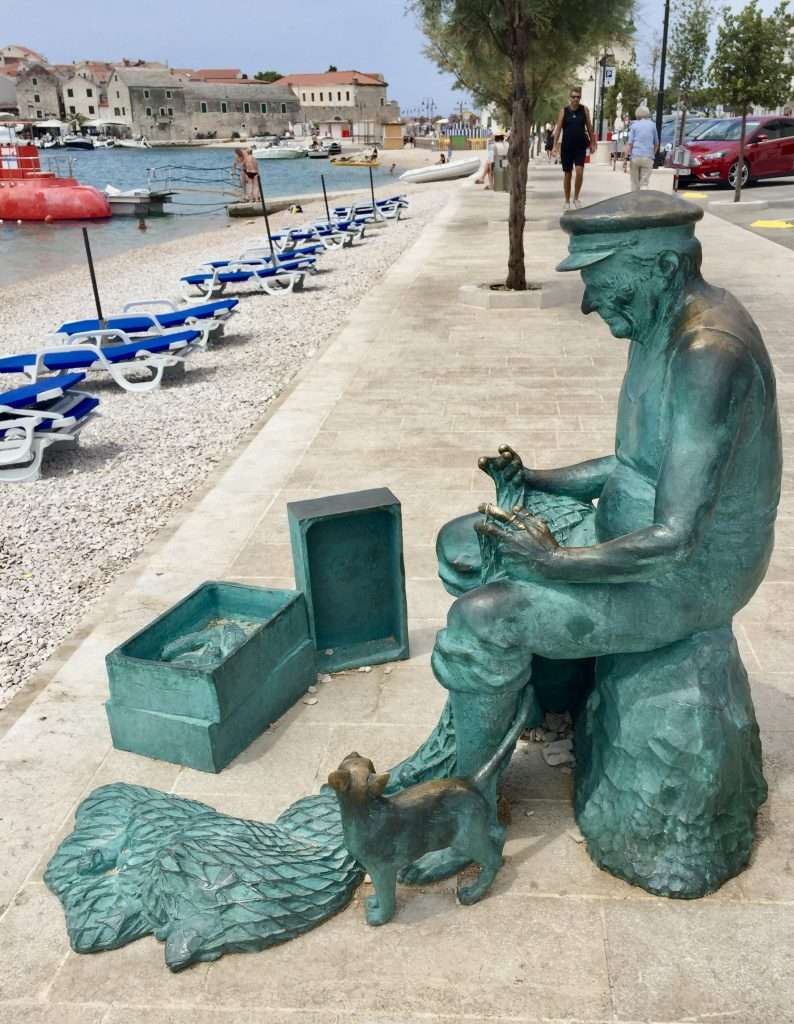
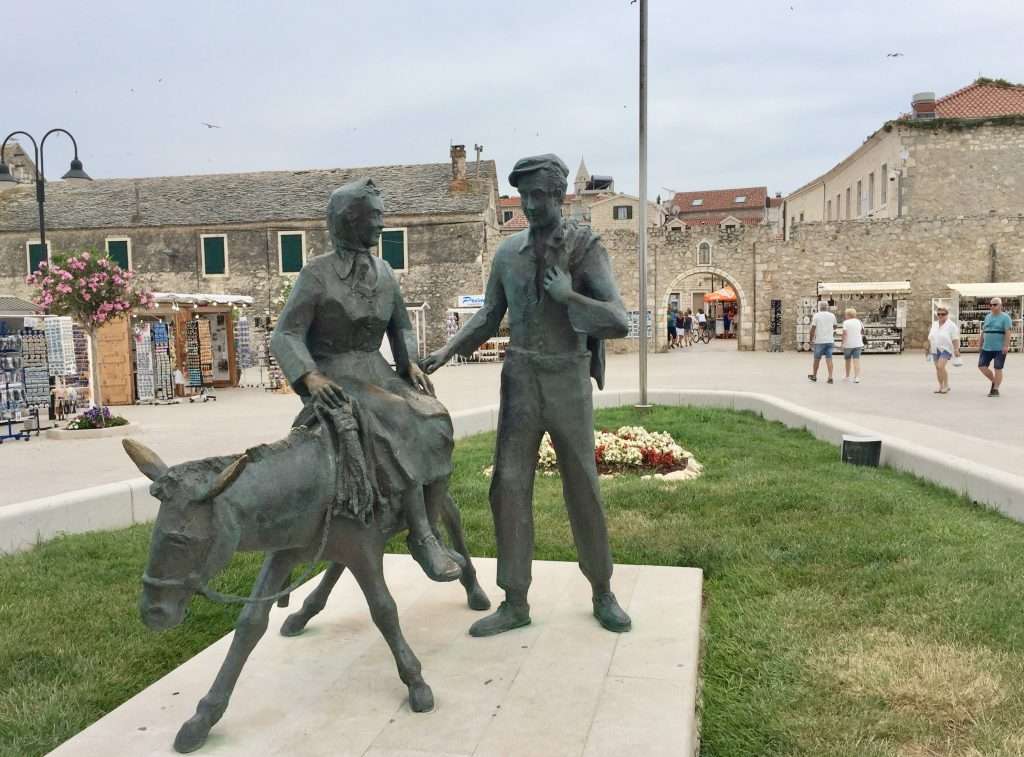
Primosten – public sculpture.
Entrance into the old town.
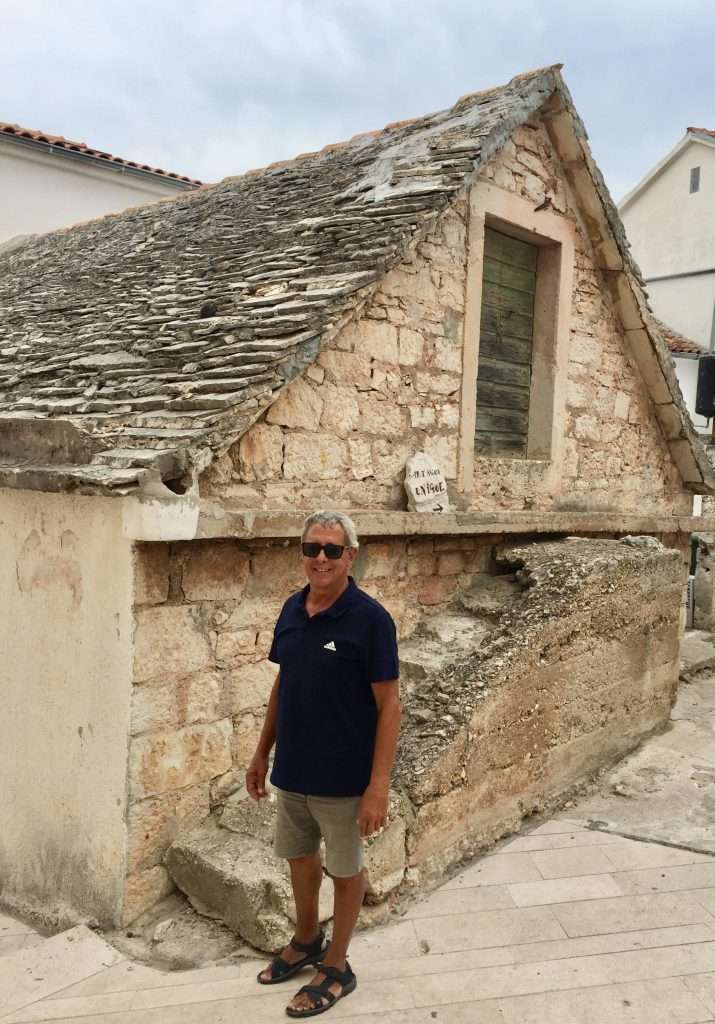
Cut stone for roof tiles.
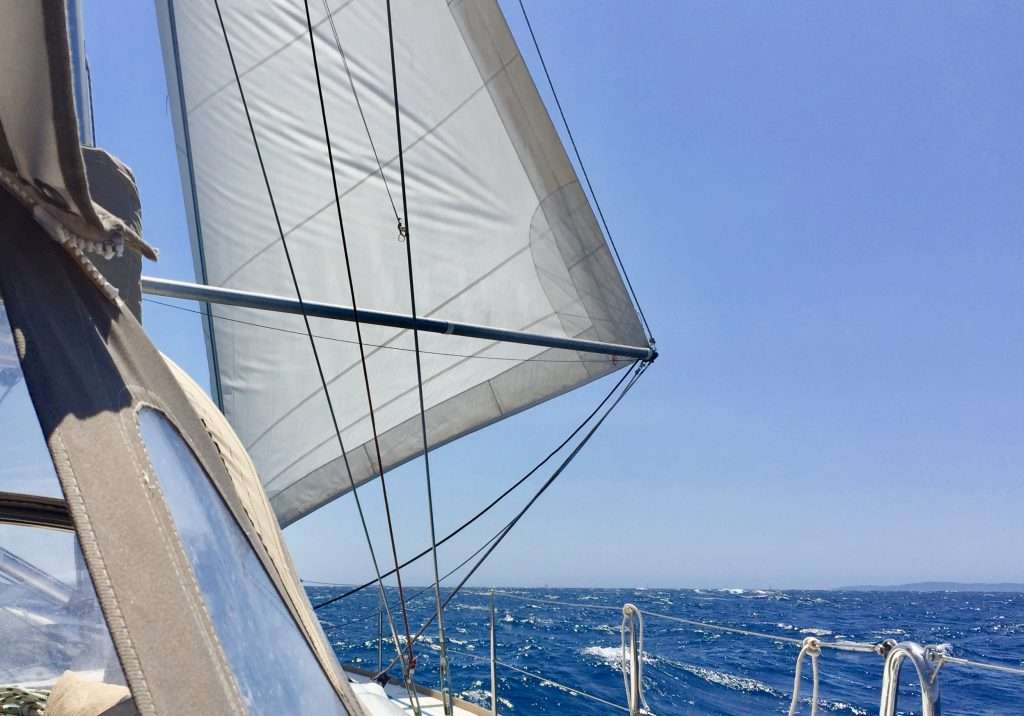
When the wind turned to the northerly Bora, we had two days of excellent downwind sailing with the pole out, overnighting at Stari Star, a small cove off Hvar and Tri Luke on Korcula island.
Relaxed downwind sailing.
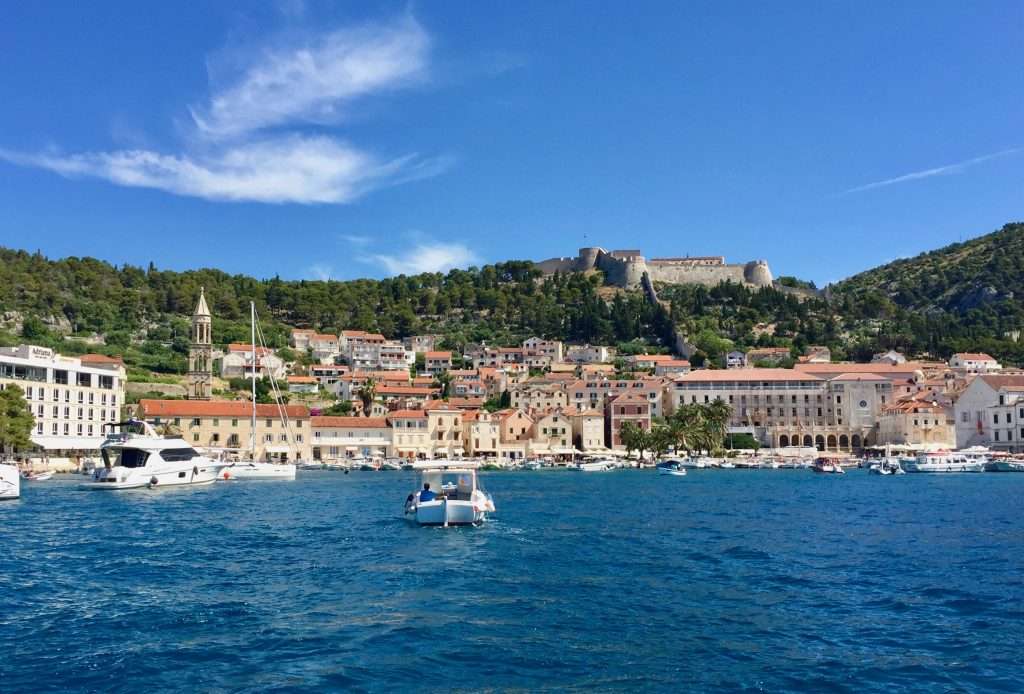
Hvar.
A few more anchorages followed and on the 27th June we were back in beautiful Cavtat, where we first checked into Croatia on the 25th April. It was now much warmer and busier, but then the Bora from the north punished us for three days with winds of up to 45 knots, while at anchor in Cavtat – not pleasant. When the wind settled down, we stocked up with provisions and waited until Tuesday the 2nd of July for the forecasted 15 knot northerly to take us on the 105 nm overnight crossing to Bari in Italy.
Annie in Cavtat.
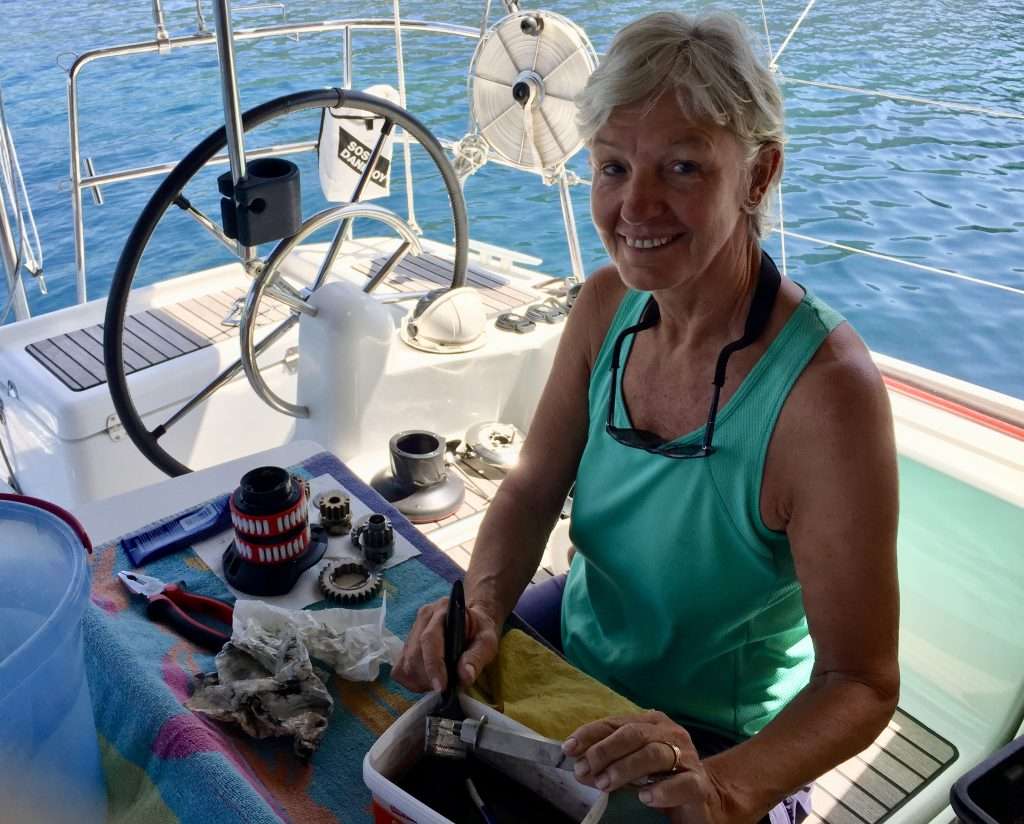
Servicing the winches in Cavtat, before our next passage.
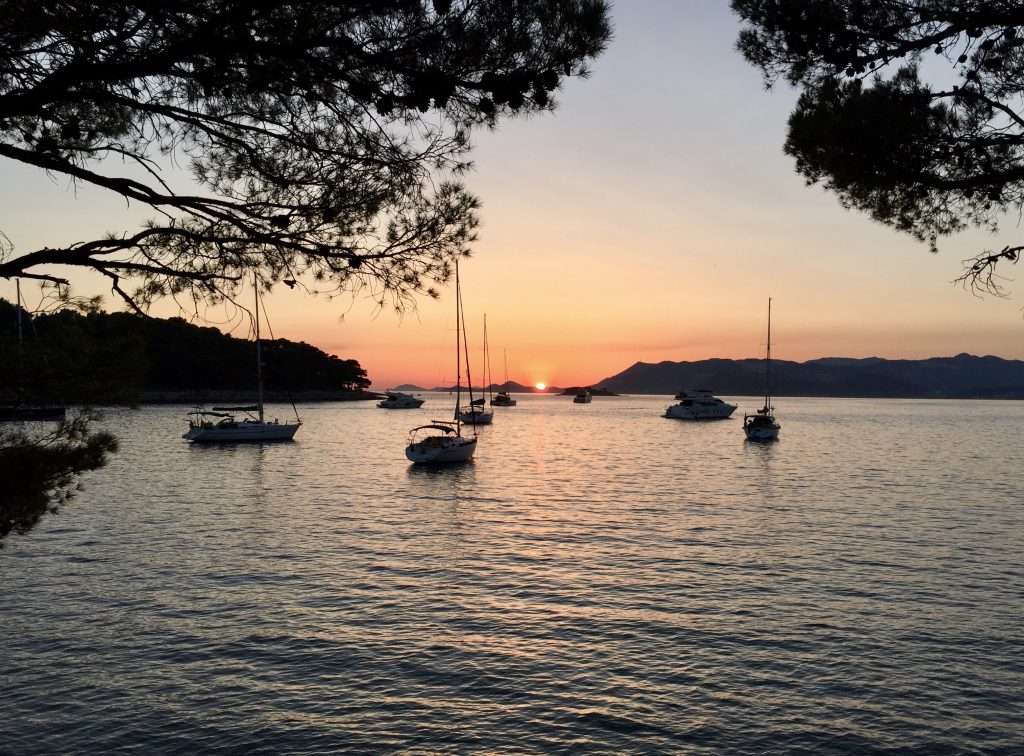
Cavtat sunset.
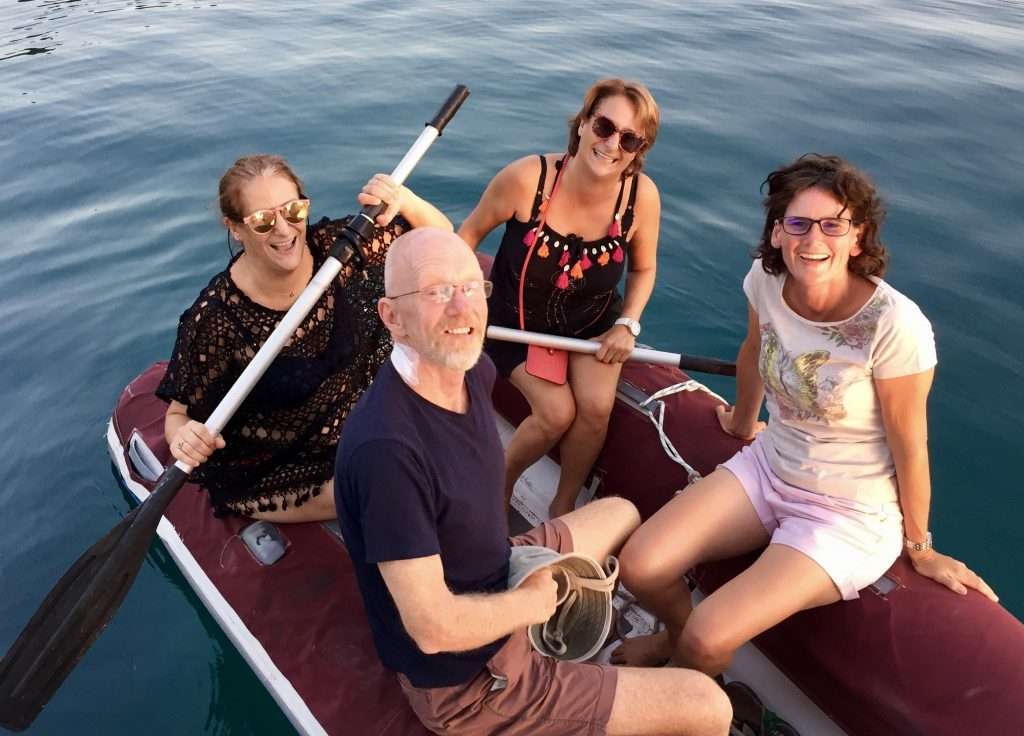
Our neighbours, Saffers Brady and Nicky and the jolly French twins, Christine and Anne over for goodbye drinks.
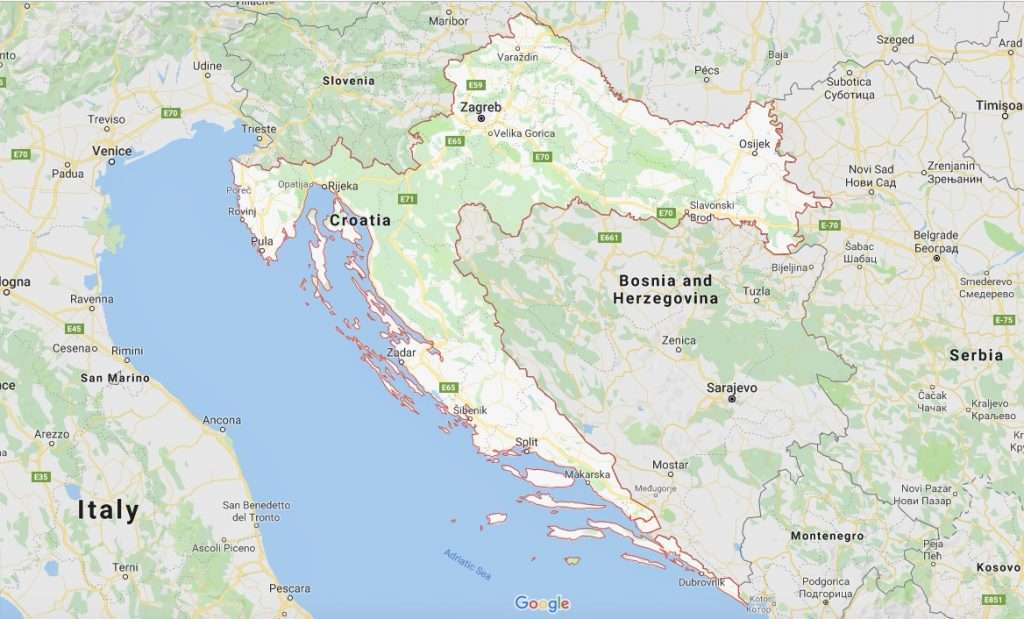
In conclusion: Our cruise through the islands of Croatia (Hrvatska), which have been populated since the time of Ancient Greece (between 3500 BC and 2500 BC), has been a pleasant but expensive experience. According to Wikipedia, the Croatianpart of the Adriatic Sea, has 718 islands, 389 islets and 78 reefs, making the Croatian archipelago the largest in the Adriatic Sea. Sailing at night is not recommended, as not many of the islets and reefs are marked!
Map of Croatia and some of it’s bigger islands.
Of the 718 islands, only 47 are inhabited in the sense that at least one person resides on that island. Some sources indicate 67 inhabited islands, which is the number of islands that have a settlement on them, but 20 of these islands have lost all of their population as a result of the population decline occurring throughout the Croatian islands, due to insufficient economic activity. A number of young people working in restaurants have told us that the younger generation is leaving Croatia for economic or political reasons – a familiar story in today’s world.
The main industries on the islands are agriculture, fishing and tourism. The islands’ agriculture is primarily devoted to viticulture and olive growing. The local economy is relatively underdeveloped and that is possibly the reason why the island people jump at the opportunity to charge yachties for anchoring in their bays on top of the government cruising permit and other sailing levies.
We have found the people and officials very friendly, but I am afraid the cruising yachtsmen and women are now moving to Greece and Turkey, because Croatia has become too expensive.
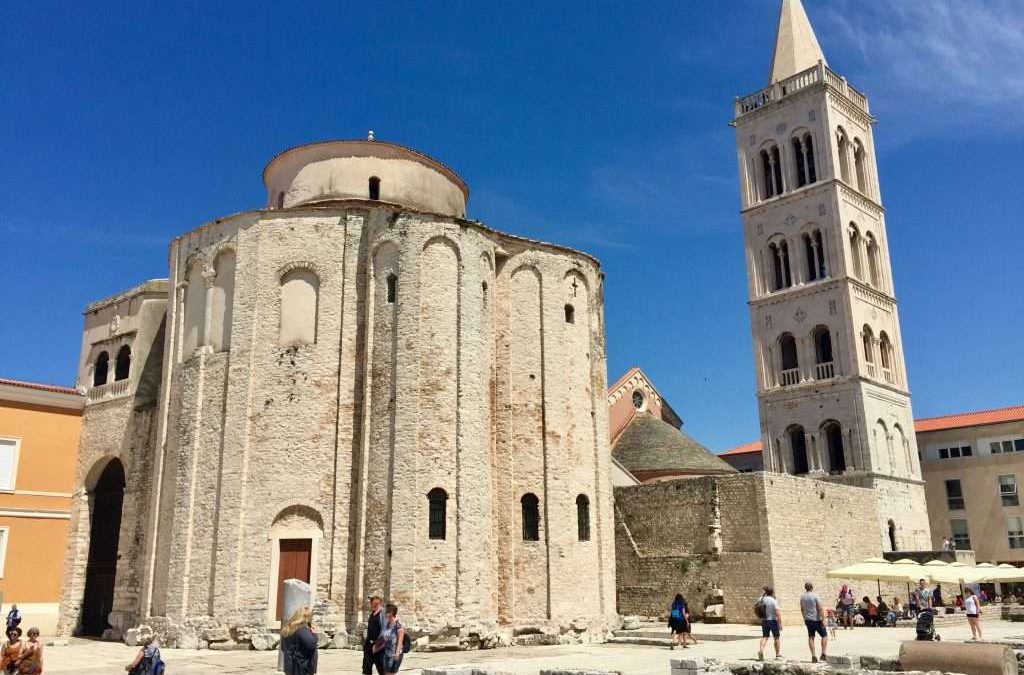
The area around Zadar has been inhabited since neolithic times. The Romans built the old town which they called Jader and the ruins of the Roman forum is still visible near the church of St Donat. The town has been occupied by various nations, and the Venetians controlled it until 1797.
The ruins of the Roman forum and the church of St Donat.
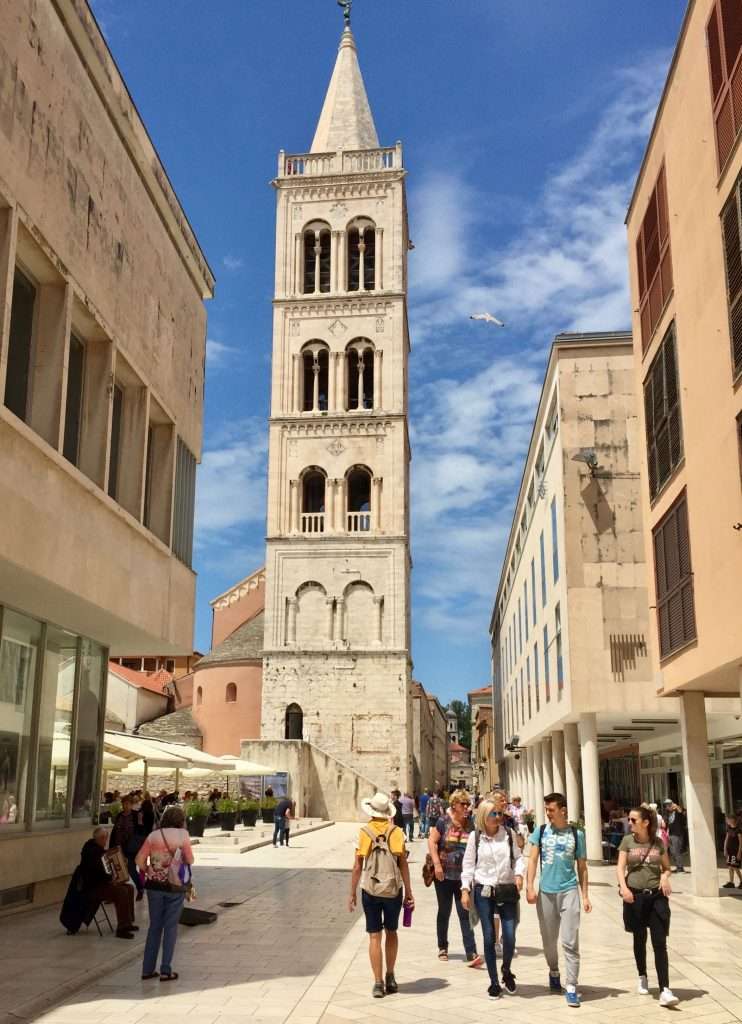
The belfry of the church of St Donat tower over the old town.
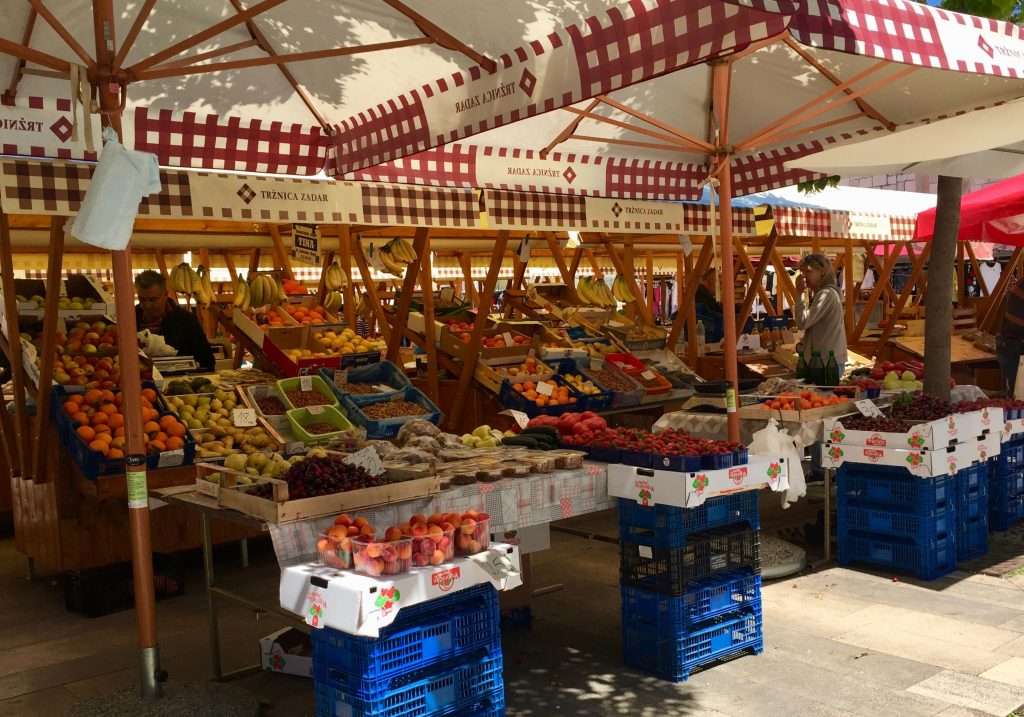
A stall at the fresh produce market.
The Italian influence is notable and we enjoyed exploring the old town, visiting the excellent fresh produce market and extending our cruising permit at the harbourmaster for an additional 15 days.
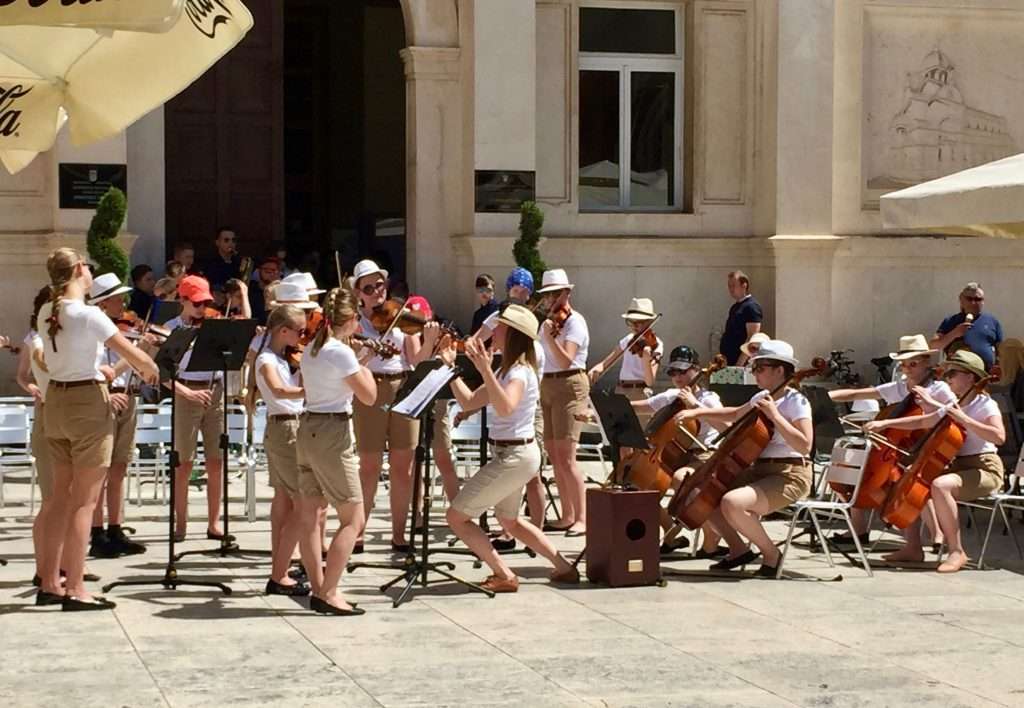
An excellent school girls string orchestra performing in the town square.
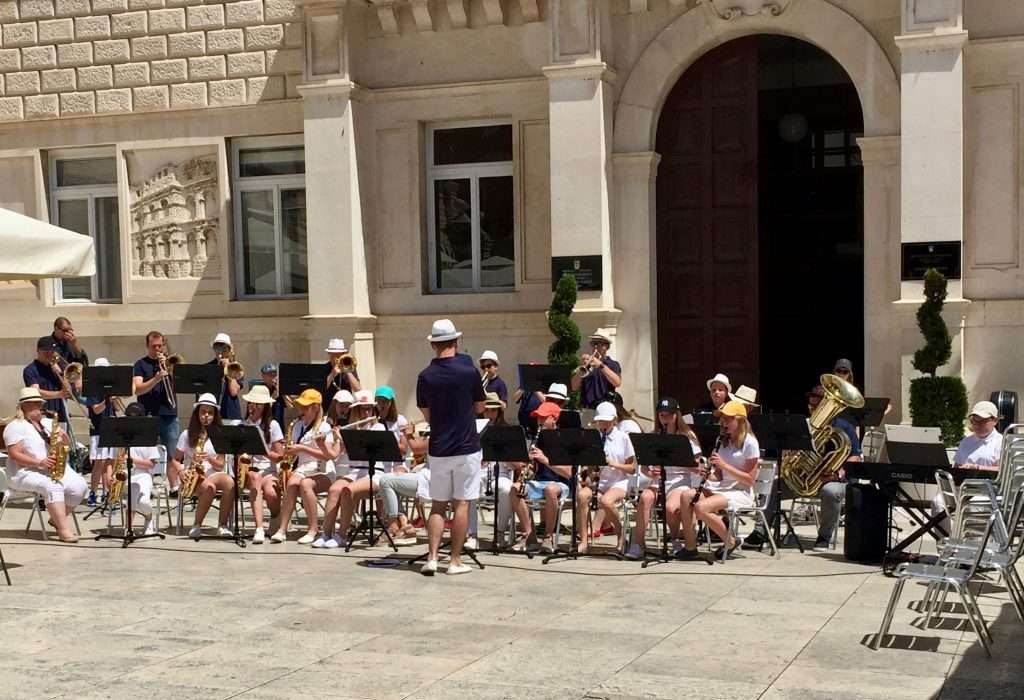
Followed by an equally good jazzy brass band.
Which had the string orchestra girls dancing! Talent with a capital T.
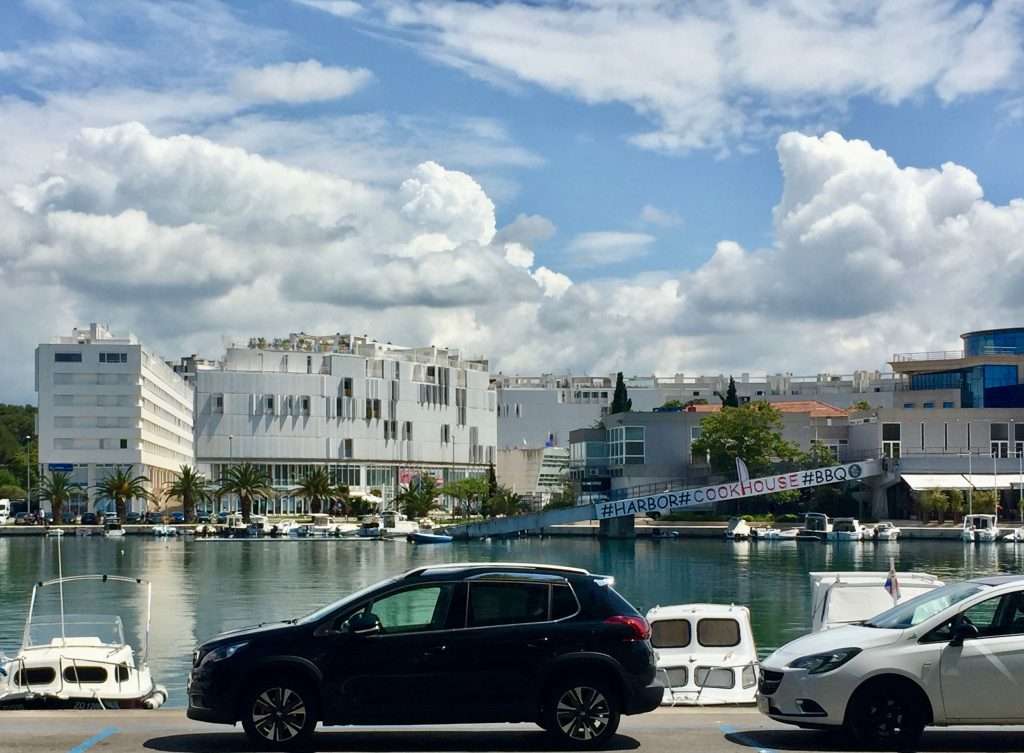
Modern Zadar.
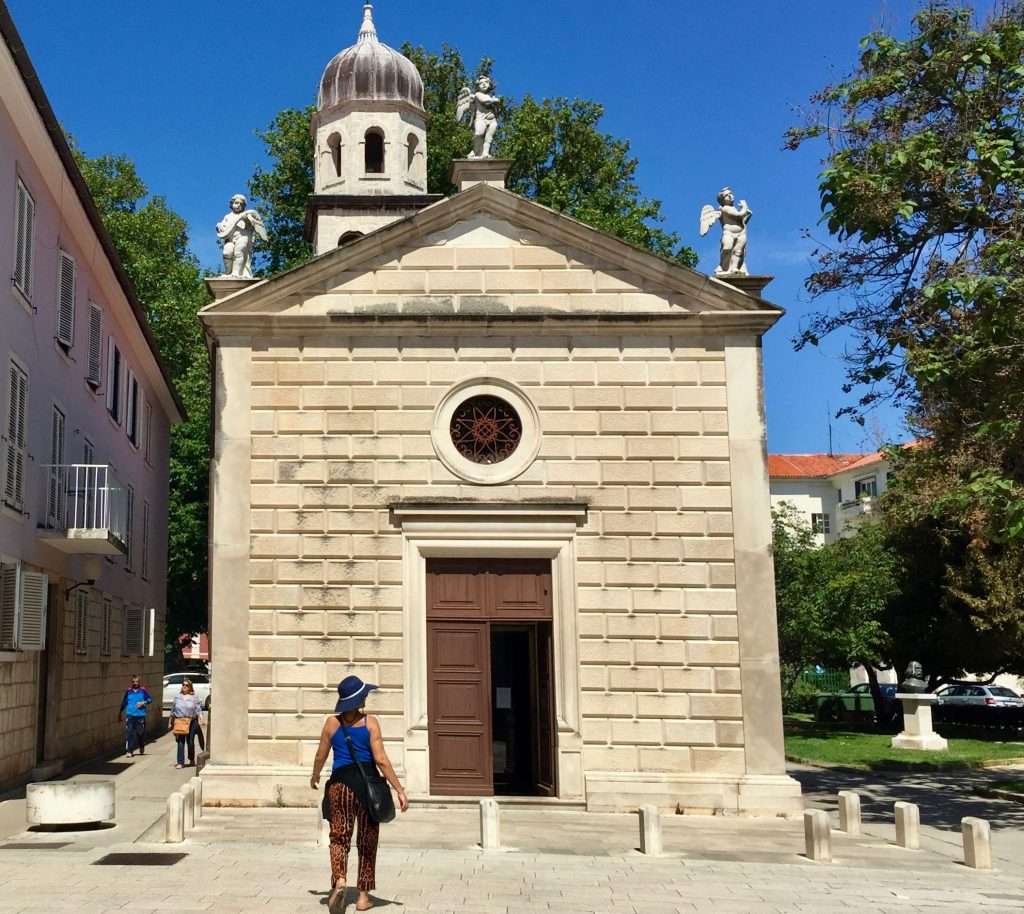
Lovely angels on this old church.
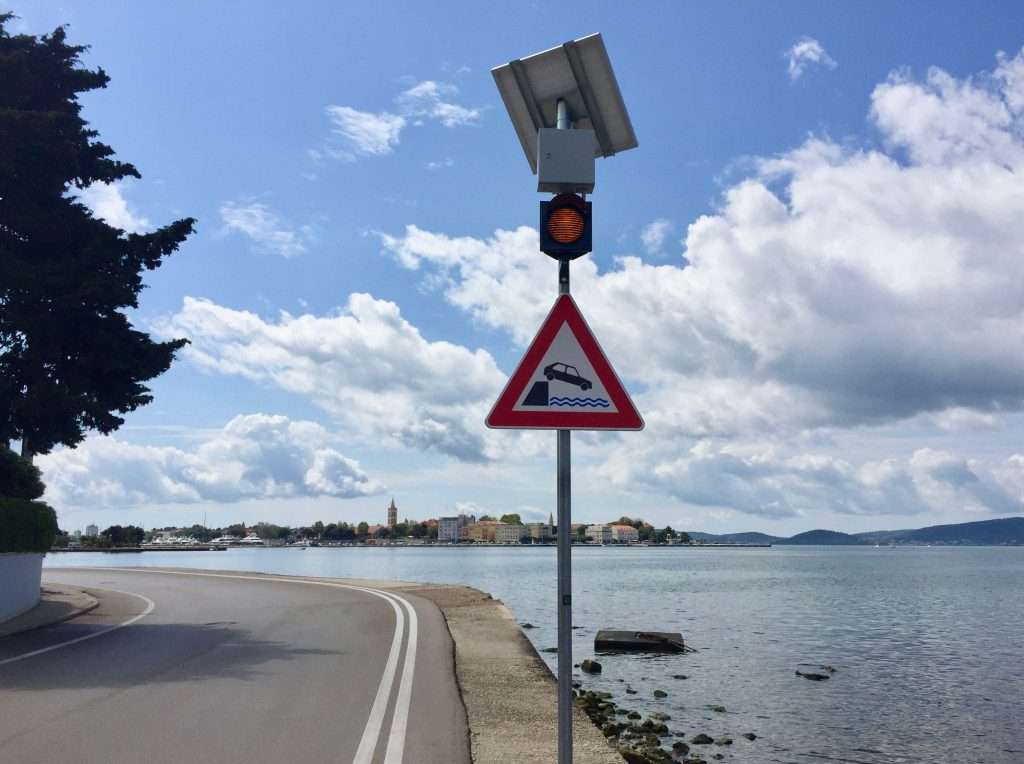
Who will play in heaven for those motorists who take this corner too fast.
We sailed north after three days, stopping at Luka Simuni on the way, to the island of Otok Rab. There is an excellent anchorage at Fumija off the town of Rab where we spent another three days – Rab is a town we can recommend – a beautiful old town and adjoining new town with modern shops and amenities. We managed to stock up with food, wine and beer at a big Konzum market.
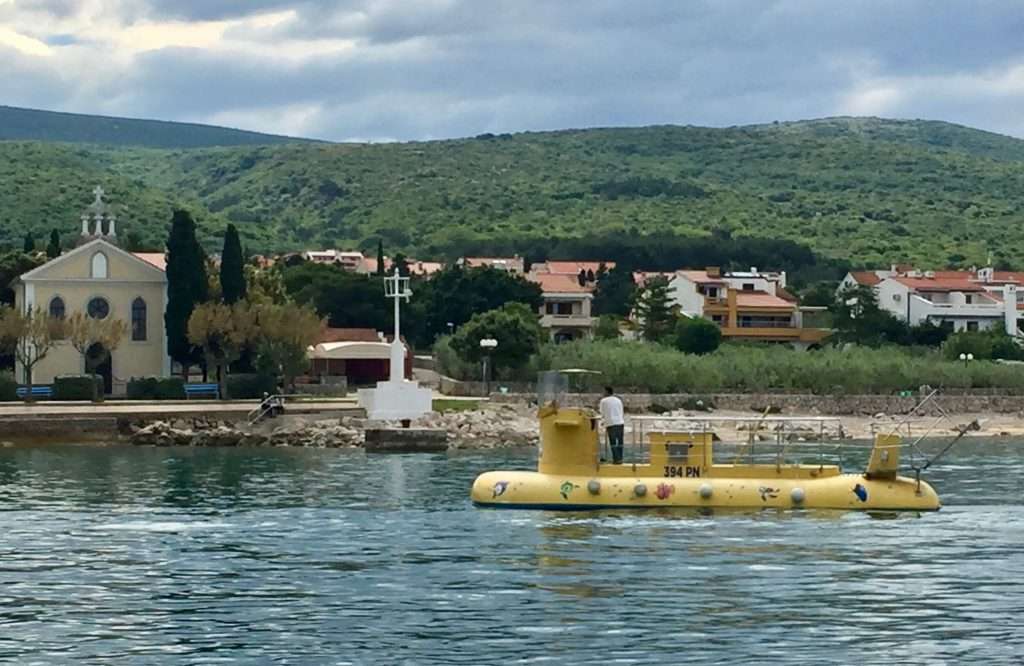
A yellow submarine spotted at the entrance to Luka Simuni.
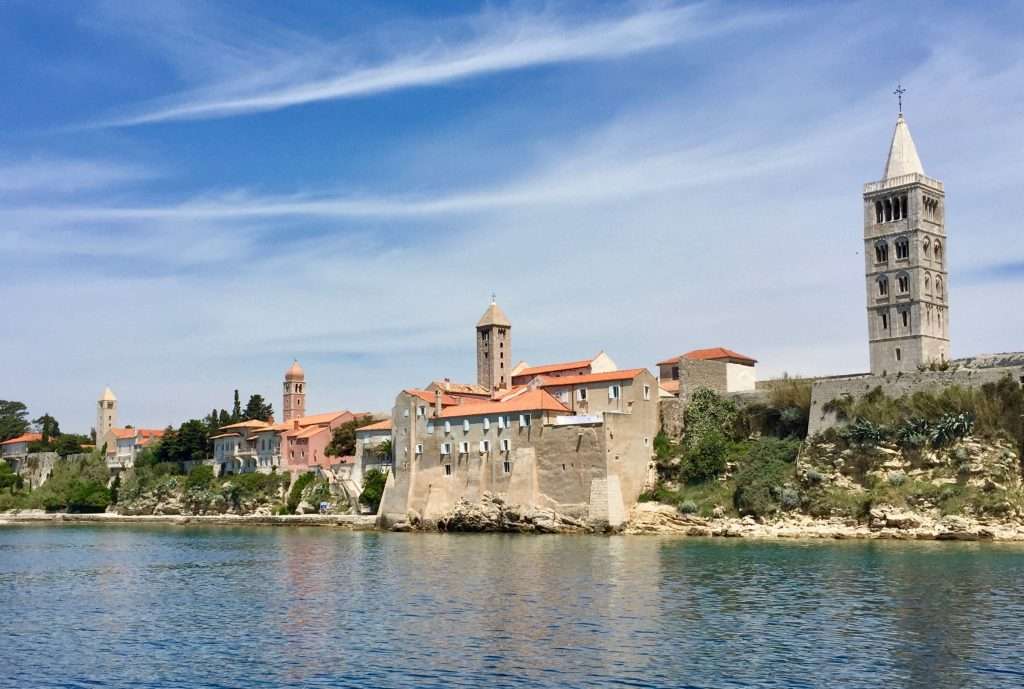
Otok Rab – church belfries dominating the old town.
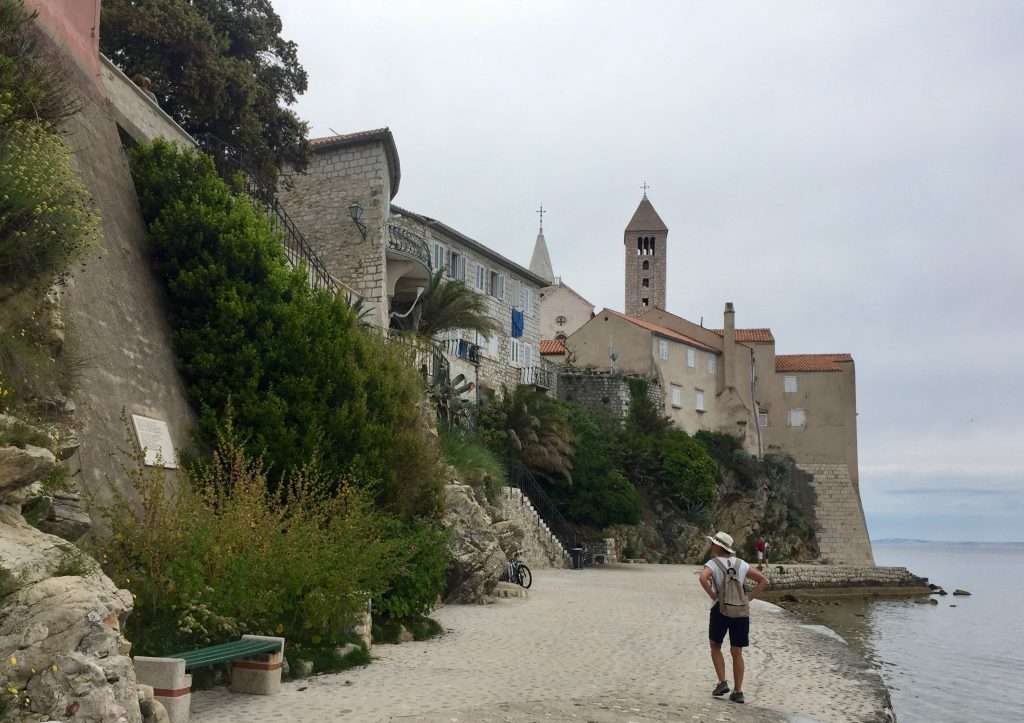
The coastal walk from Fumija to Rab.
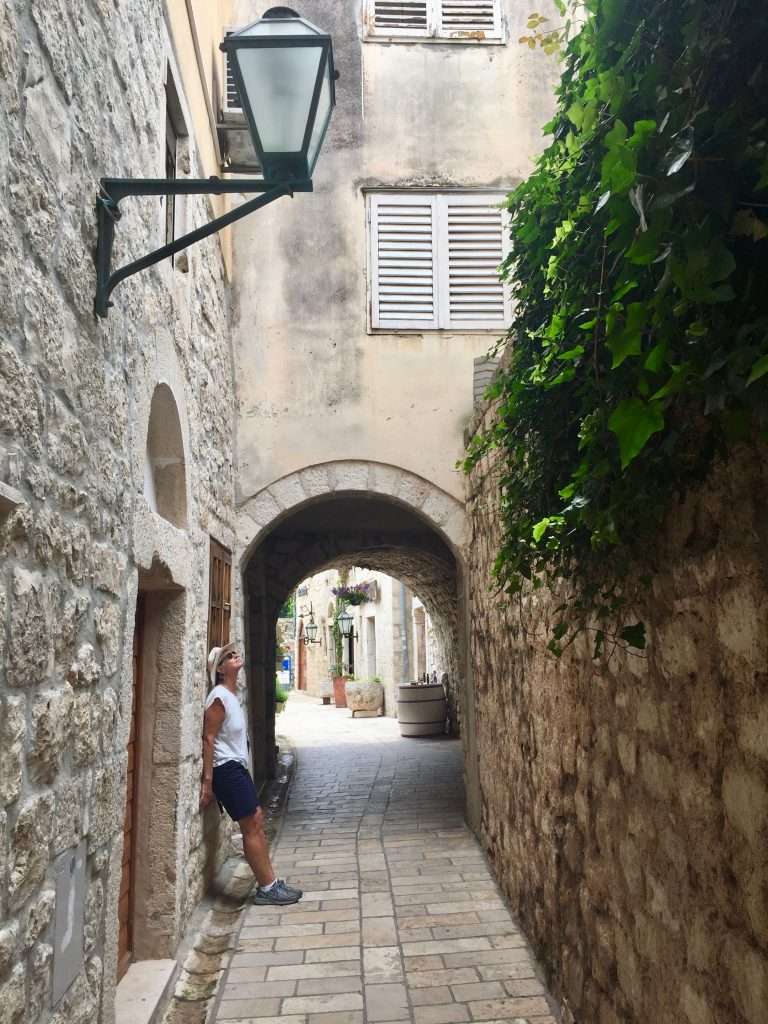
Street scene in Rab.
We had breakfast under this roof which has stood here for 1,250 years.
I was surprised to see Lucifer outside the monastery.
A restored very old chapel.
Another street scene in Rab.
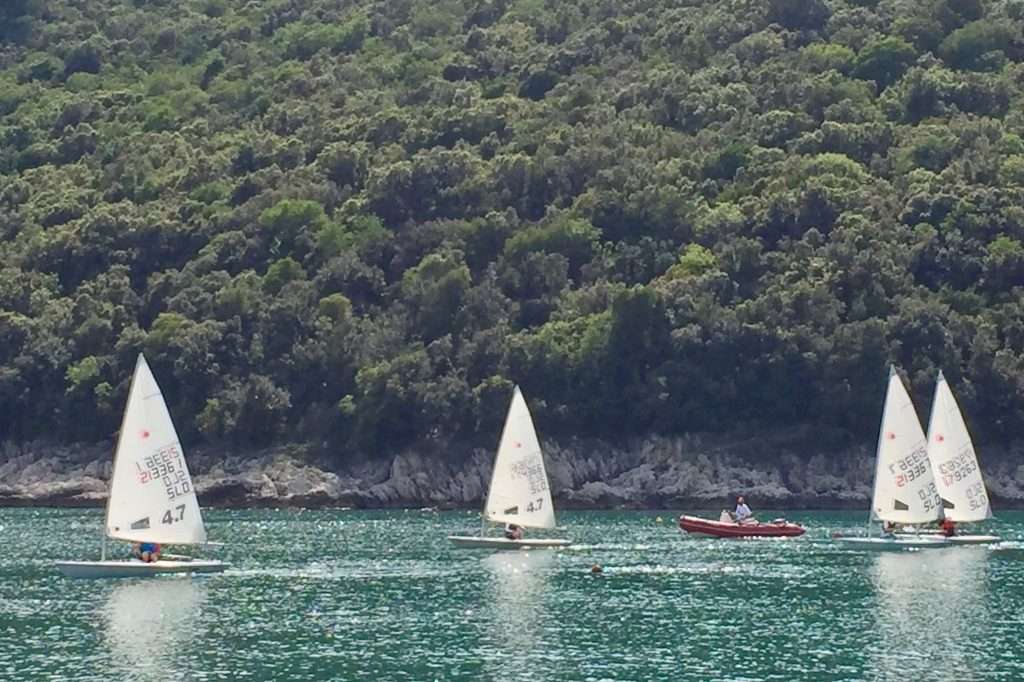
Next stop was Punat – a large sheltered bay on the island of Krk (correct spelling). Not from the rain though – 24 hours of downpours. We headed for the mainland to stop at Rabac at the very top of the gulf – the sun came out and we enjoyed the holiday atmosphere of this resort town and watching scores of Optimist and Laser dinghies sailing around us.
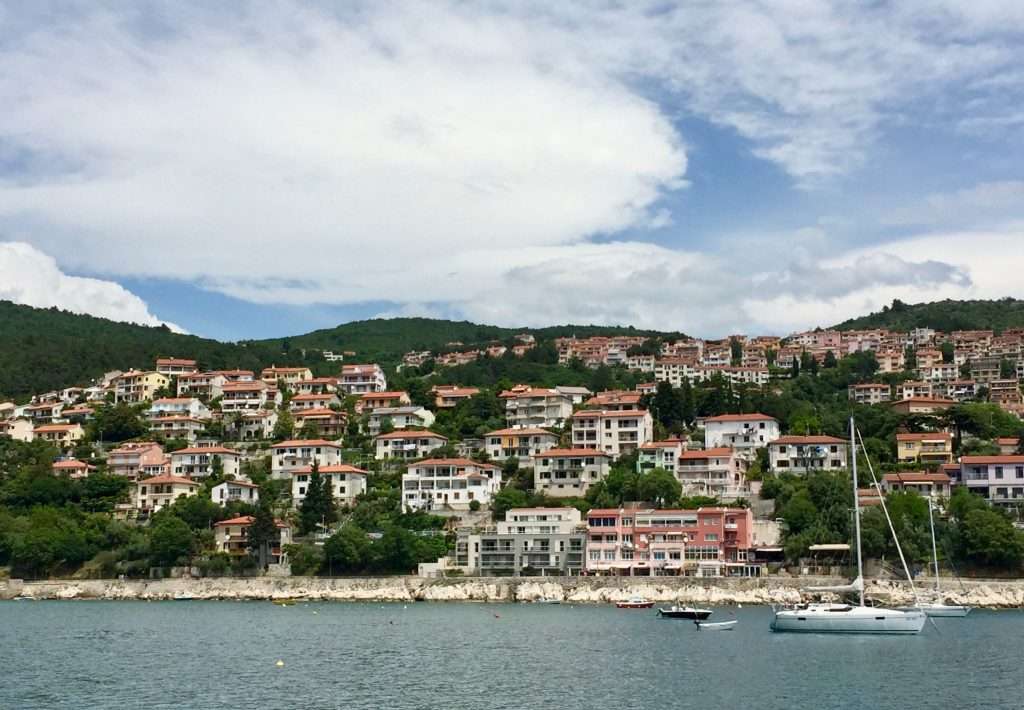
Rabac.
Lasers and their coach.
Uvala Vinjole, beautiful bay 15 nm to the west provided us with an anchorage the following day, as well as numerous nudists sunning themselves on the shore. Unfortunately, we had to continue north the following day, as our extended cruising permit (vignette) was only valid for another week – by which time we wanted to sail to Venice in Italy.
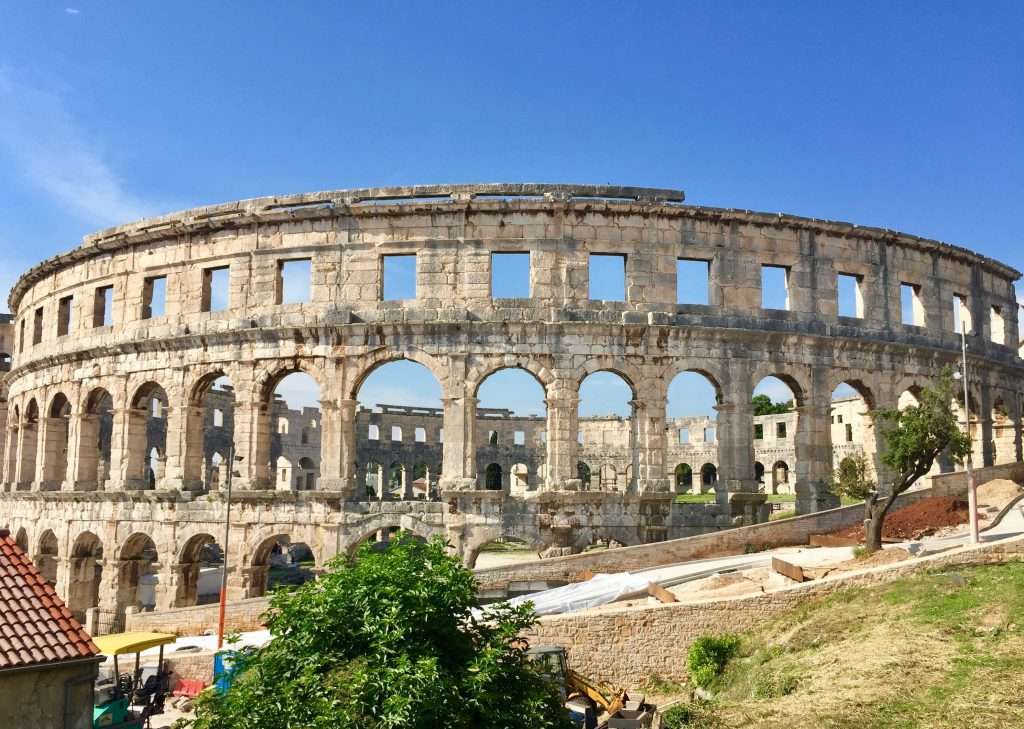
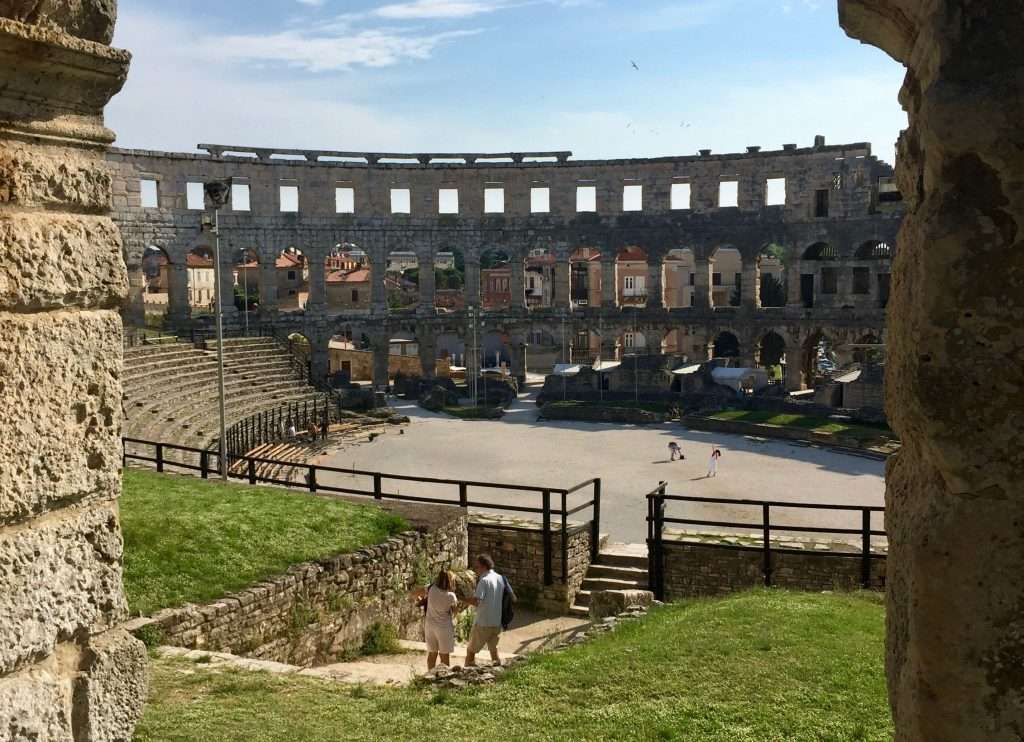
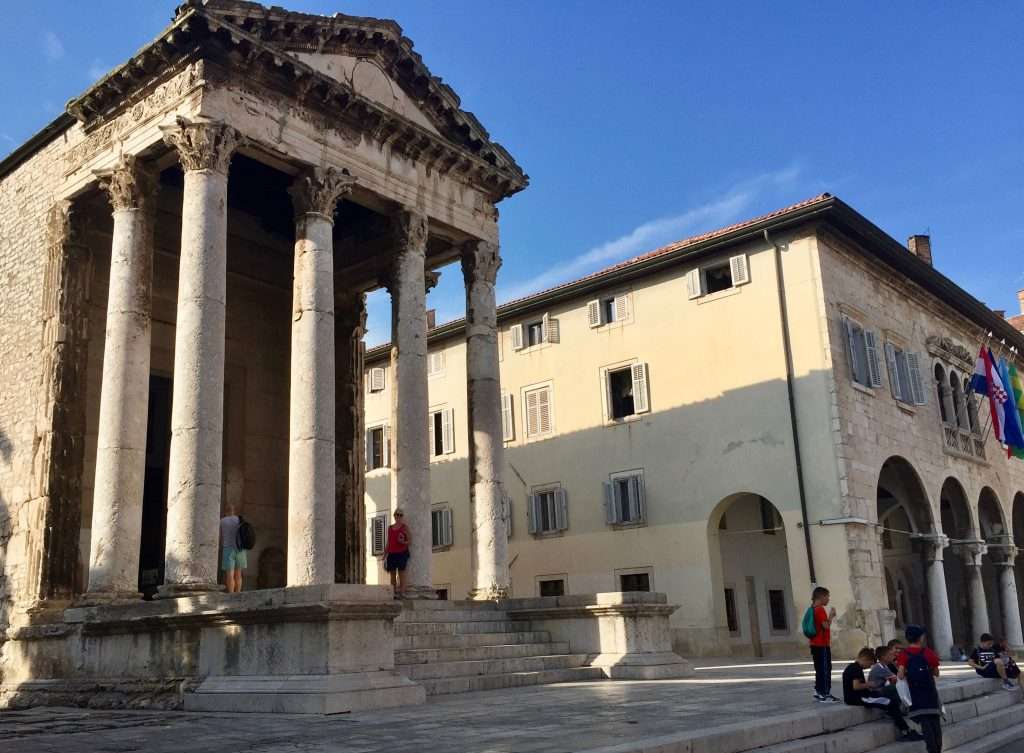
There followed a good sail to Pula, which is an industrial town, slightly tatty, but with excellent Roman remains, notably the well preserved Roman amphitheatre and a temple to emperor Augustus.
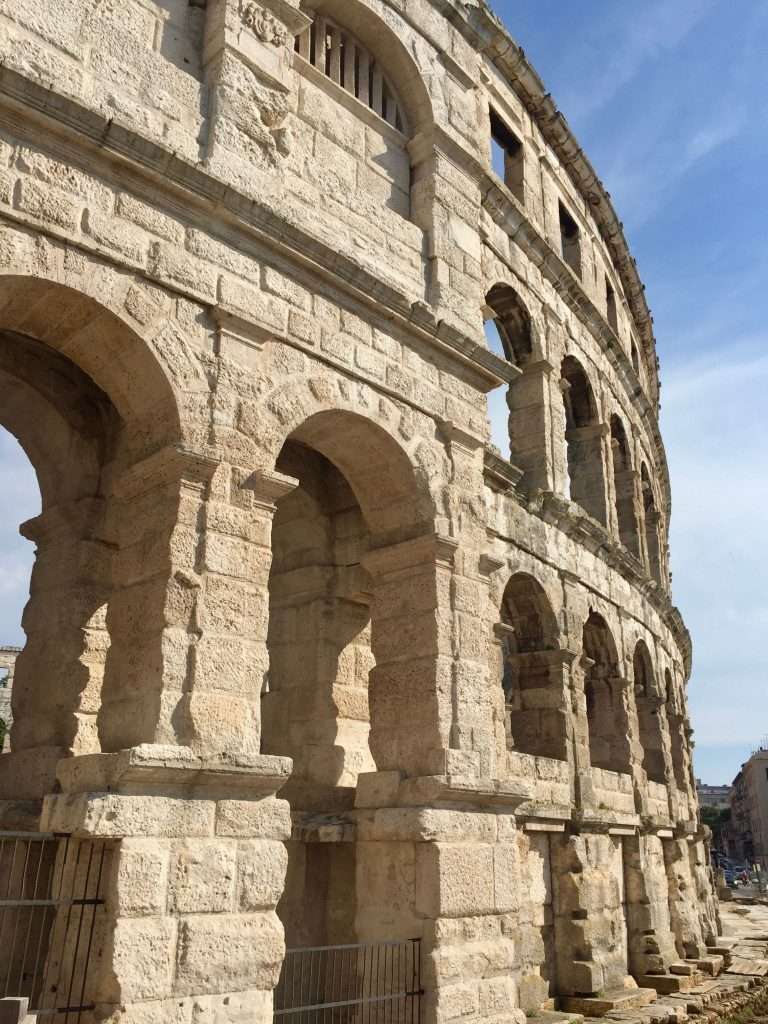
Pula: Roman amphitheatre built AD 41 -80.
Close up – massive masonry.
Amphitheatre interior.
Temple to Augustus.
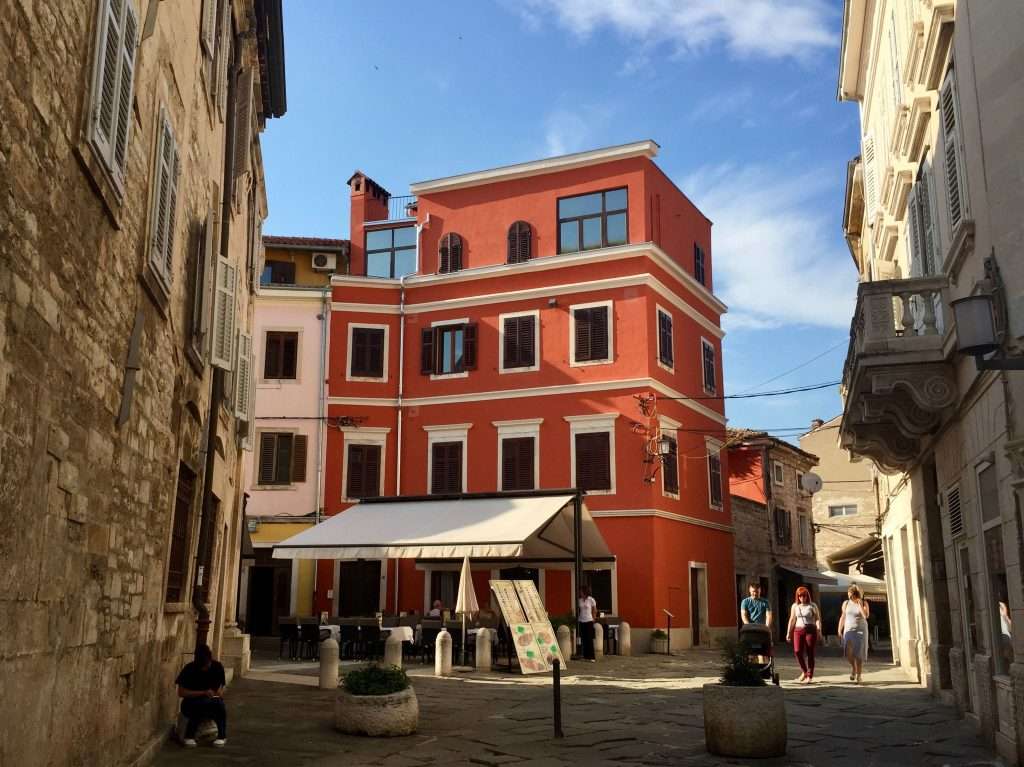
Pula: an older street.
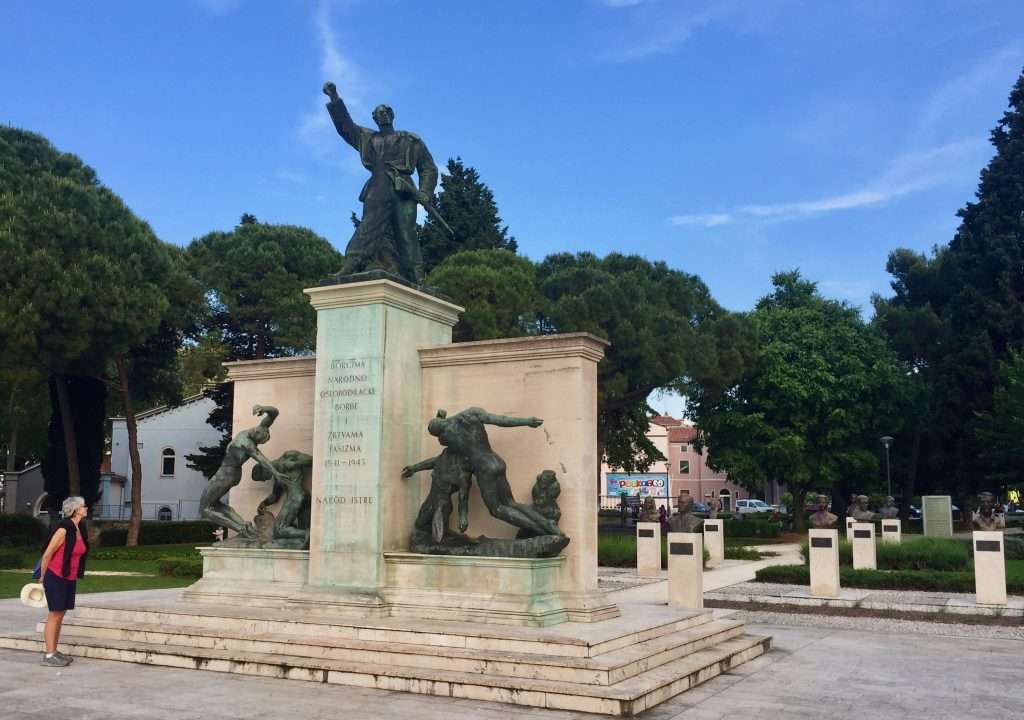
A statue to the Croatian Resistance Movement who fought against the fascist occupation 1941-45.
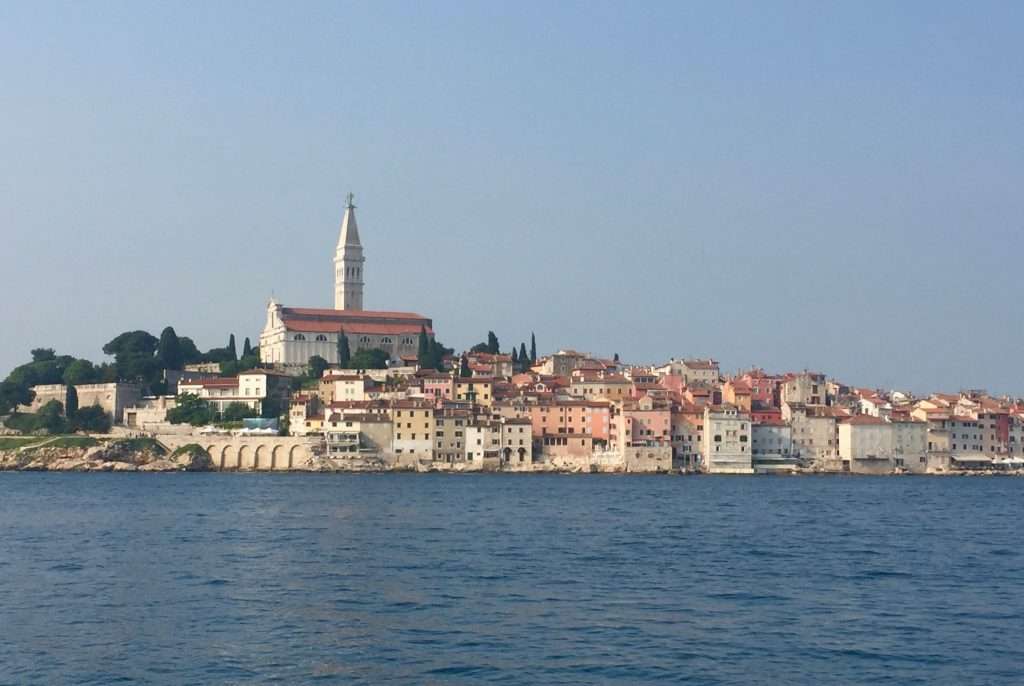
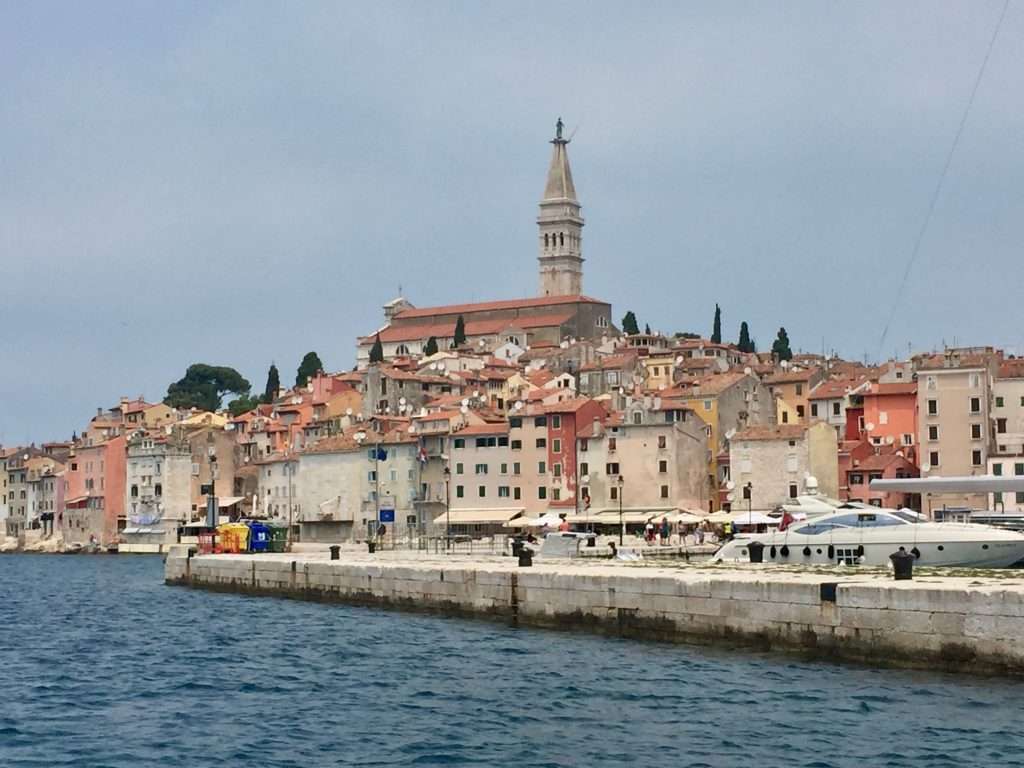
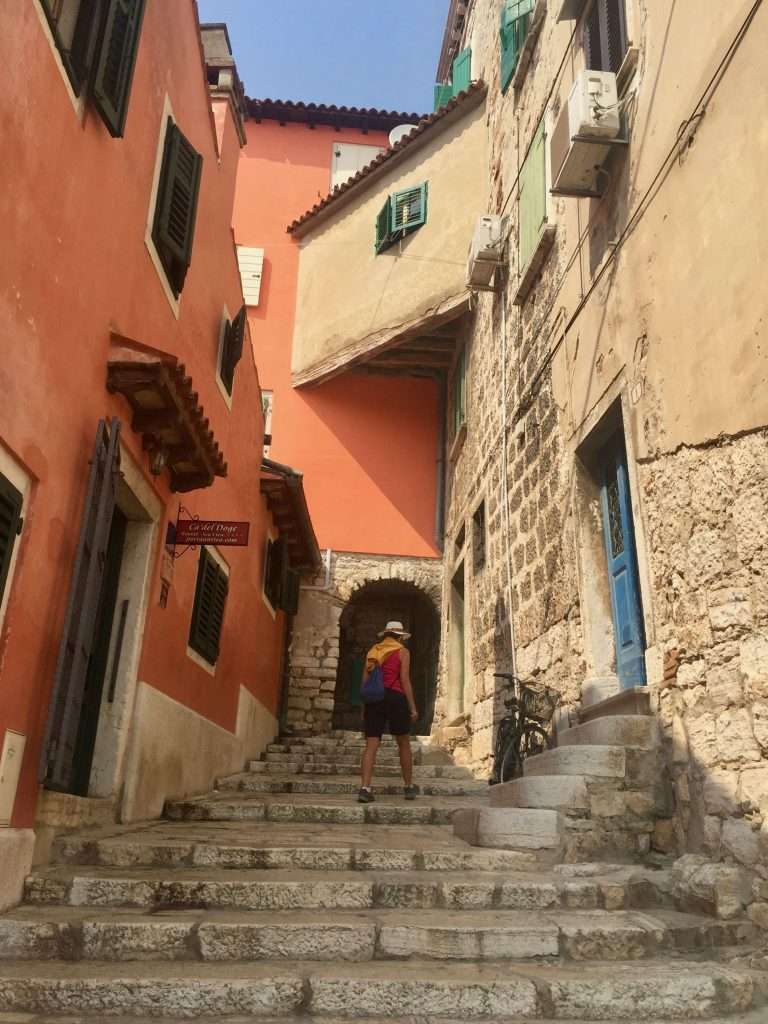
The Scirocco carried us on to Rovinj, a beautiful town well worth a visit. The church of St Eufemija is visible for many kilometres and the old town surrounding the church has a warren of narrow streets, which we explored. We got back footsore to Esprit, anchored in the lee of Katarina island.
View from our anchorage. The church of St Eufemija is visible for miles.
Approaching Rovinj harbour.
Starting the walk up to the church.
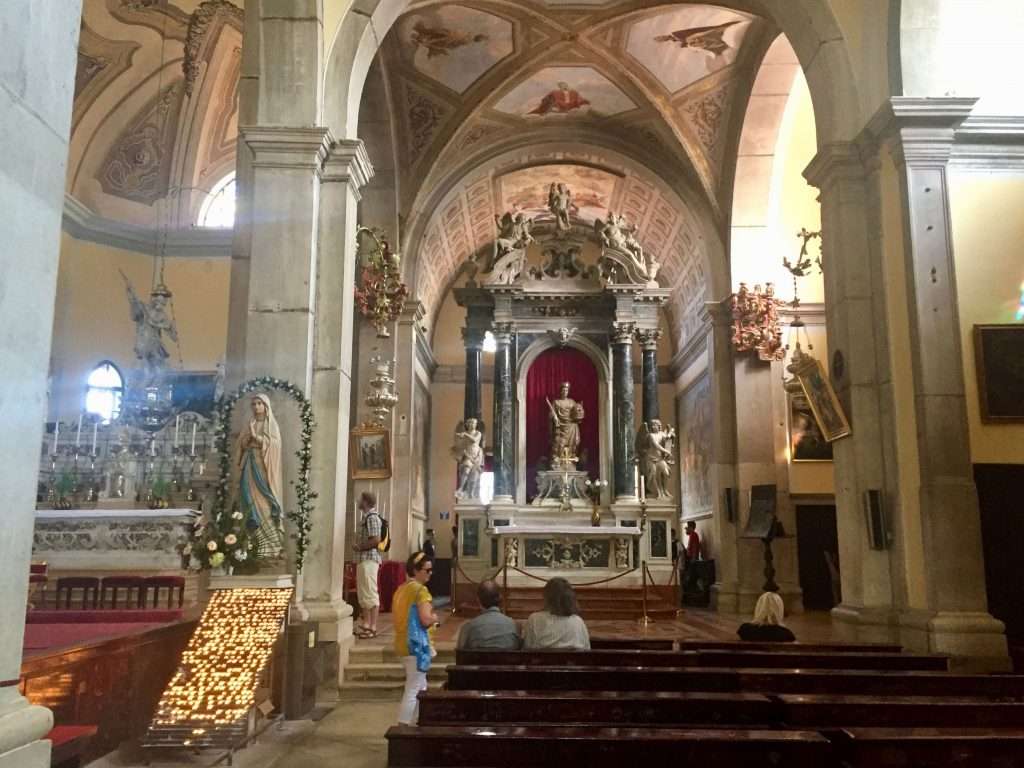
Side vault of the church.
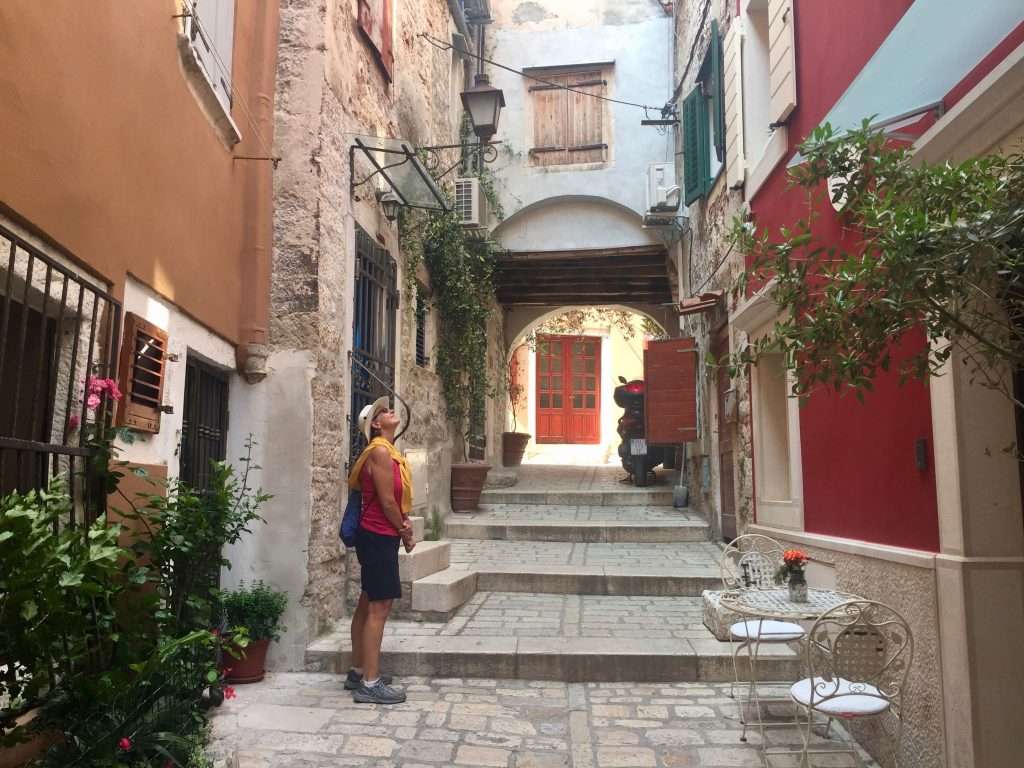
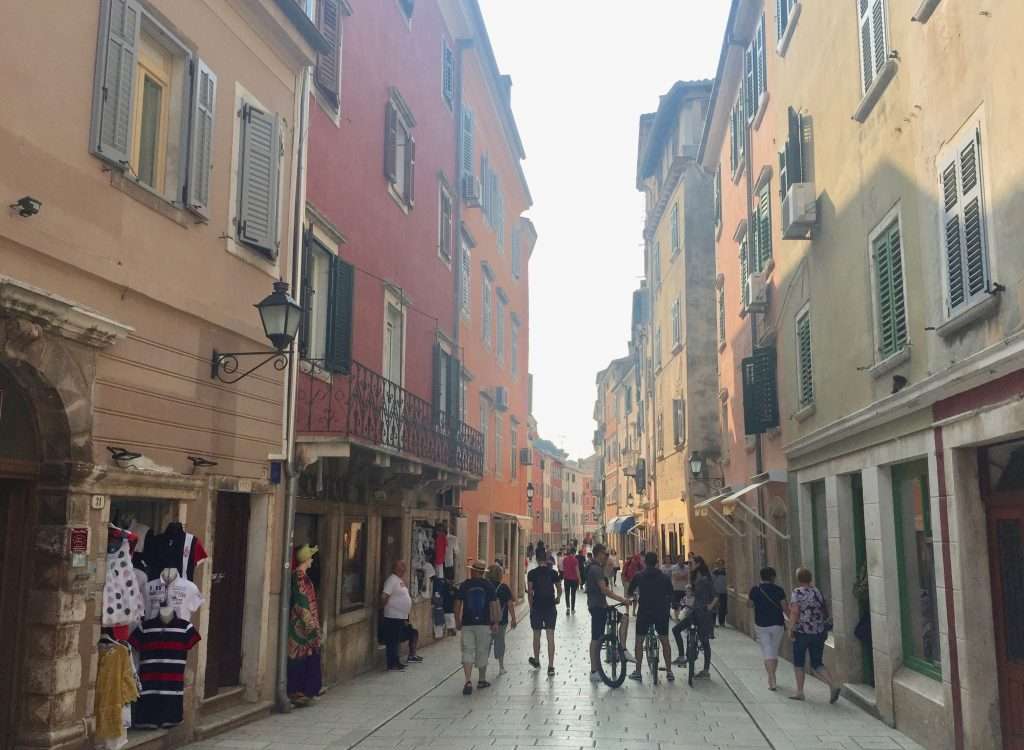
Rovinj street scene.
A wider street.
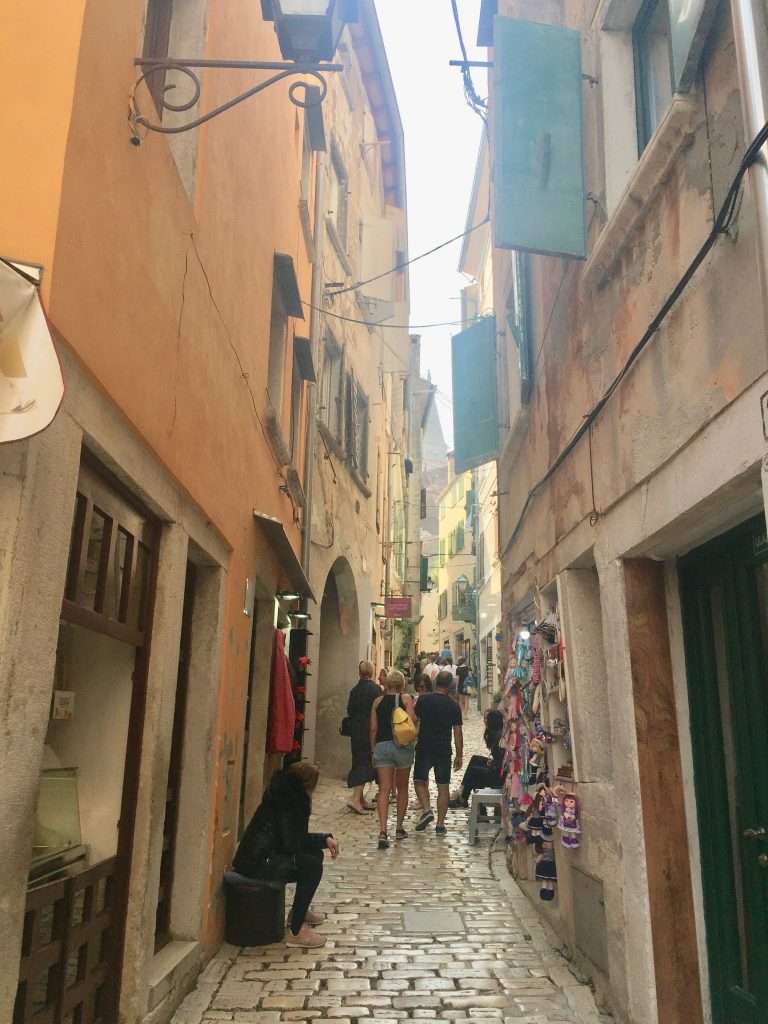
And a narrower street.
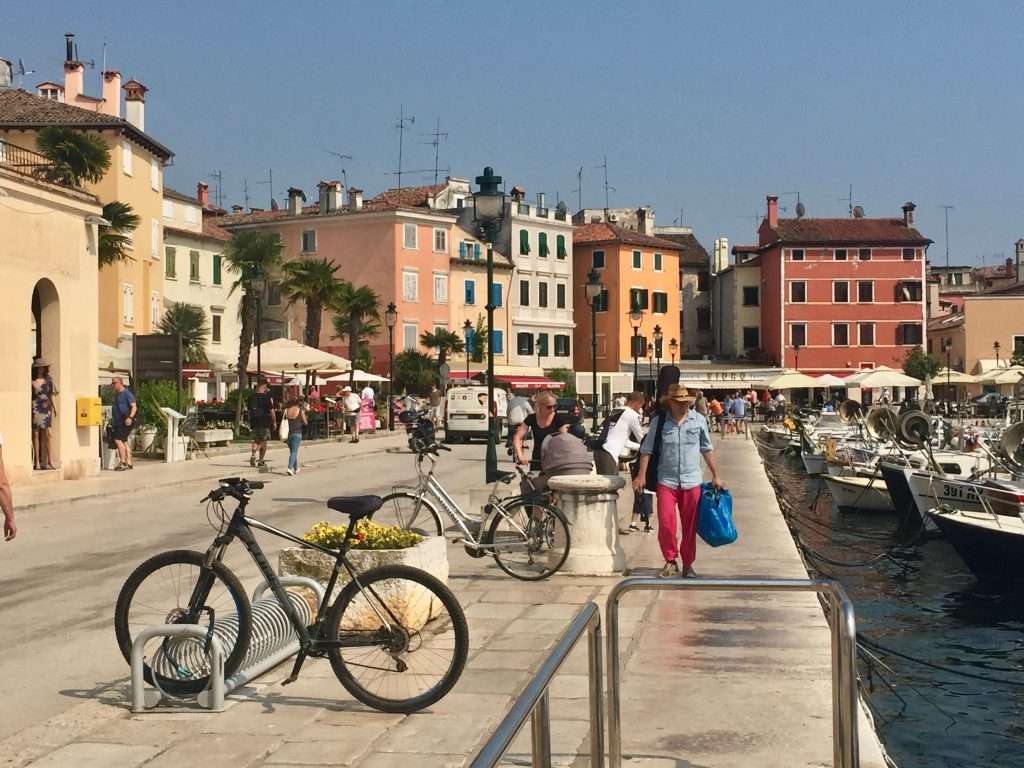
Walking around the Rovinj harbour front.
We had two more stops at Porec and Dajla before reaching Umag, the most northerly harbour in Croatia before reaching the Slovenian border. After stocking up with provisions in Umag, we cleared out with Customs and the police for the 50 nm crossing to Venice, which at 45 degrees north, is as far north as Esprit will sail on this trip.
The expected Bora wind from the north didn’t materialise, so we had to motor the 50 nm across to Venice. Our last visit to Venice was almost five years ago and we were happy to be back in one of our favourite cities. The Venice Biennale is on at the moment, so we were able to visit a number of very interesting exhibitions. It is tempting to include dozens of photos of Venice, so please indulge me with this small selection below.
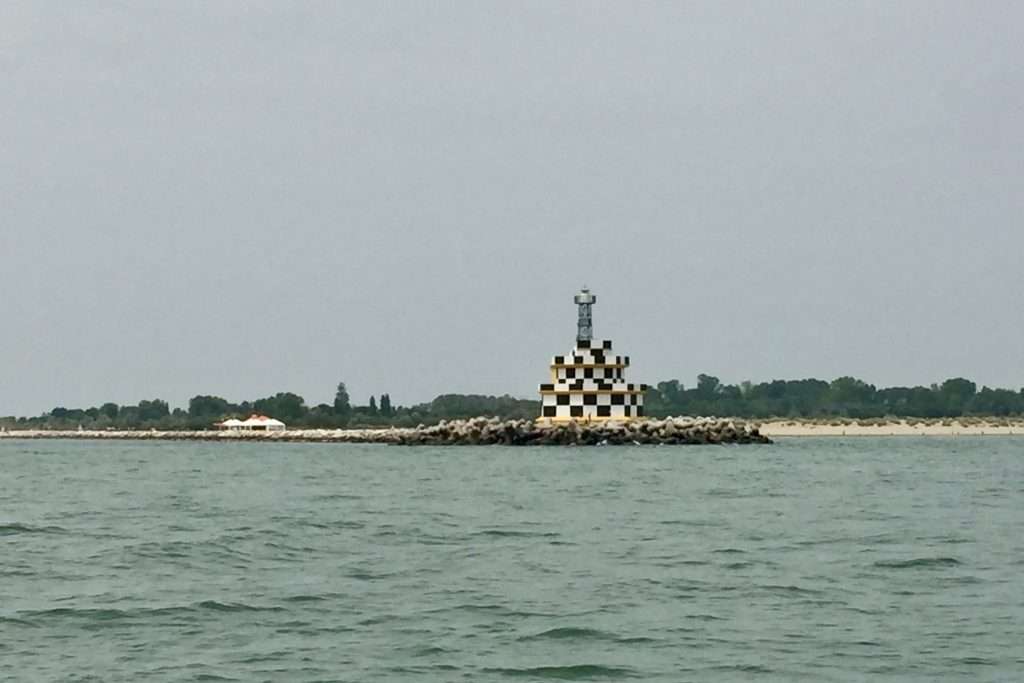
The prominent lighthouse at the Lido entrance to the lagoon of Venice.
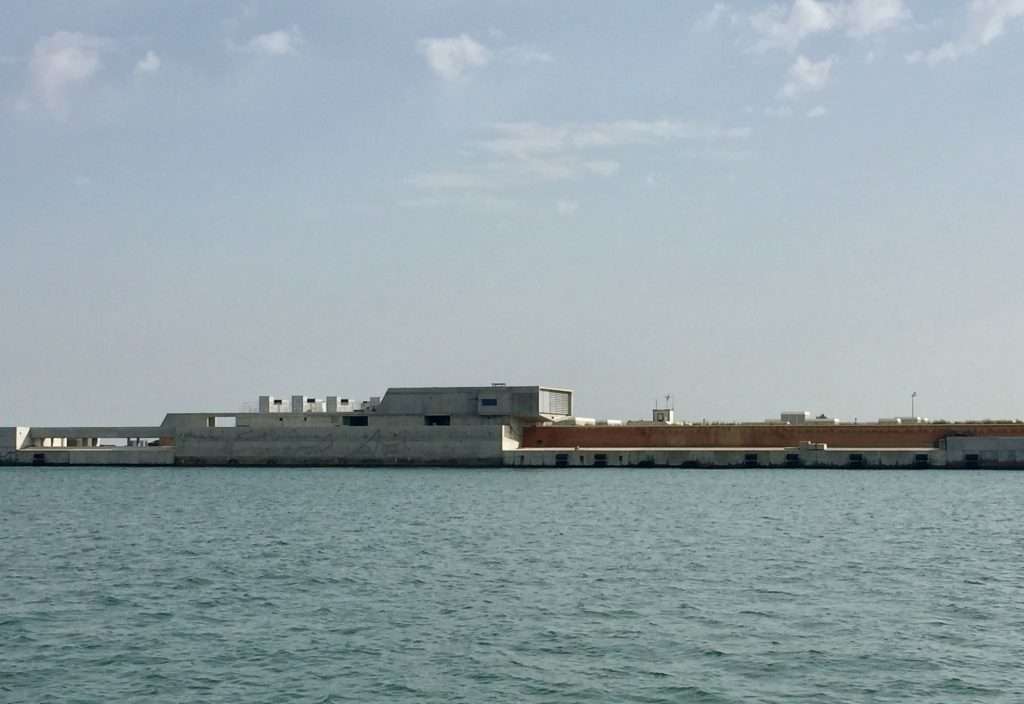
The impressive flood control gates at the Lido, installed to manage future flooding of the lagoon.
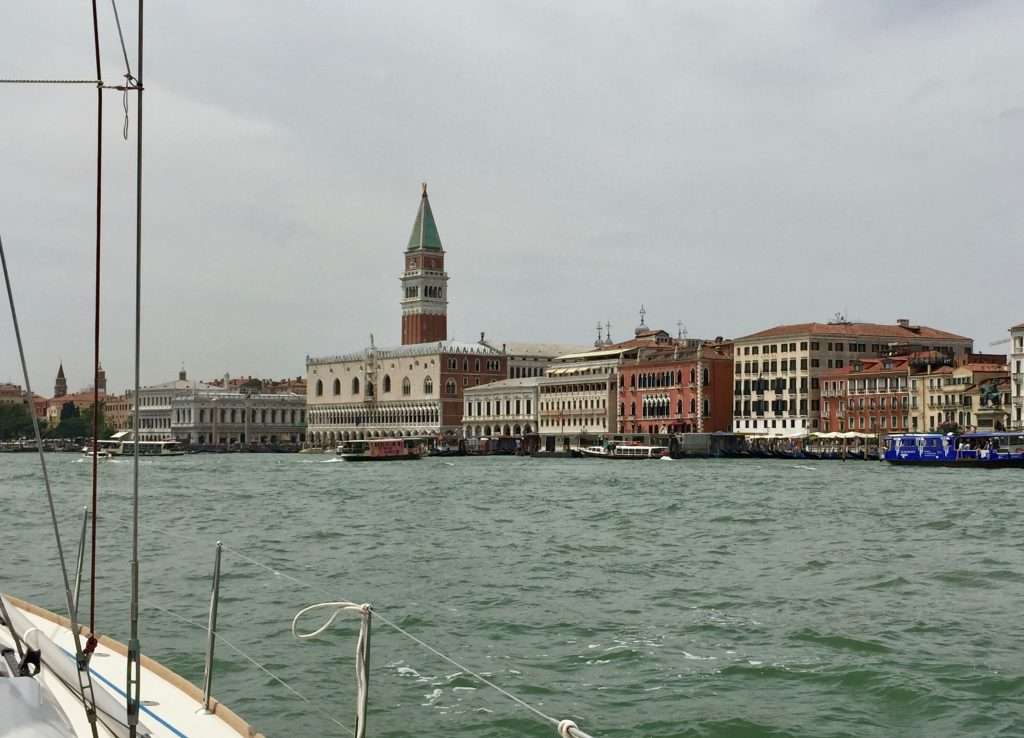
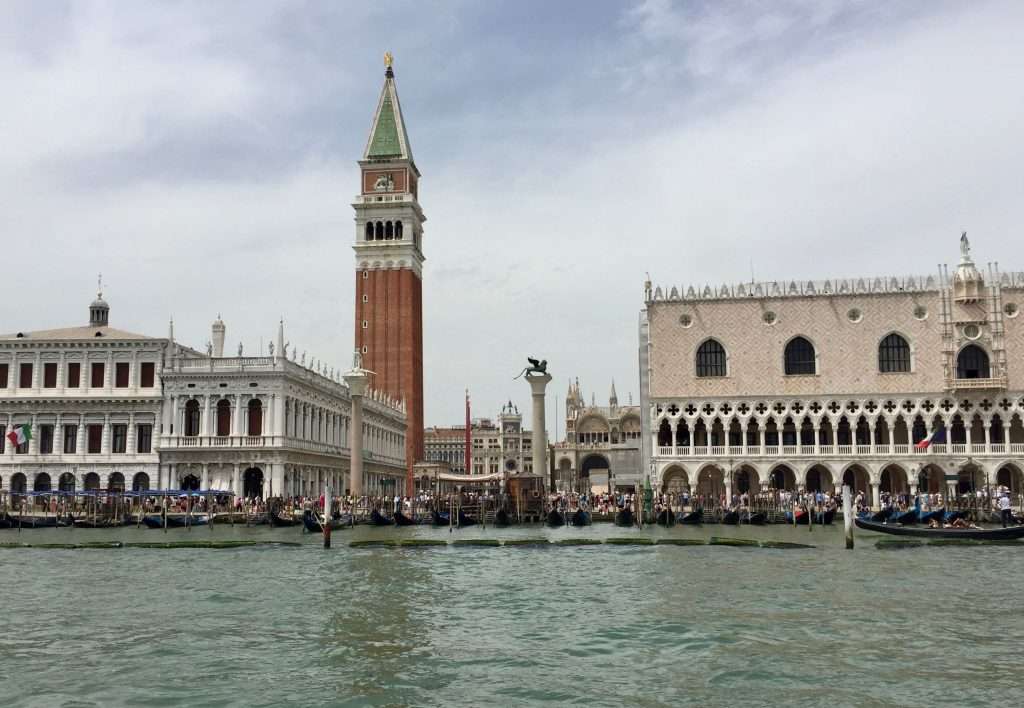
Approaching Piazza San Marco.
Off Piazza San Marco.
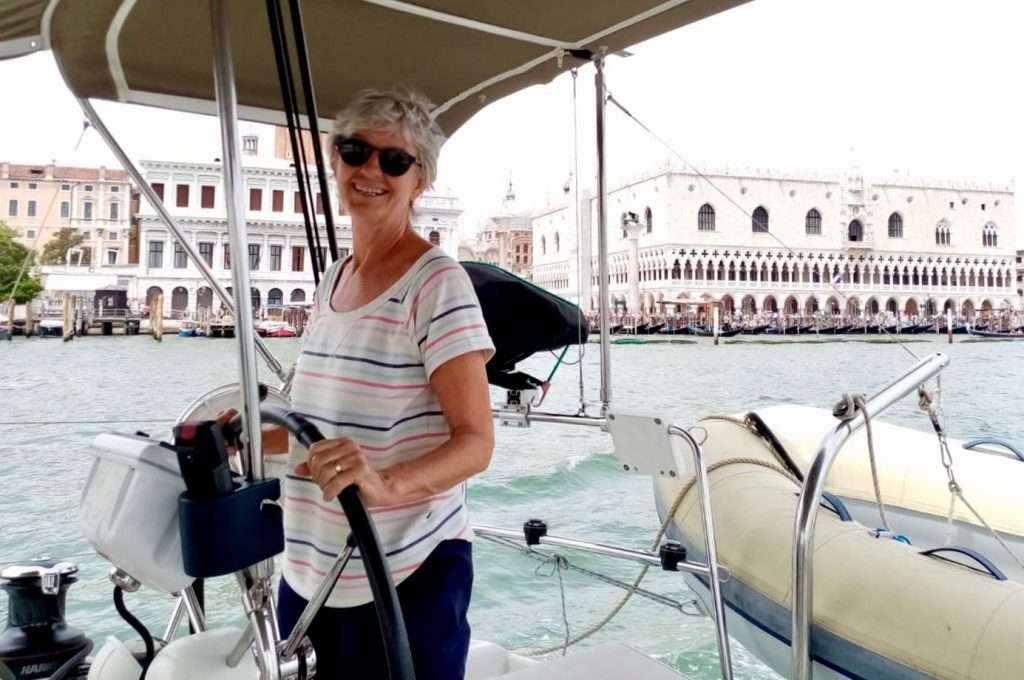
Annie, my Gondolier, weaving through the water taxis and vaporettos off St Marco.
Off Riva St Biagio.
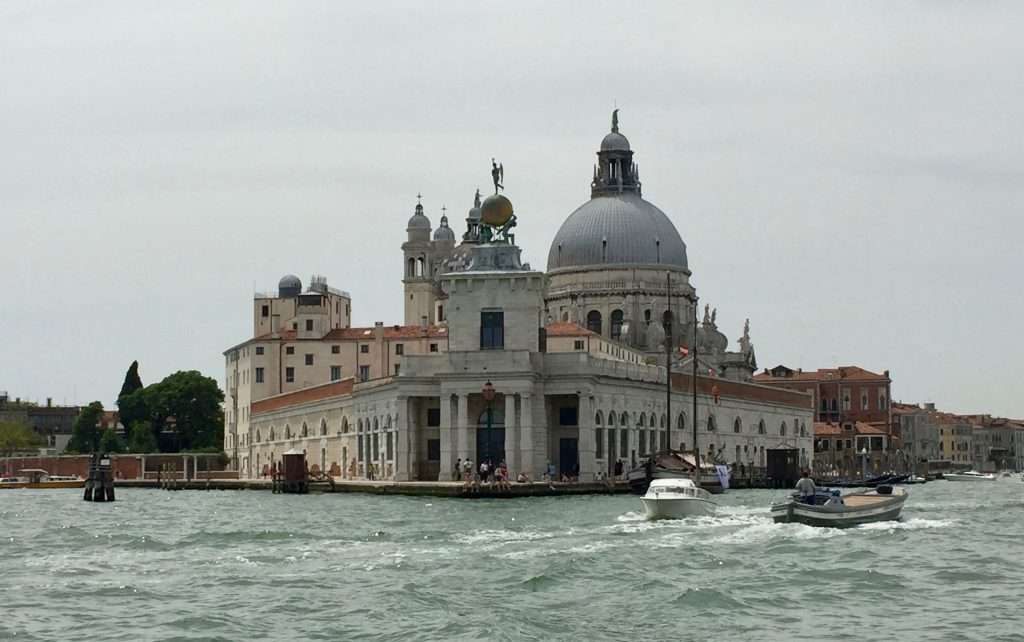
Santa Maria della Salute.
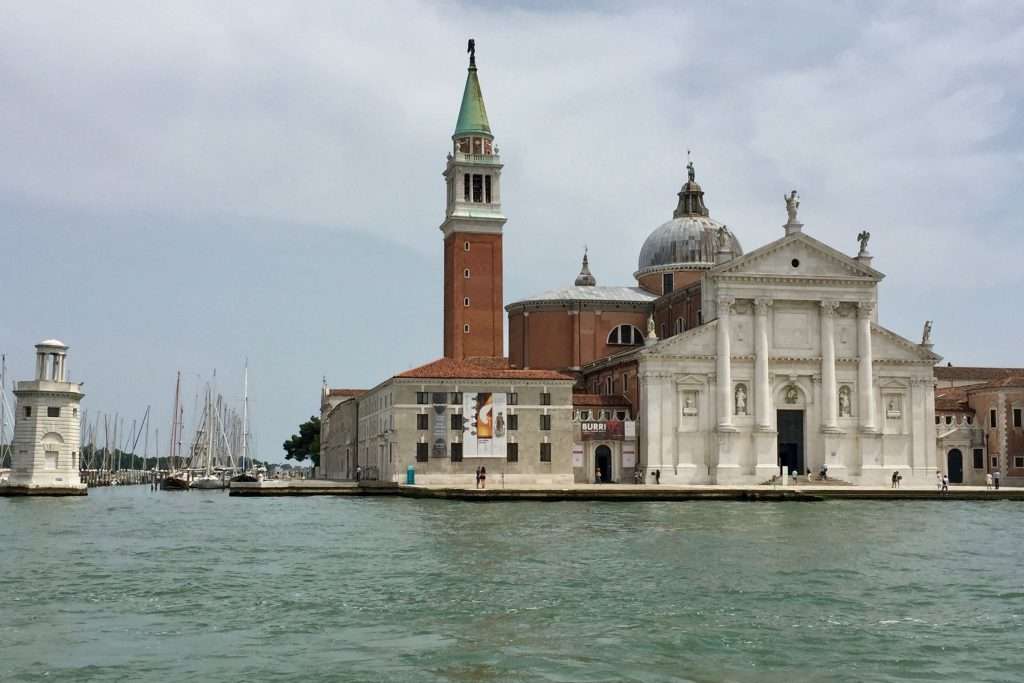
San Giorgio Maggiore.
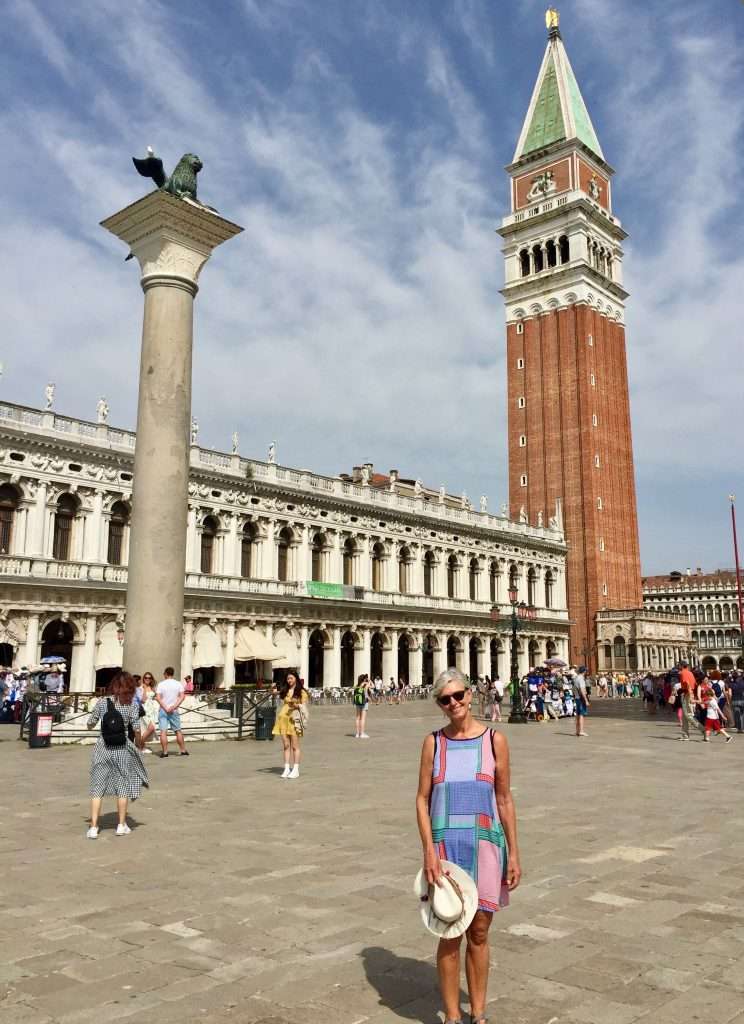
Back on land: The belfry of St Mark, with the lion of Venice on the column.
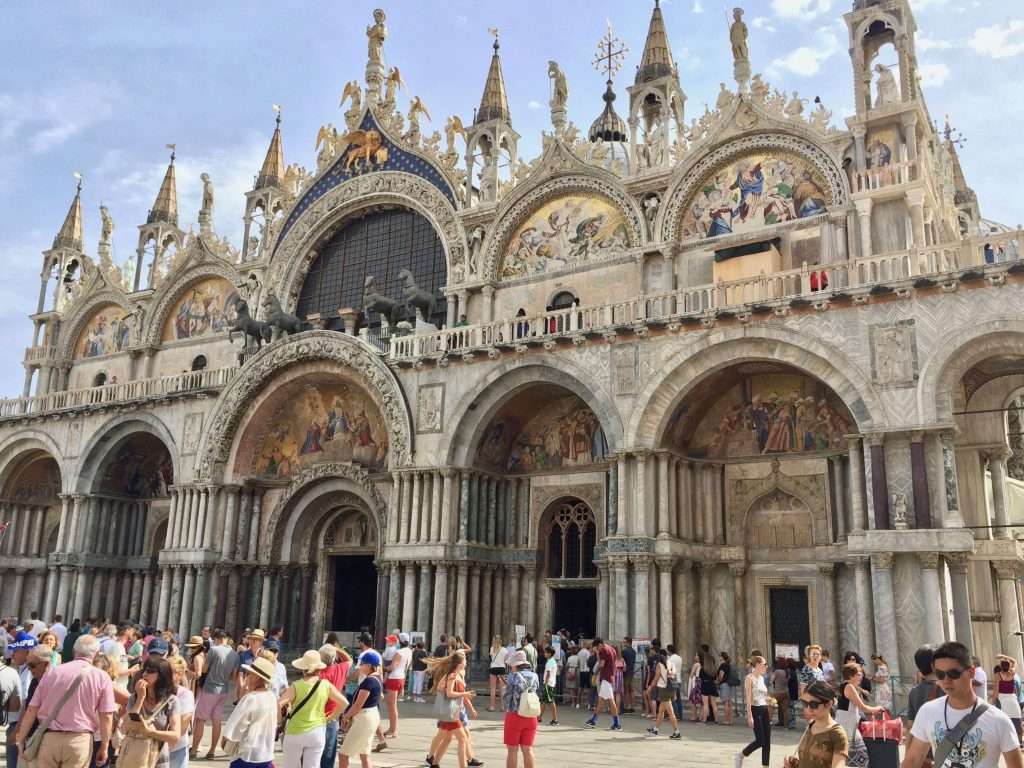
The Basilica di San Marco.
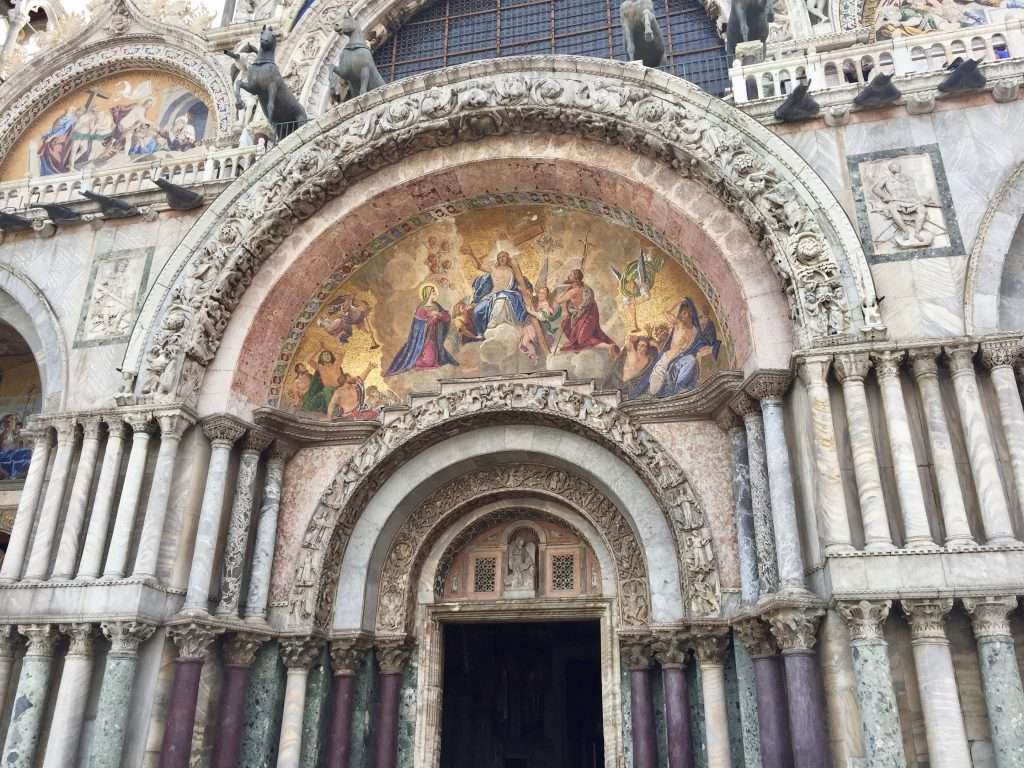
The architect liked columns – lots of columns.
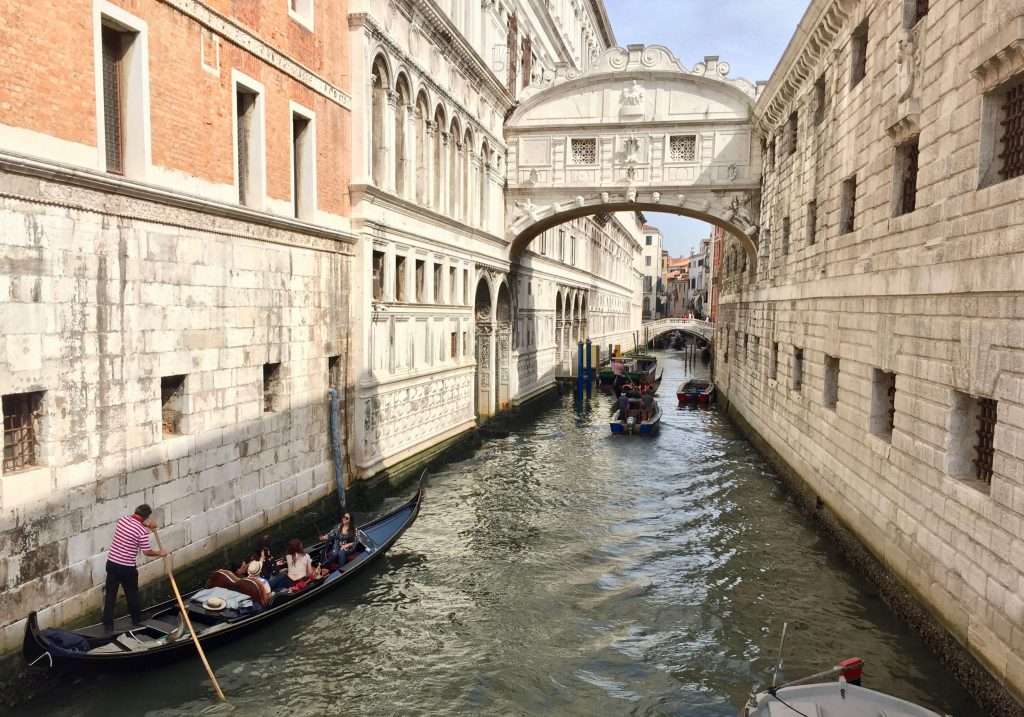
The Ponte del Sapiri between the Palazzo Ducale and the old prison.
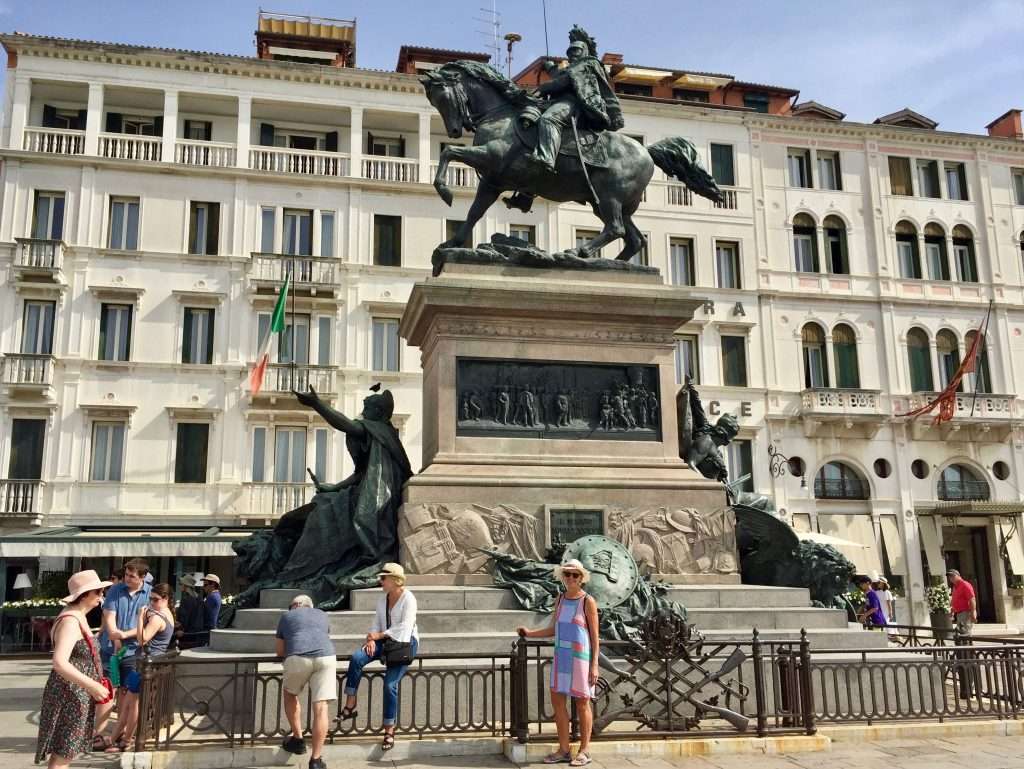
Heroic monuments.
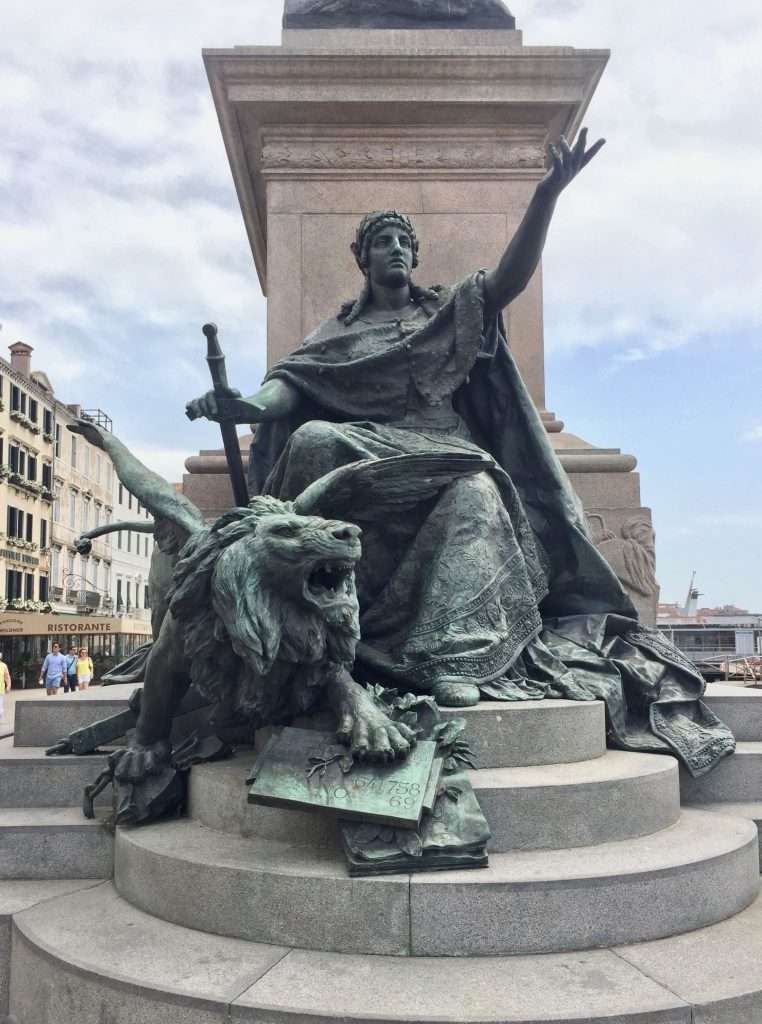
With the ubiquitous lion.
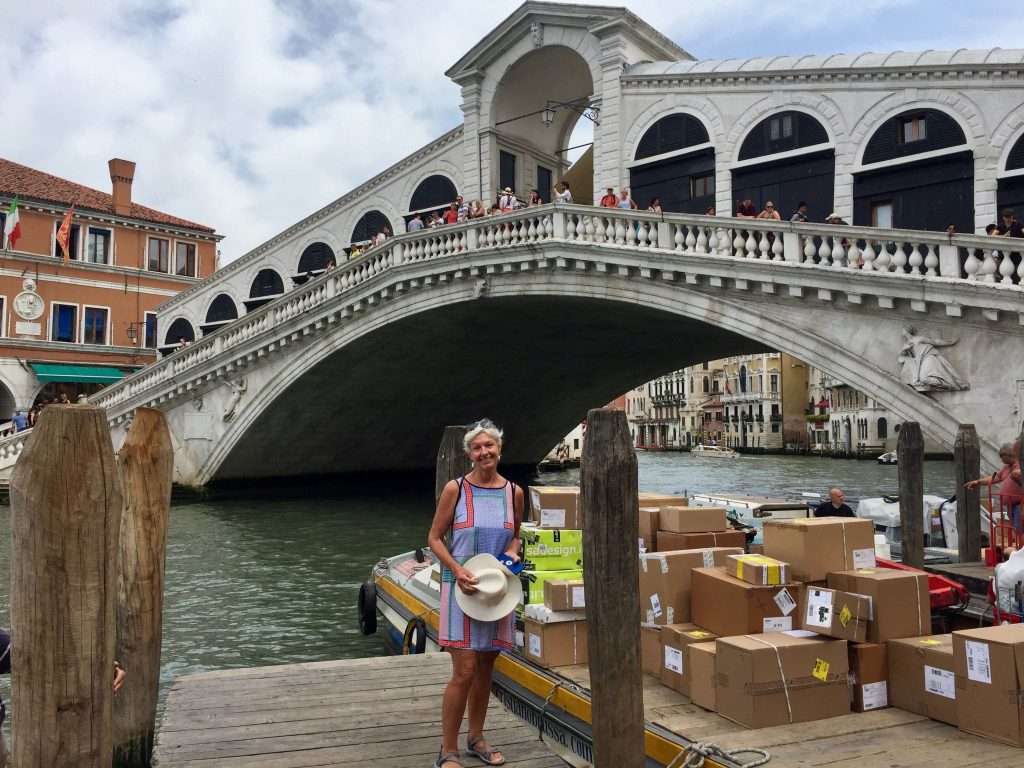
The Rialto bridge.
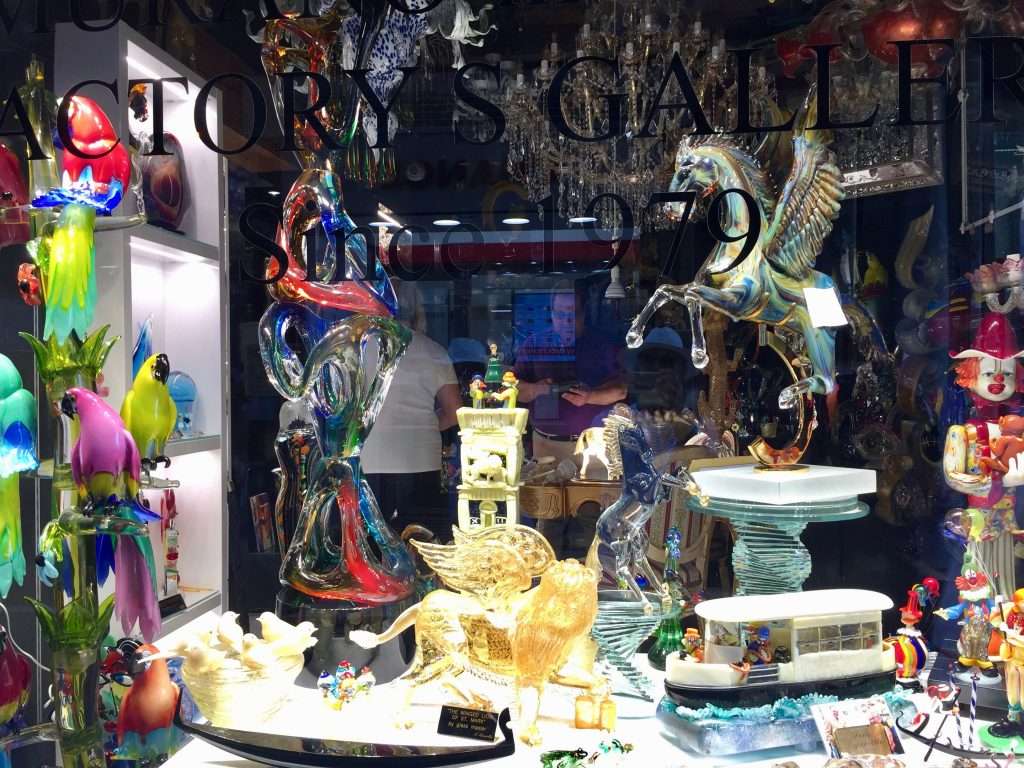
Amazing Murano glassware in a shop window.
Interior of La Pieta church – also called Vivaldi’s church.
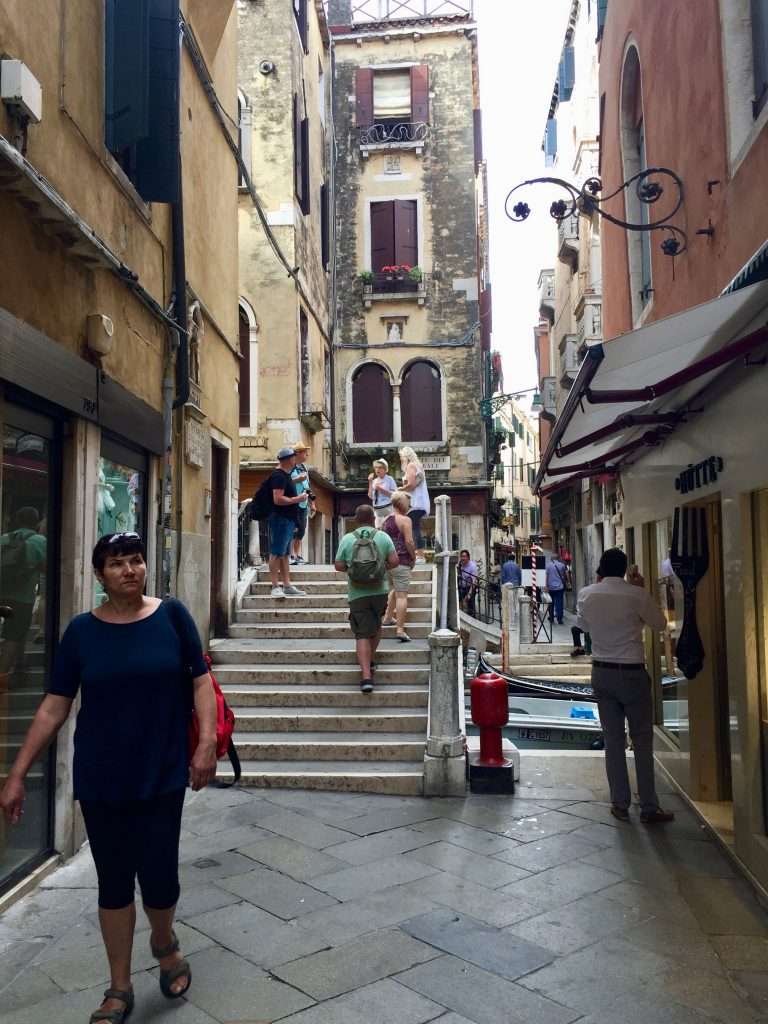
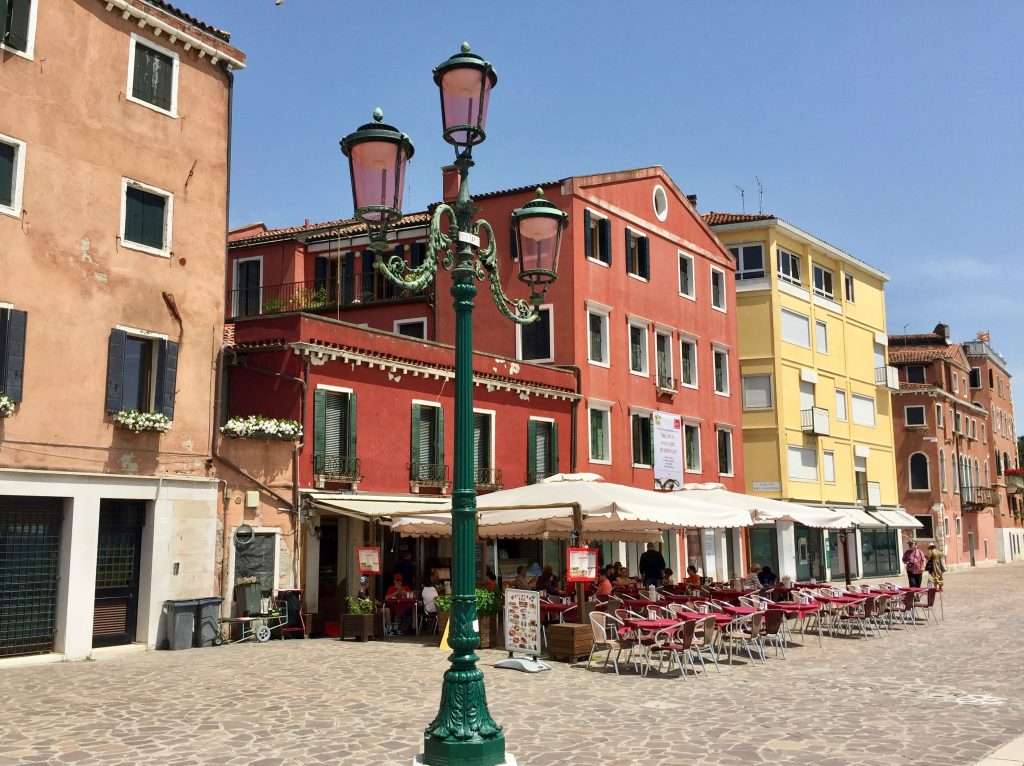
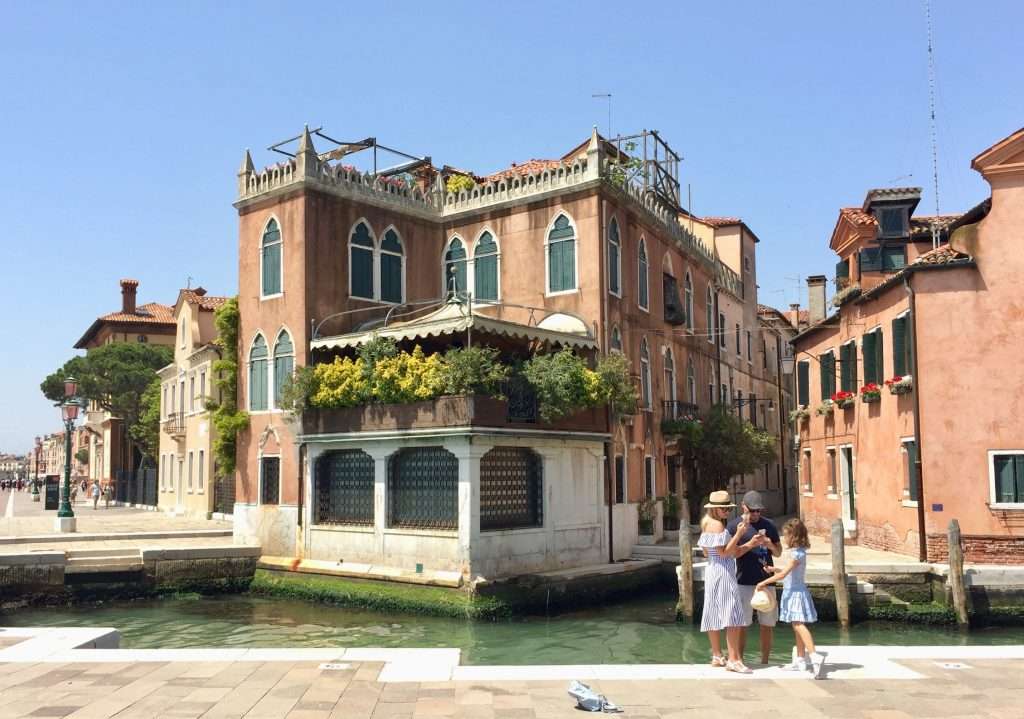
Following are a few street scenes. Don’t ask me the names!
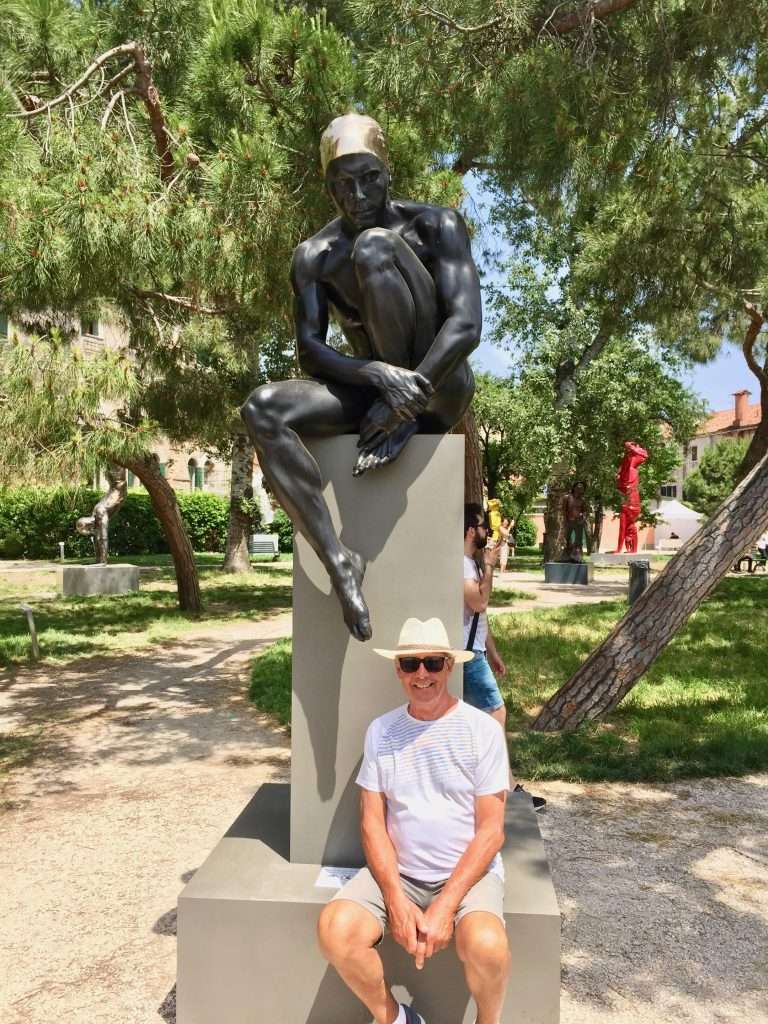
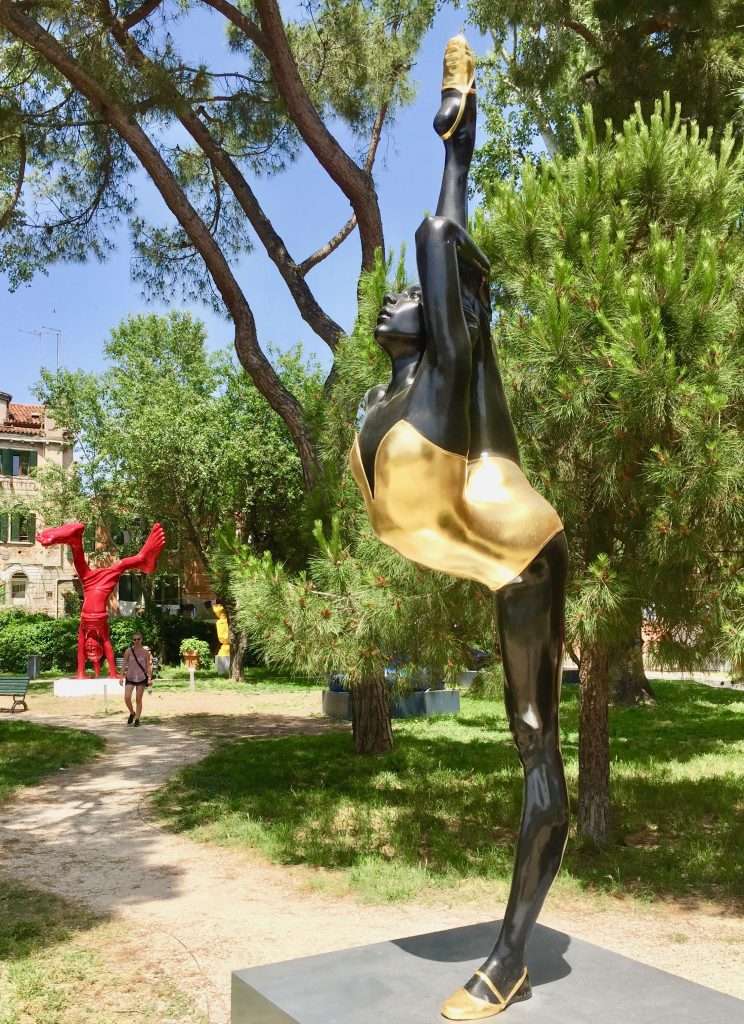
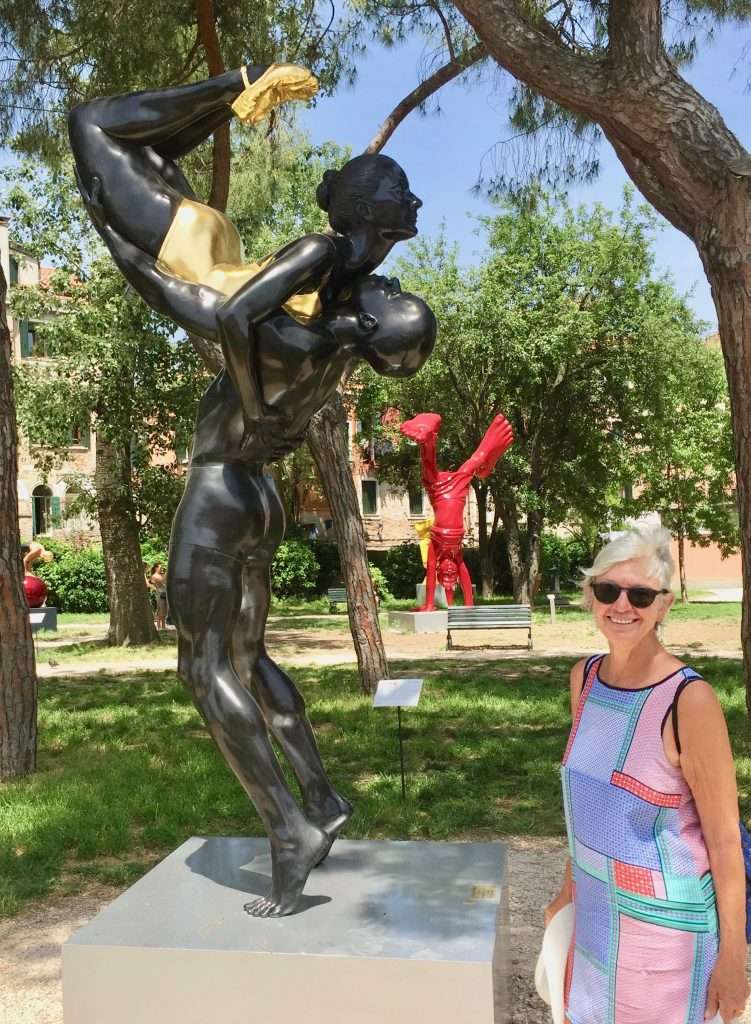
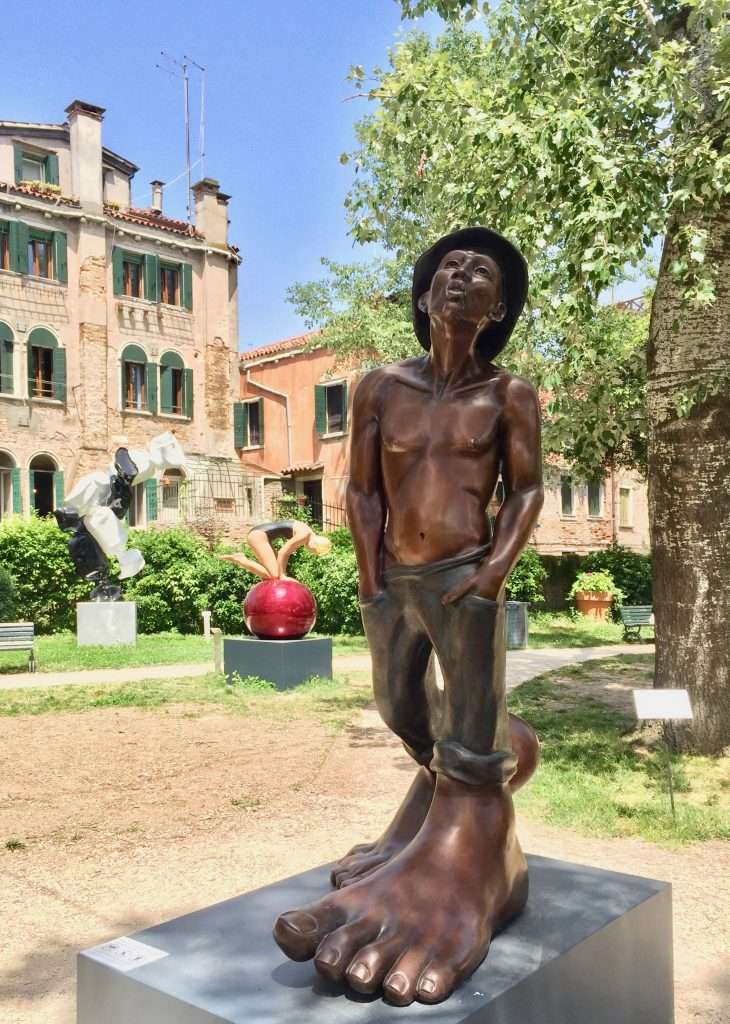
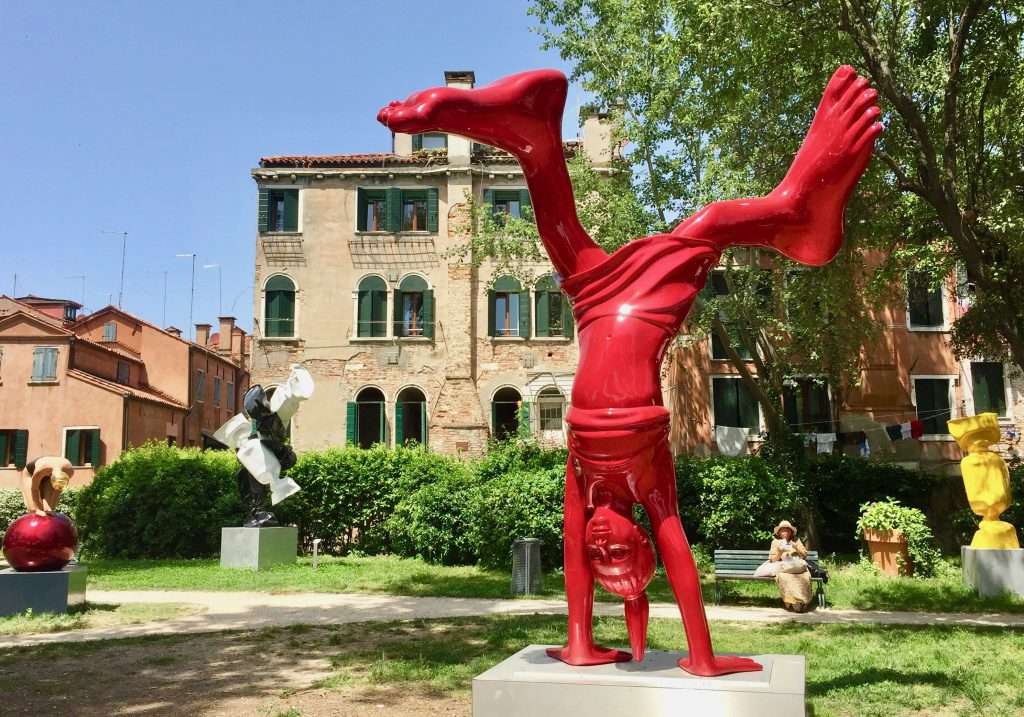
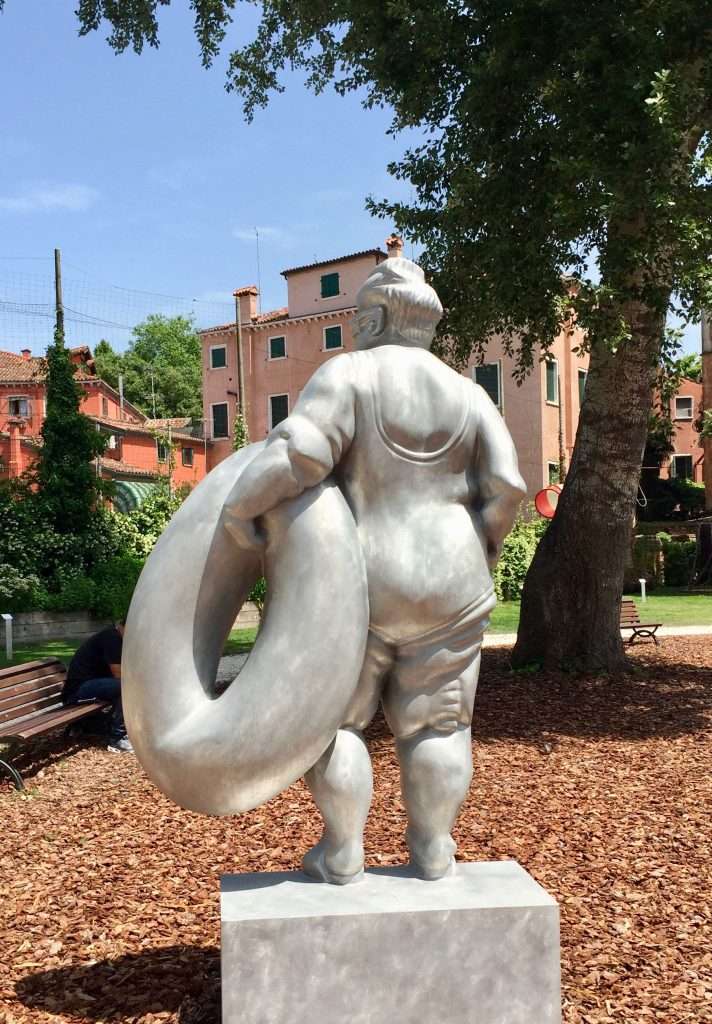
Finally, some sculptures at the Venice Biennale. Evidently the black and gold sculptures are in bronze, highly polished and painted. The futuristic coloured sculptures are cast resins a la Jeff Koons work.
My sort of gal – in traditional concrete.
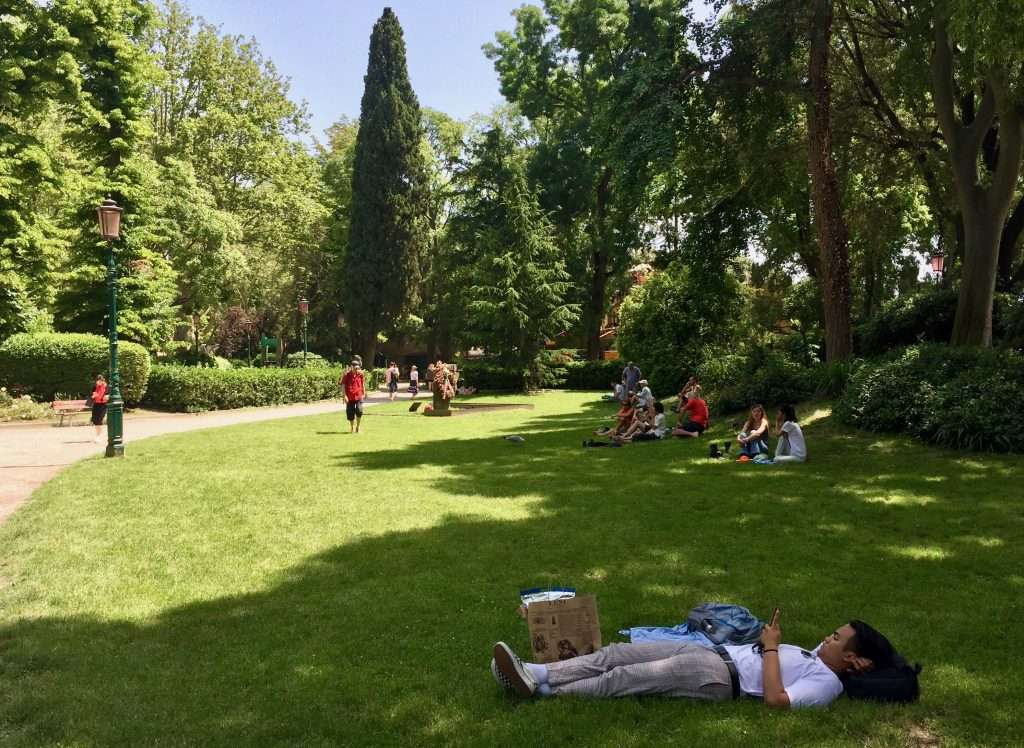
After lunch, a little recovery lie down in the park outside the Biennale.
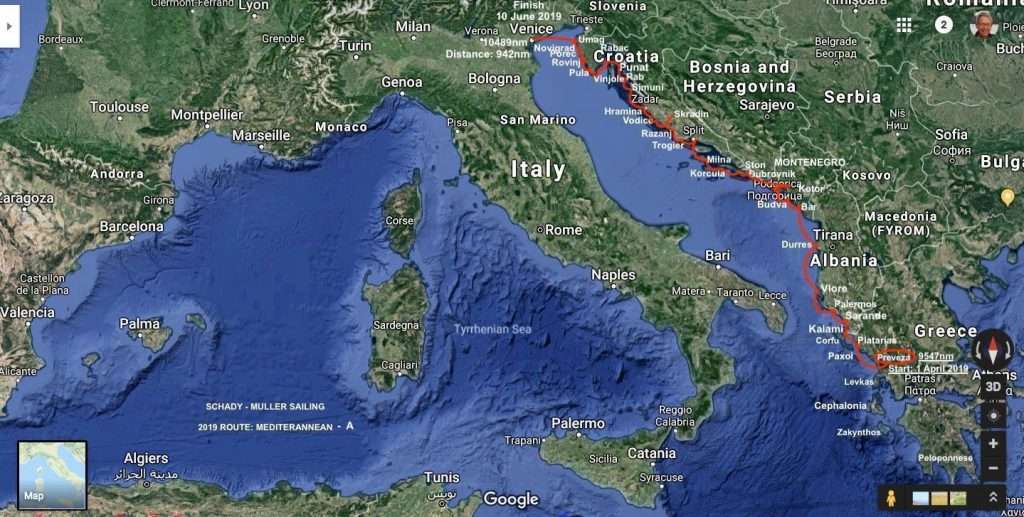
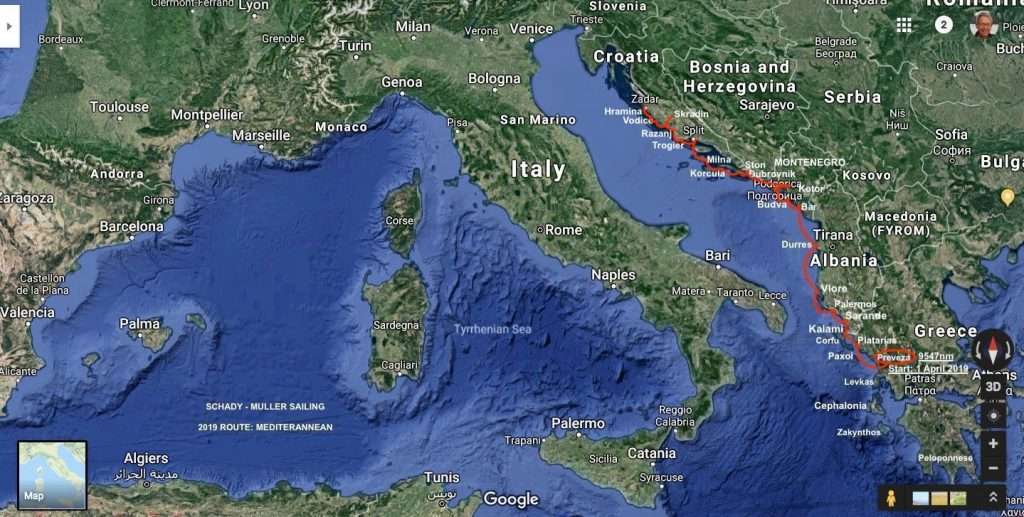
To sum up: Our route north west.
We will now head back to Umag and then sail south east through the outer Croatian islands, before crossing to Bari in Italy.
After saying goodbye to Reini and Lynne, we spent another two days at Trogier Marina before setting sail to go northwest up the Croatian coast. The weather continued to be wet and cold, proving that at 44 degree latitude north in the Adriatic Sea, summer comes later than our friends who were sailing in Greece and Turkey, were experiencing at 37 degrees north.
Leaving Trogier old town.
Anchored in Vinisce.
Vinisce waterfront.
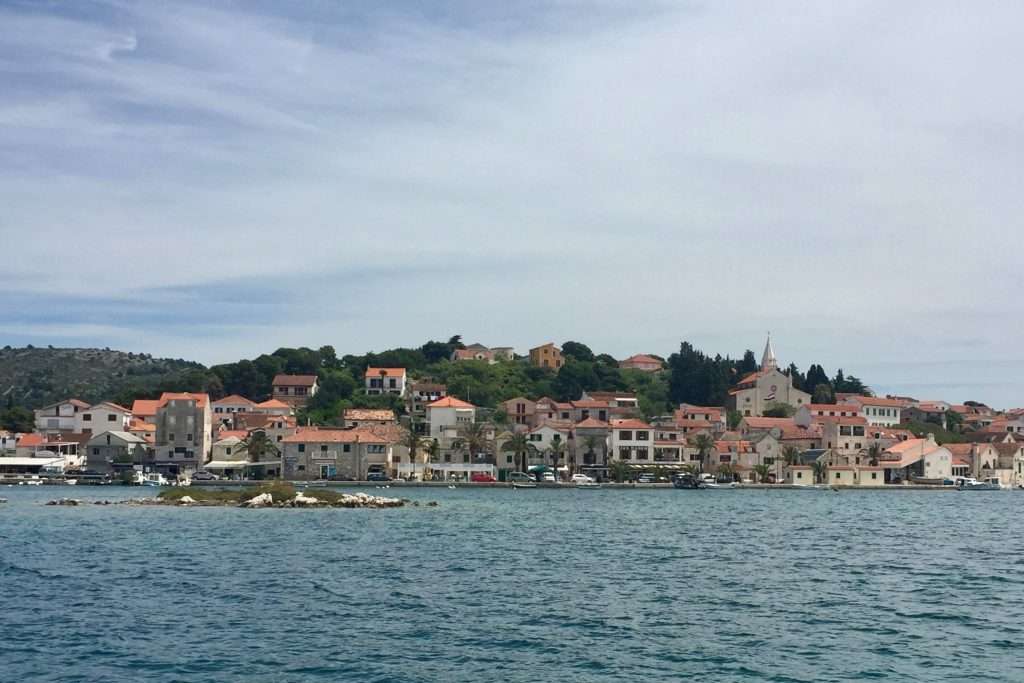
The first three days provided little in the way of wind, which meant a lot of motoring with fairly average scenery on land of new developments. We stopped at Vinisce, Rogoznica and Razanj. Once we headed up the Luka canal, the scenery improved as we reached Sibenik.
Sailing past Sibenik.
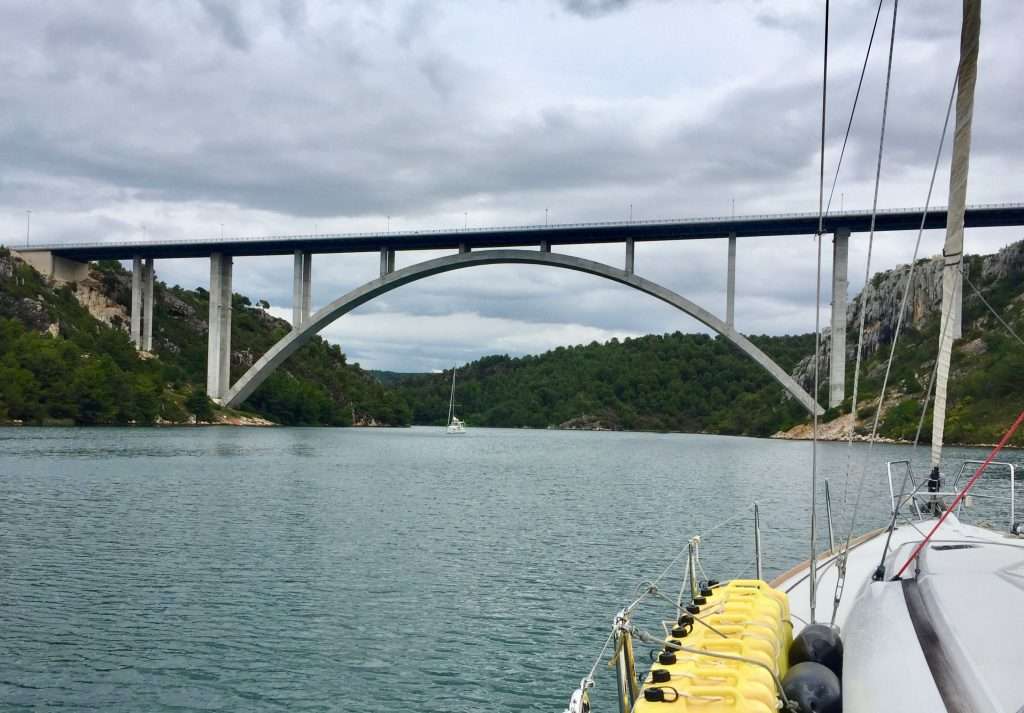
We were now in a massive inland waterway that took us about 10 nm inland to Skradin, which is as far as Esprit could go before a low road bridge. Tickets from the National Parks allowed us to take a ferry another 3 nm into the Krka National Park to the Skradinski Buk waterfalls.
Esprit’s route on the vast waterway of the Luka canal.
Going under the road bridge to Skradin.
Skradin town.
One of the many swans that welcomed us.
With the rains we had over the previous two days, the waterfalls were in full flood and quite beautiful – it reminded us of a mini version of the Iguazu falls between Brazil and Argentina. Backon Esprit, the wind picked up to 40 knots from the northeast and we spent an anxious night anchored off Skradin town on the Krka river.
Entrance into the Krka Park.
The travertine falls.
More falls.
More falls as we climb higher.
Water everywhere.
Walkways so close, you can touch the water.
At first light the following morning, we ducked downstream to Vrulje to get into the lee of the land. Charlie, a local fisherman came over to suggest we re-anchor further into the cove, as there was an even stronger westerly coming through that evening. The following day, we motored to Zaton village where the anchorage was too narrow for us, so we carried on to Sibenik, and found shelter in a bay south of the town.
Zaton village.
This was a good choice, as we were near a ships chandler where we bought a discharge pipe for the toilet to the holding tank, to replace a blocked pipe. Four hours later and a new passage cut through two bulkheads with a 55mm hole saw, the job was done. We settled down with celebratory drinks, as it was the 15th May, our third anniversary since sailing out of Sydney.
Back in Sibenik, the barrel vaulted cathedral.
We enjoyed Sibenik before motoring to Vodice, seven miles to the northwest. The sun came out at last and we explored the town to buy fruit and veg at the market and groceries, wine and beer at the Tommy hypermarket. The sunny period was short lived as it clouded over the next day, but with a nice 25 knot south easterly to take us 20 nm north to Hramina where we found shelter.
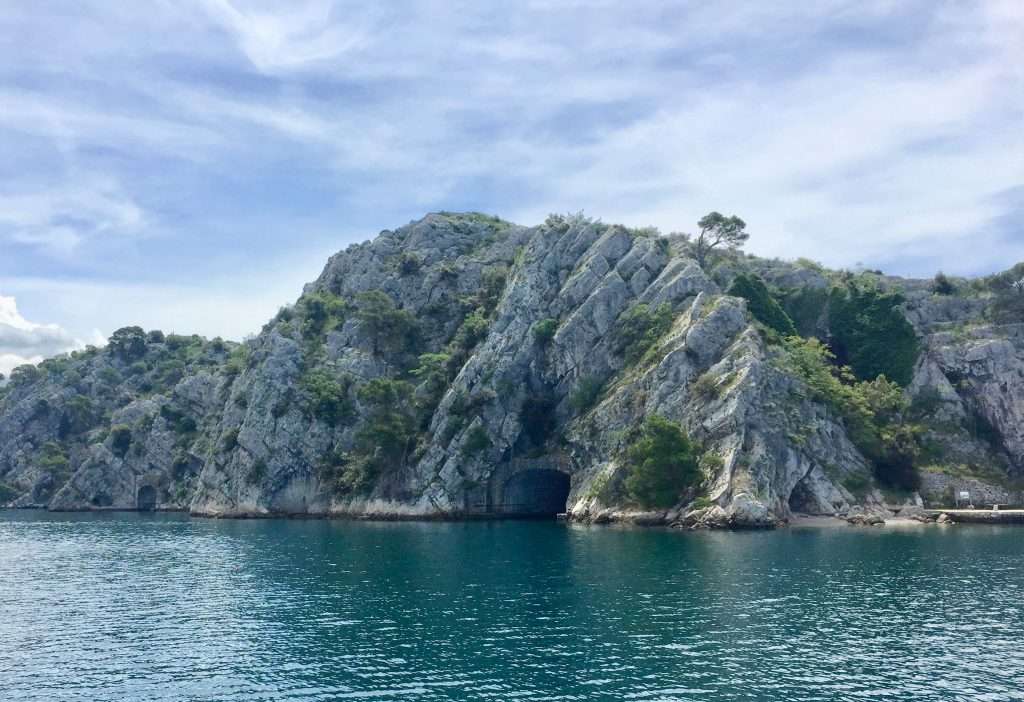
Leaving Sibenik – WW2 shelters for submarines.
The Venetian fortification at the entrance of the Luka canal.
Opposite it, the lighthouse.
What’s wrong with this picture? The new hotel next to the town of Vodice.
Hramina, like most of the towns further north, has a marina for the exclusive use of a charter company. The company at this marina for example, had more than 80 vessels, of which about half were Jeanneau SO 439 monohulls like Esprit, with also smaller and bigger Jeanneau’s. These were in the company of about 20 American Lagoon catamarans.
Lagoon of course, wins the prize for building floating camper vans that least resemble sailing vessels, often challenged by Leopard catamarans. However, the Hummer military combat vehicle aesthetic of Lagoon cats, tip the scales in their favour. Different strokes for different folks.
Hramina peninsula – the sunken Roman town of Colentum at top left.
Colentum partially visible.
Walking up Gradina hill – the church and cemetery below.
View from Gradina to Hramina marina.
View up to the islands.
Fresh calamari paella from the market.
After some good walks around Hramina, a strong south easterly took us swiftly to Zadar, a large city, 22 nm to the northwest. We will spend a few days here to get prices for a new anchor windlass, as the original one sounds as though it will kark it at any minute. So, rather than wait for that surprise and pull up the anchor and chain by hand, let’s be ready with a replacement.
Due to very little wind, it was a 31 nm motor cruise from Montenegro to Cavtat in Croatia where we checked in with the friendly female harbour master and the police. This necessitated a quick trip to an ATM to draw cash to pay the 663 Kuna ($144) “Safety of Navigation” fees for 2019 and the 1,400 Kuna ($304) “Sojourn Tax Vignette” valid for 30 days. It therefore costs $10/day to sail in Croatia, before any other expenses.
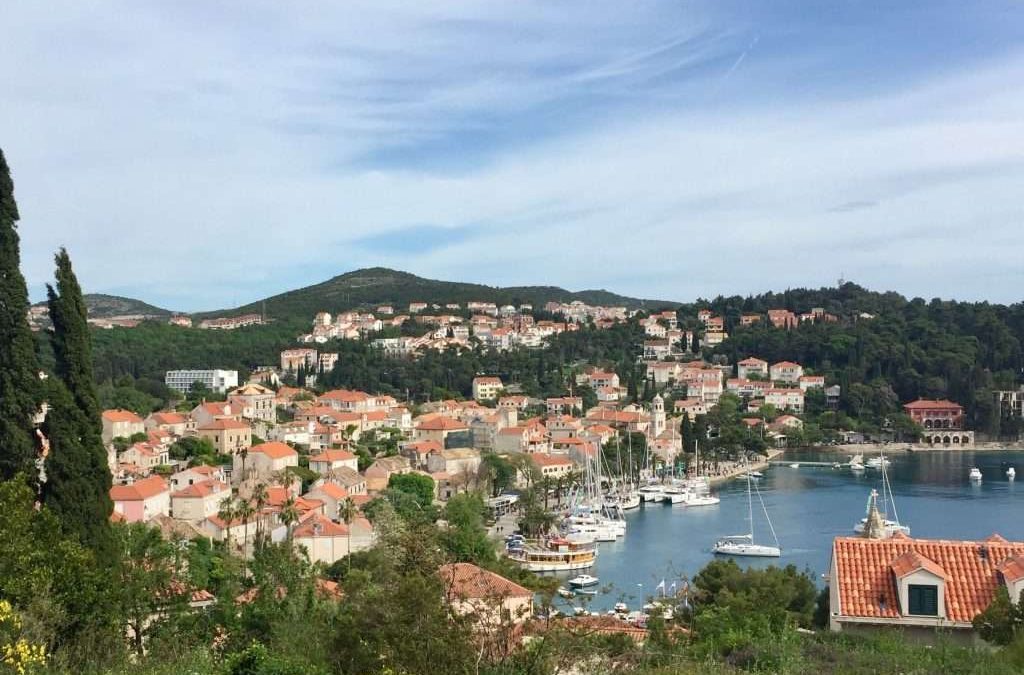
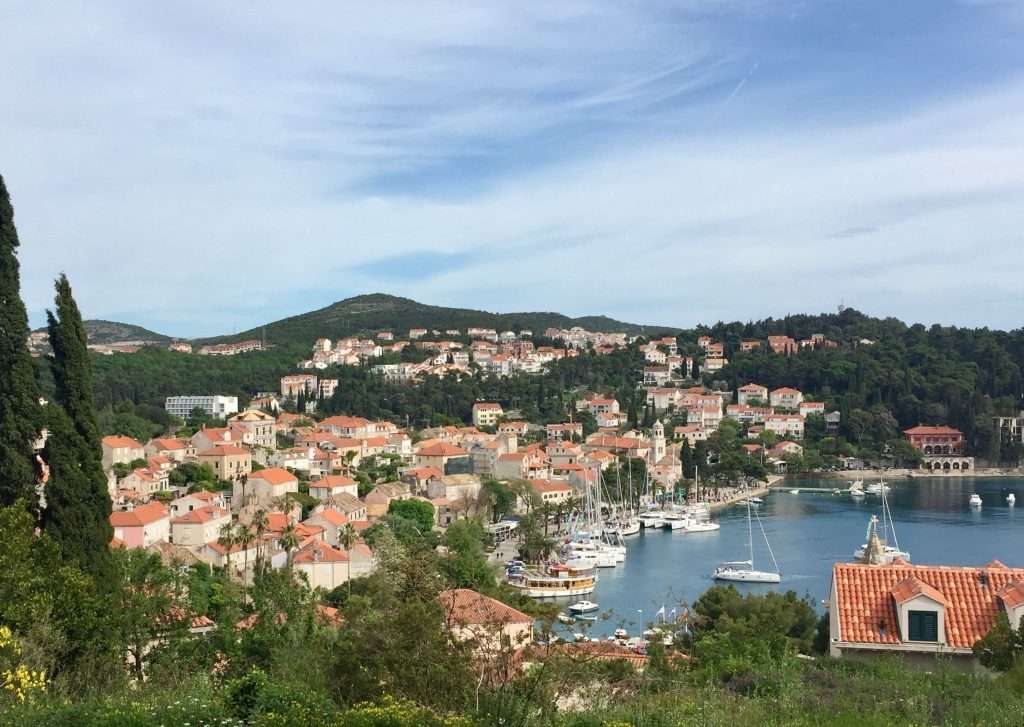
Cavtat from the cemetery on the hill above the town.
Cavtat is a small and attractive town, 12 km southeast of Dubrovnik, built on the ruins of the ancient Greek settlement of Epidaurus. Two days later Reini and Lynne Adelbert from Cape Town flew in from Berlin to join us for a bit of R & R. The 28th April marked my 72nd birthday and we spent a pleasant day starting with coffees at the harbour, exploring Cavtat and finishing off with a BBQ on the boat.
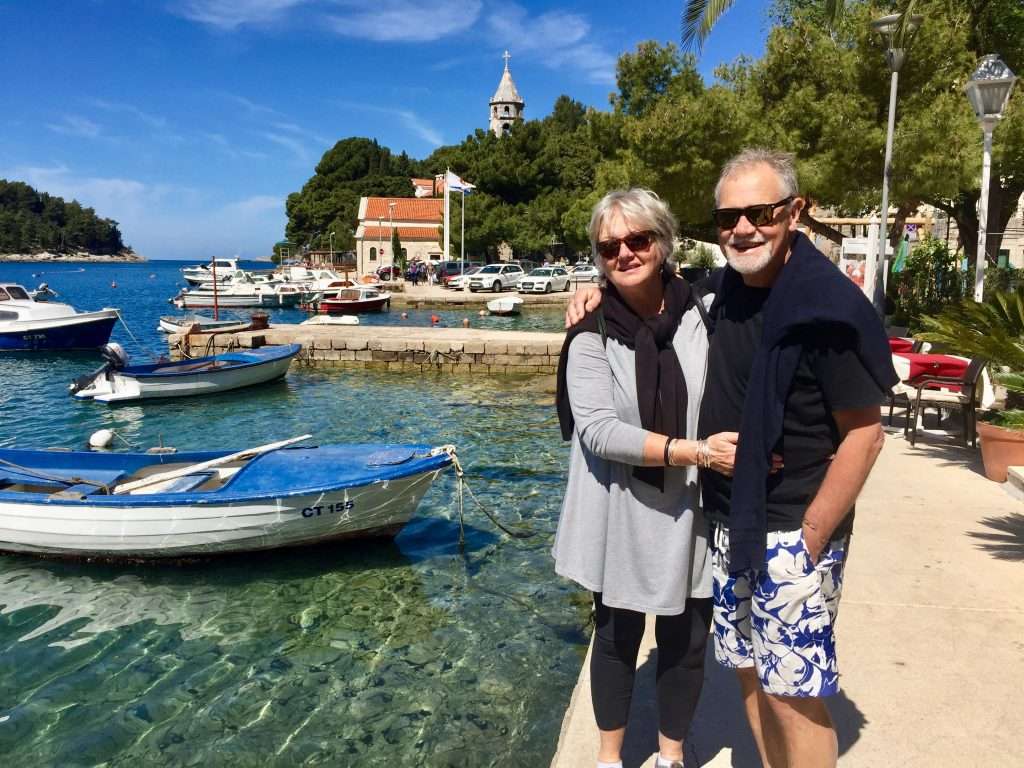
Lynne & Reini on the Cavtat waterfront.
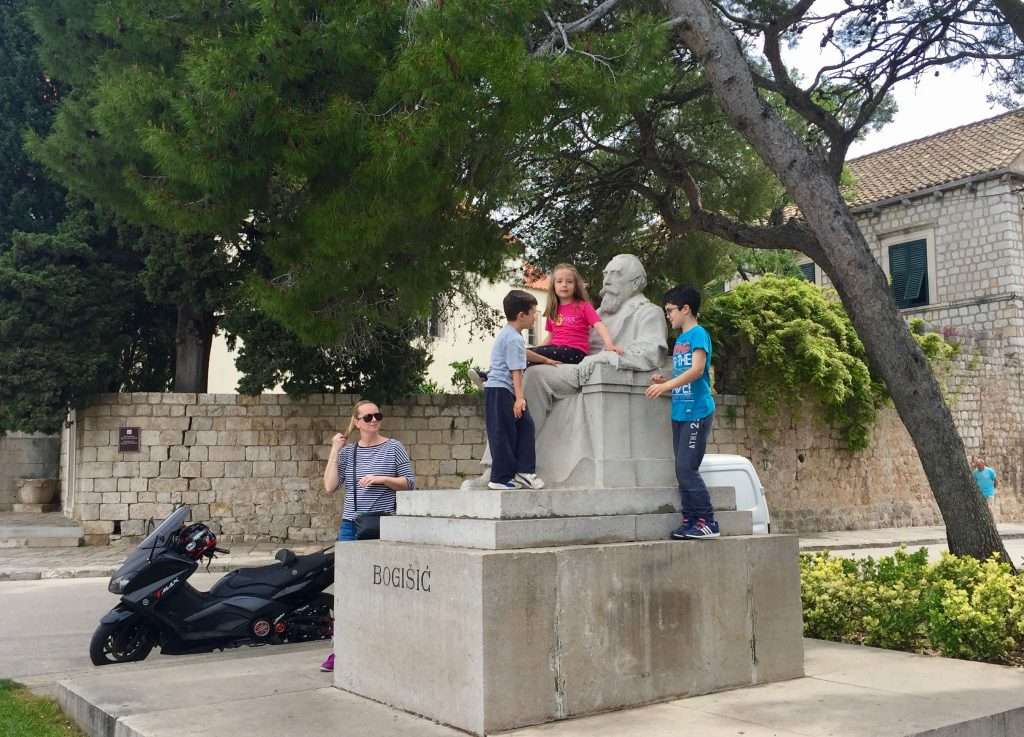
Kids playing on the statue of an old Cavtat luminary.
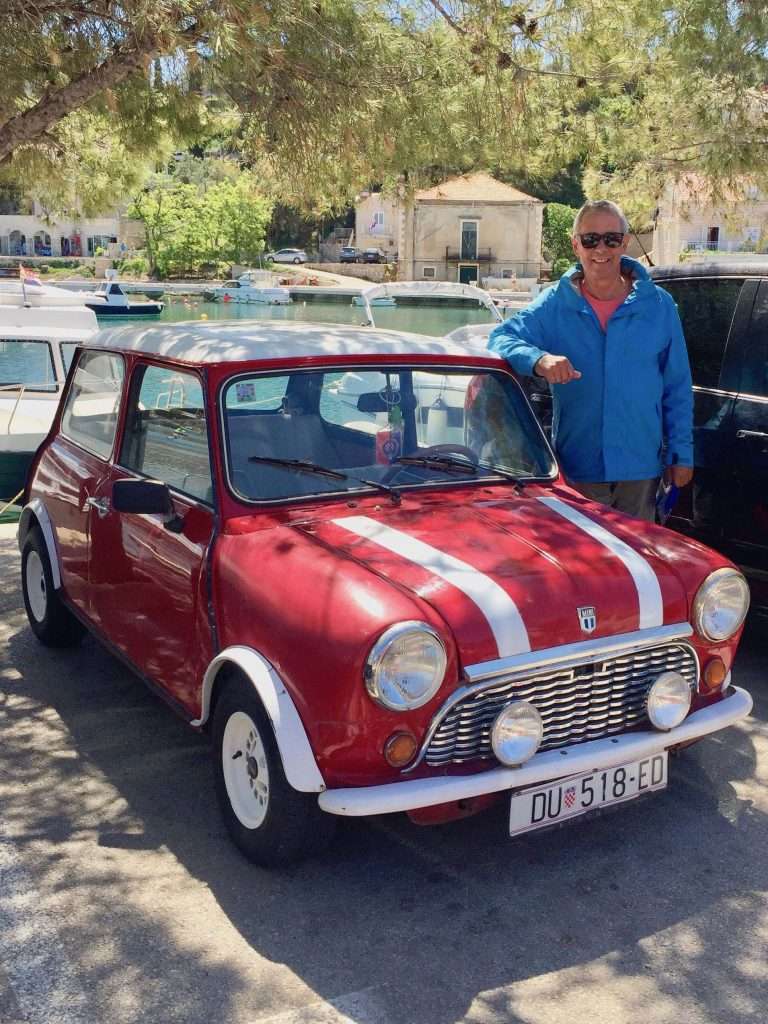
A local Mini – I owned a number of these beauties in SA!
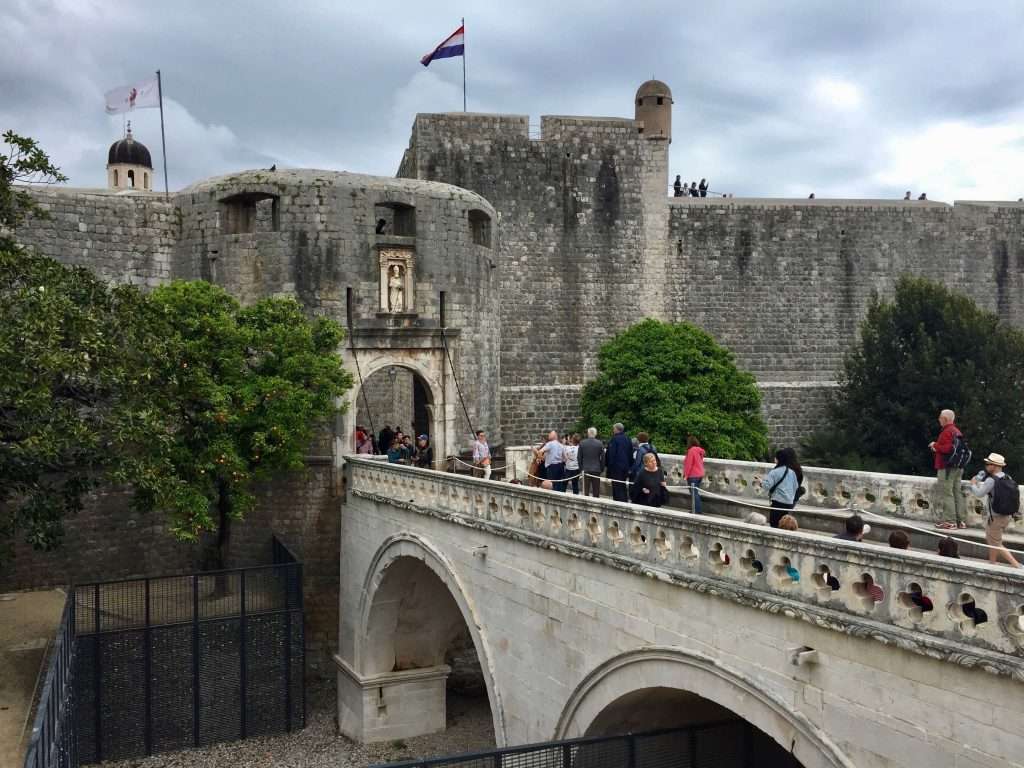
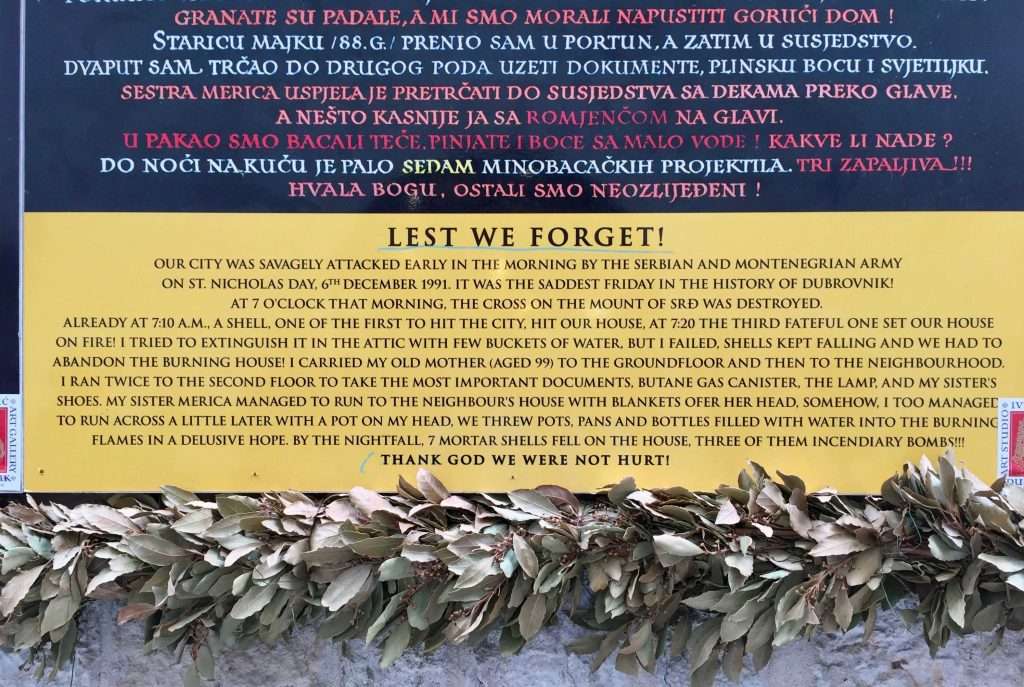
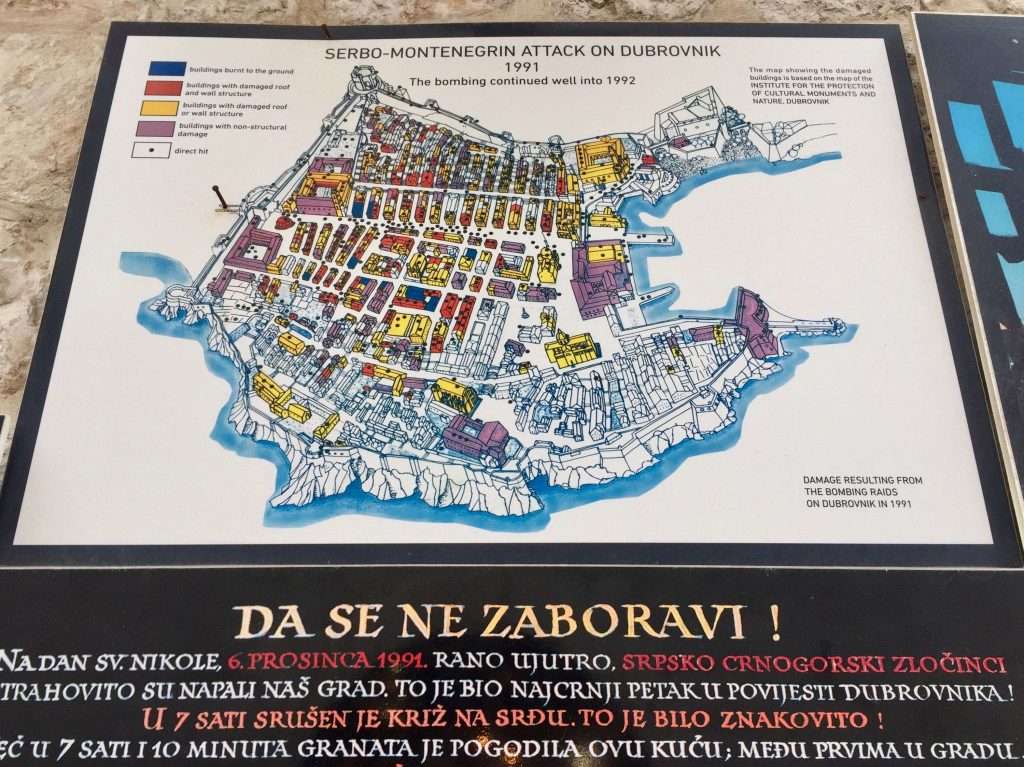
The following day we caught a bus into Dubrovnik to explore the Old Town, which was bustling with people. The town has been restored since it was devastated in the 1991-2 war and is really worth a visit. With its breathtakingly beautiful streets, squares and buildings, the only downside are the exorbitant prices which take your breath away. After a pleasant walk about, we took the bus back to Cavtat.
The bridge into Dubrovnik old town.
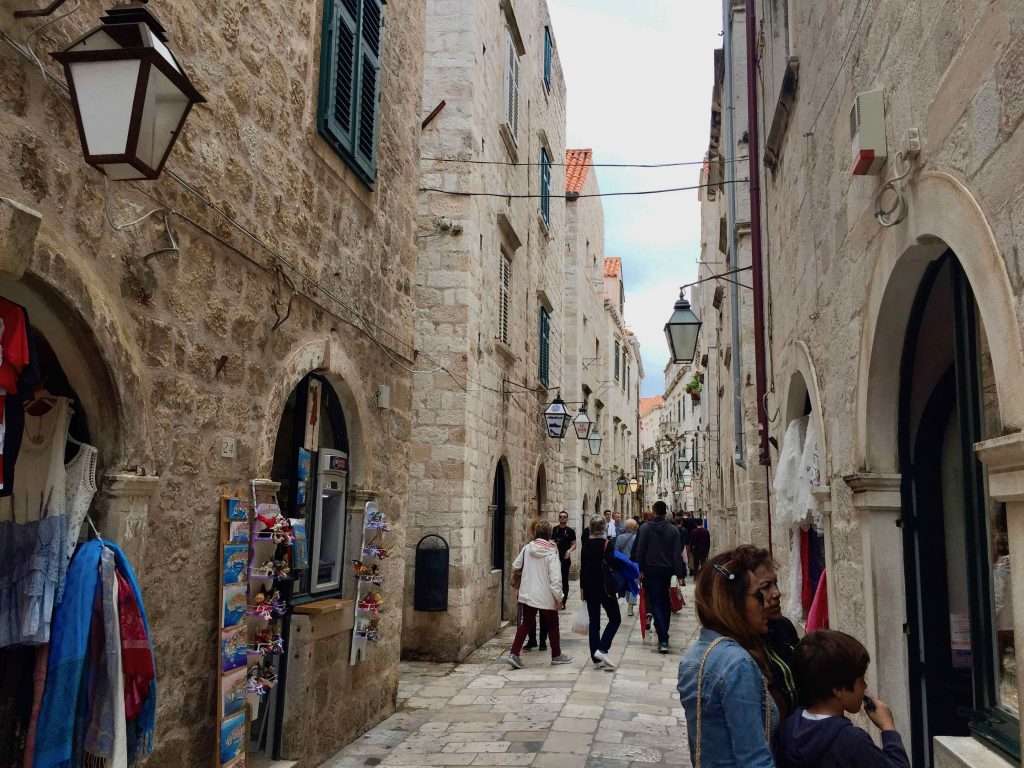
Dubrovnik street scene.
A tragic war reminder on a Dubrovnik house.
A map of the old town – the black dots show the mortar and bomb hits.
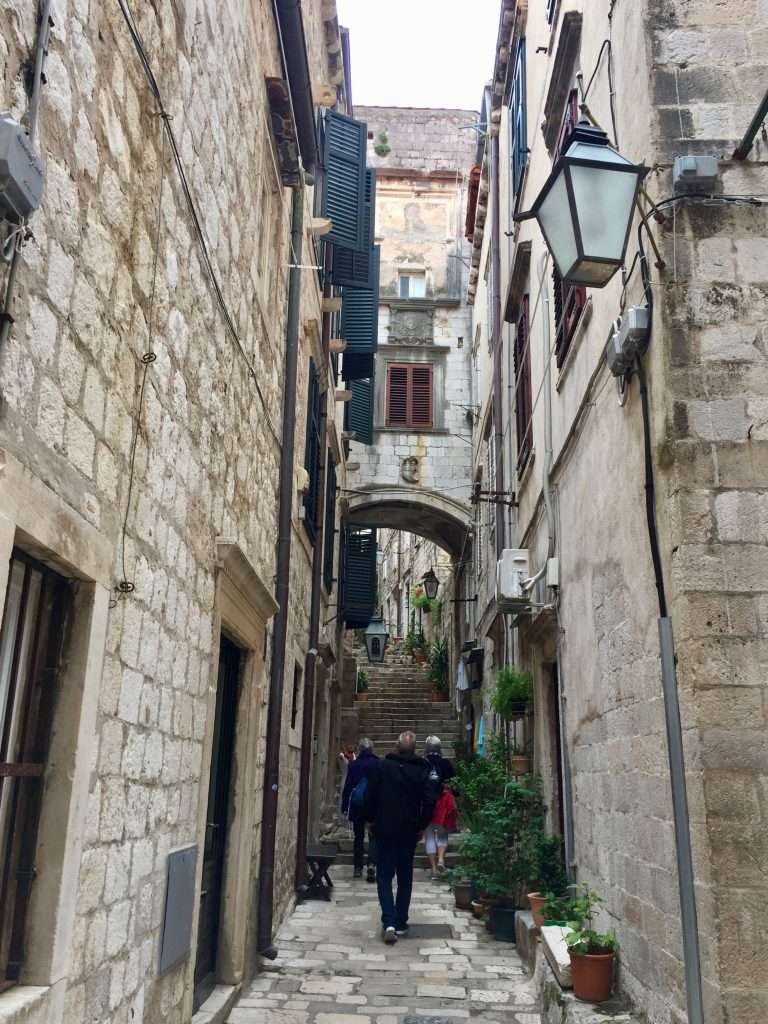
Dubrovnik side alley.
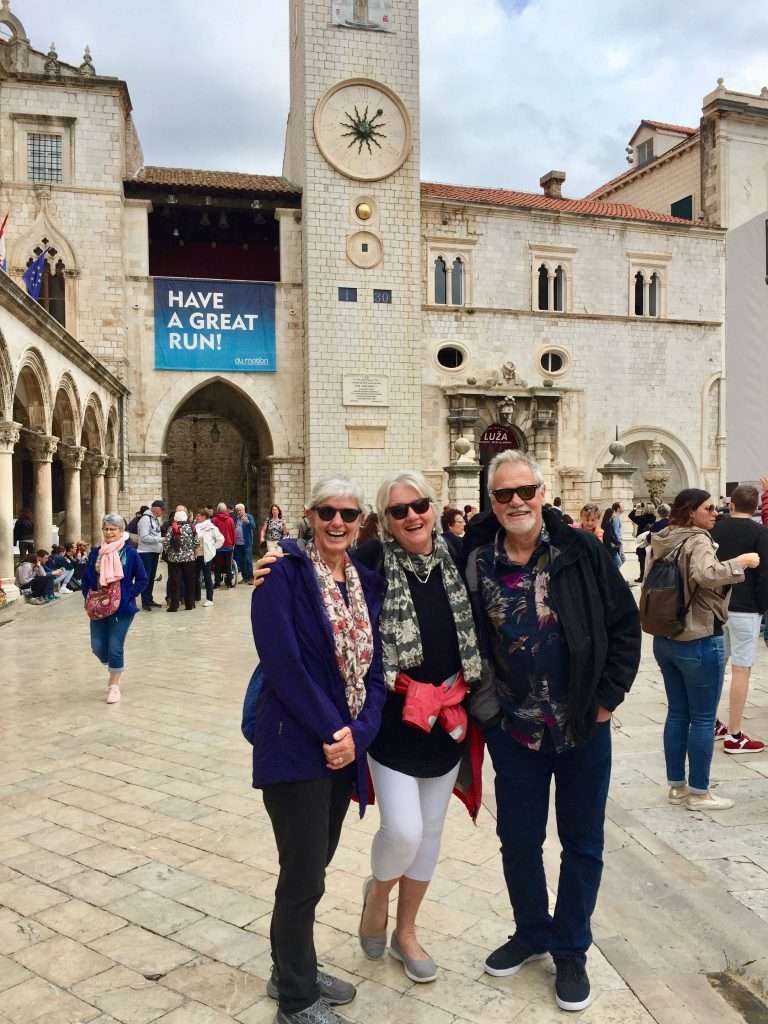
Annie, Lynne and Reini on the Dubrovnik town square.
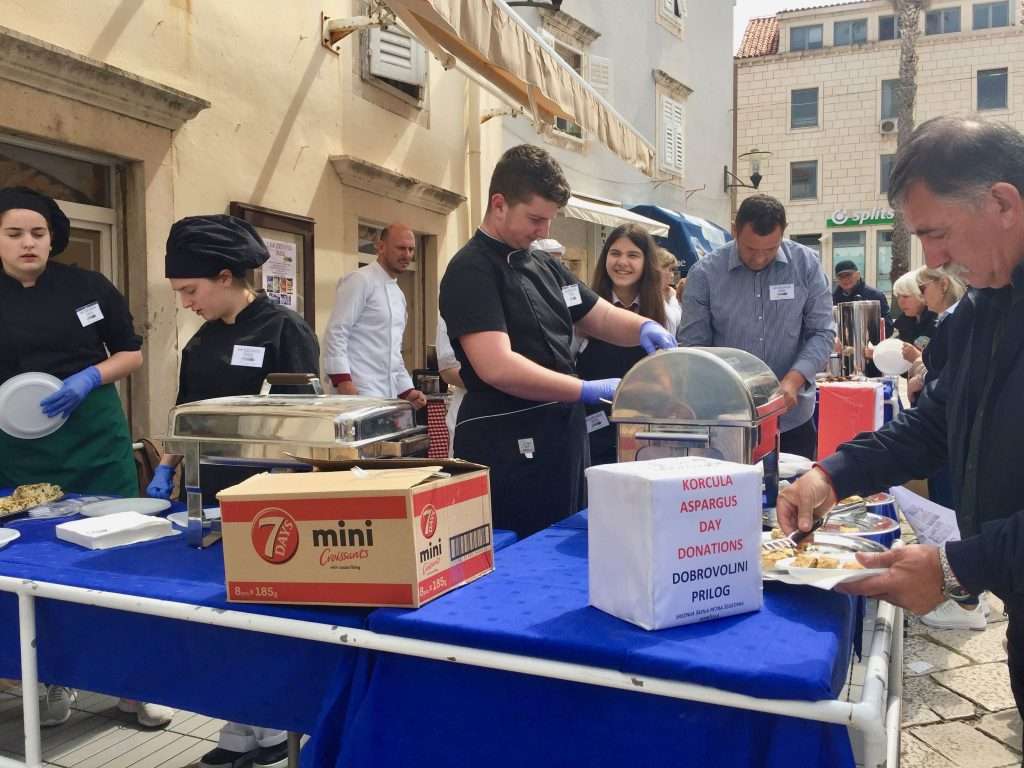
Visits to Zaton Bay, Ston and Kobas followed, before we anchored in Lumbarda for two nights, to bus into Korcula for a visit. Again, we were struck by the well maintained old town and were pleasantly surprised to find the local Asparagus festival happening on the town square. At the festival, young students offered savoury and sweet snacks free of charge, in exchange for a donation to the school.
Broce village on the way to Ston.
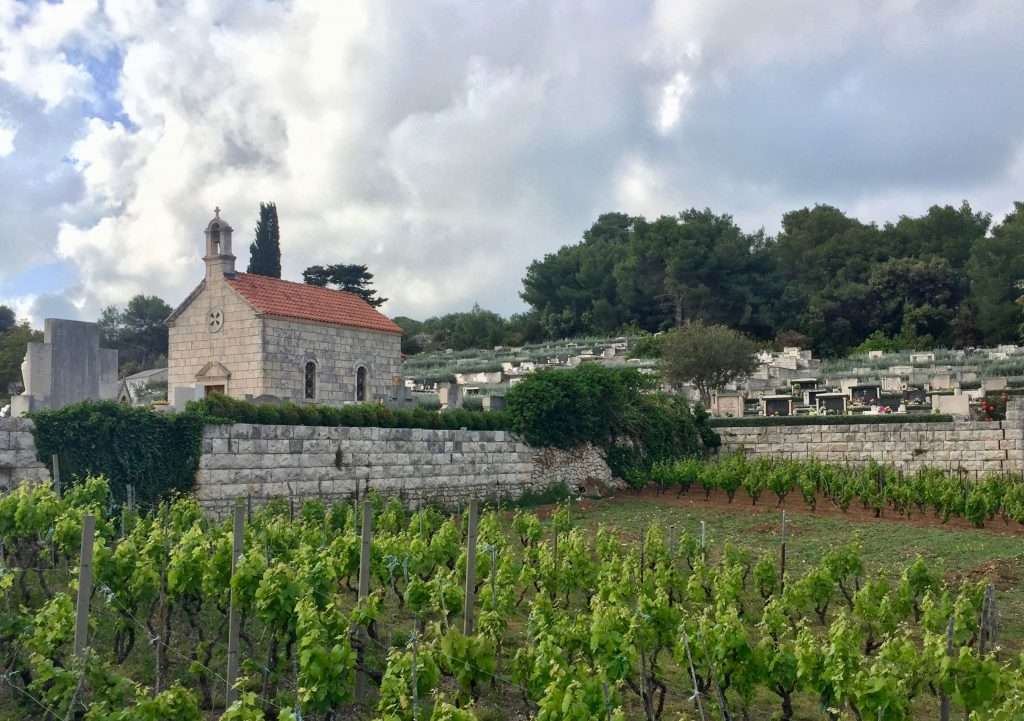
Lumbarda church and cemetery.
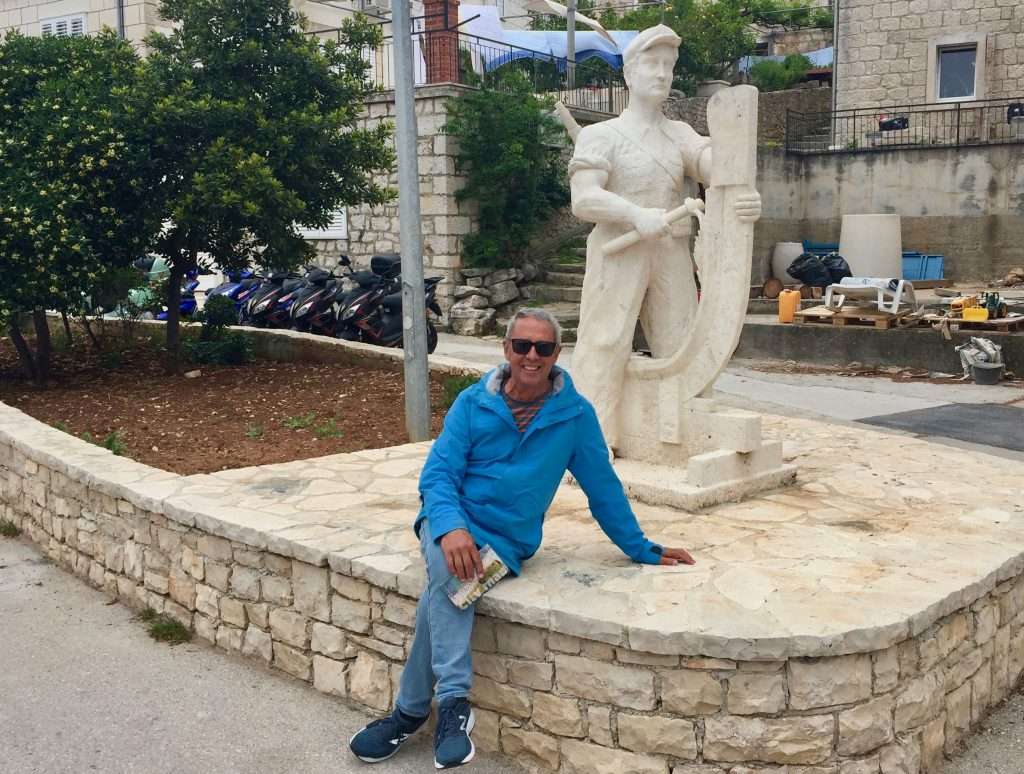
Lumbarda. The forgotten communist dream: A worker with the obligatory machine gun on his back.
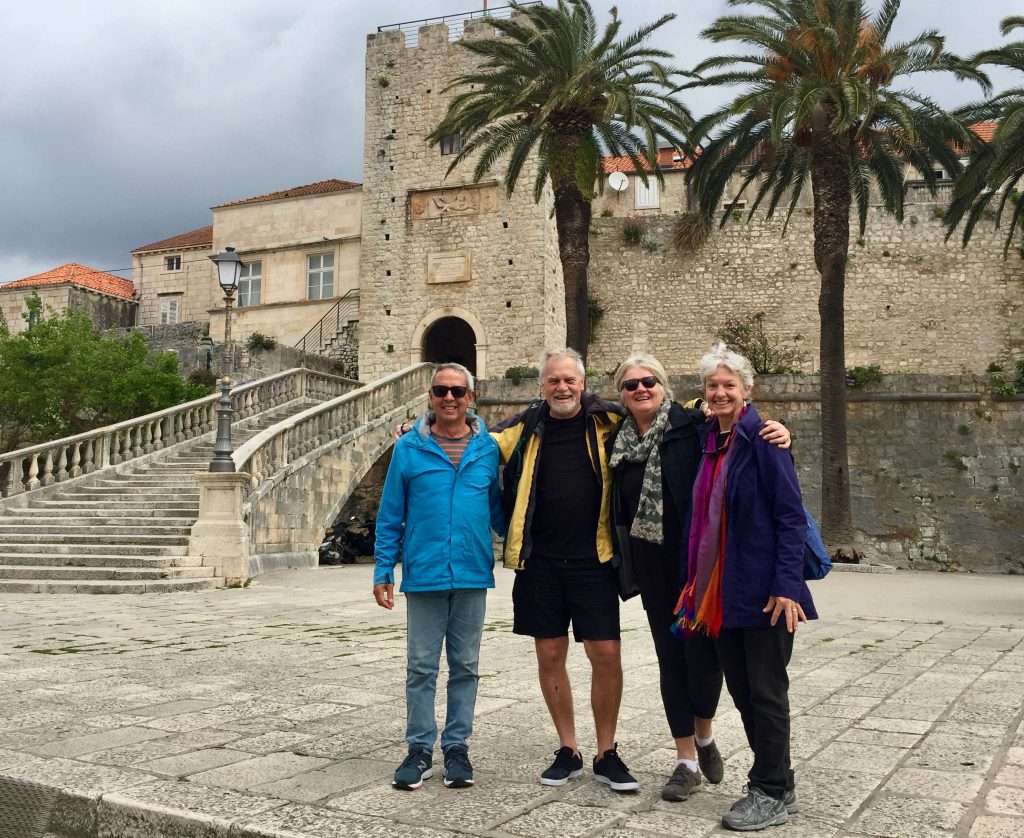
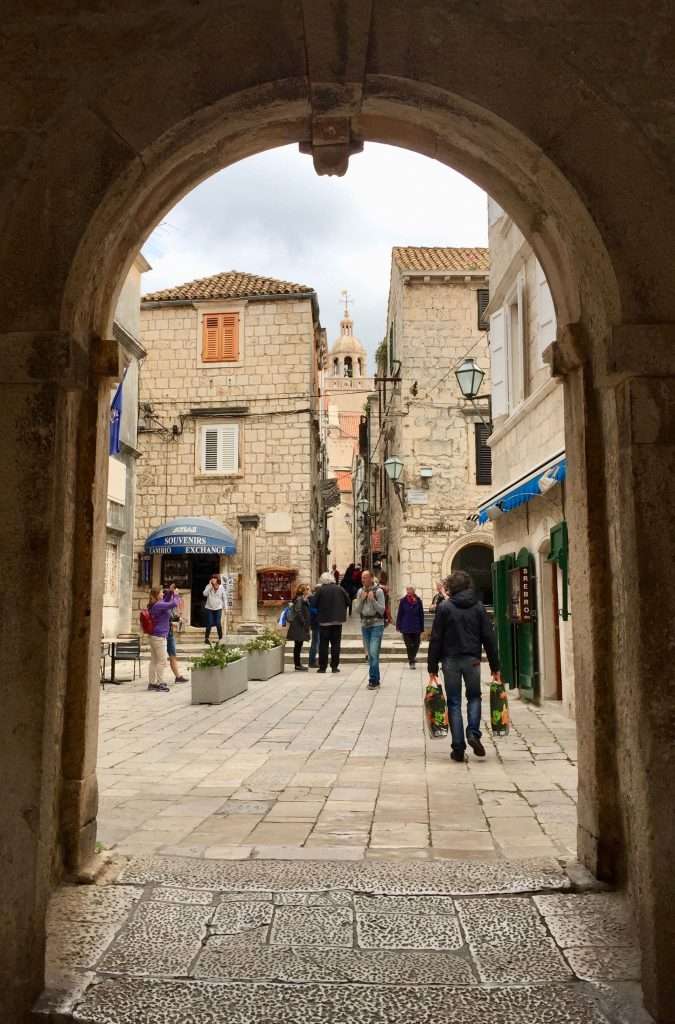
At the entrance to Korcula old town.
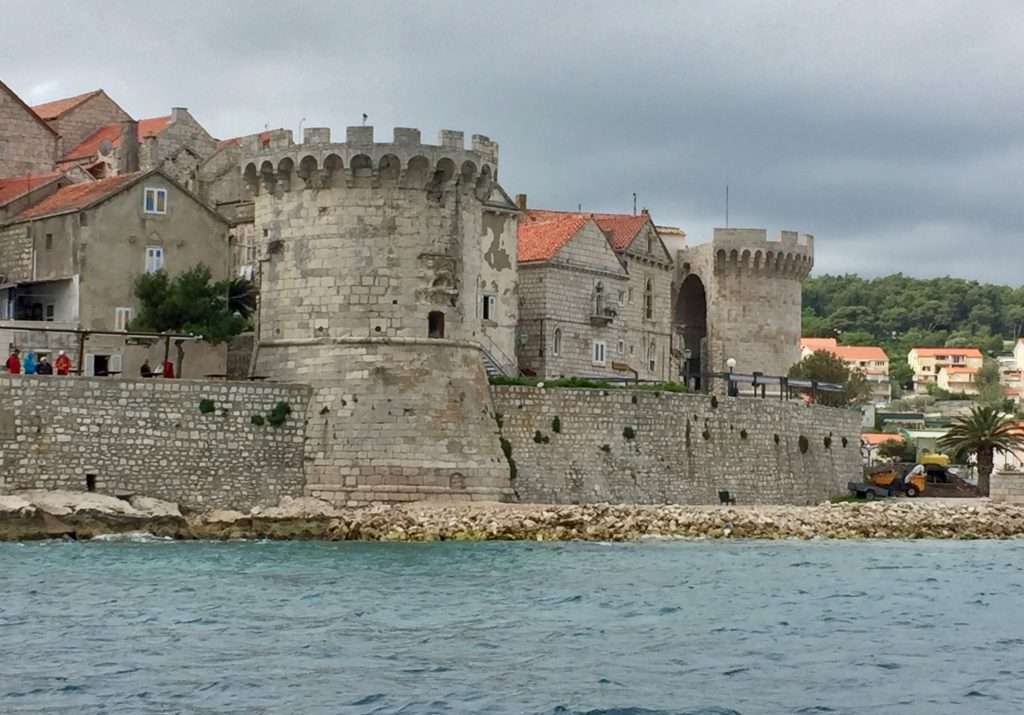
Korcula town gate.
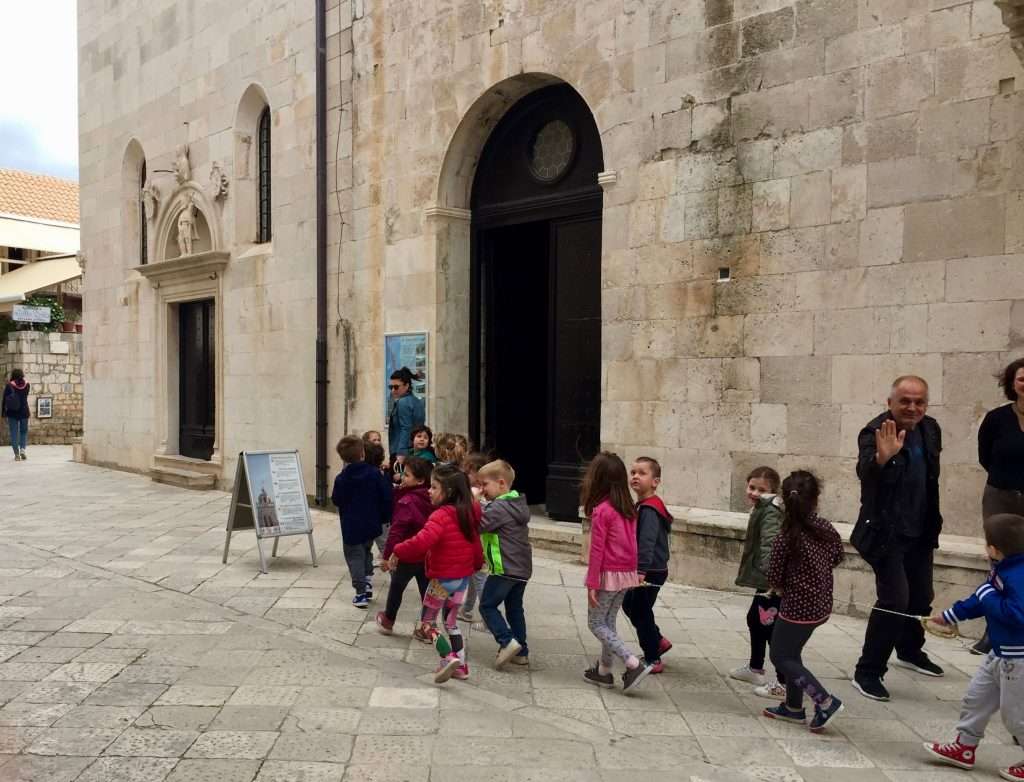
Kids following their teacher on a rope.
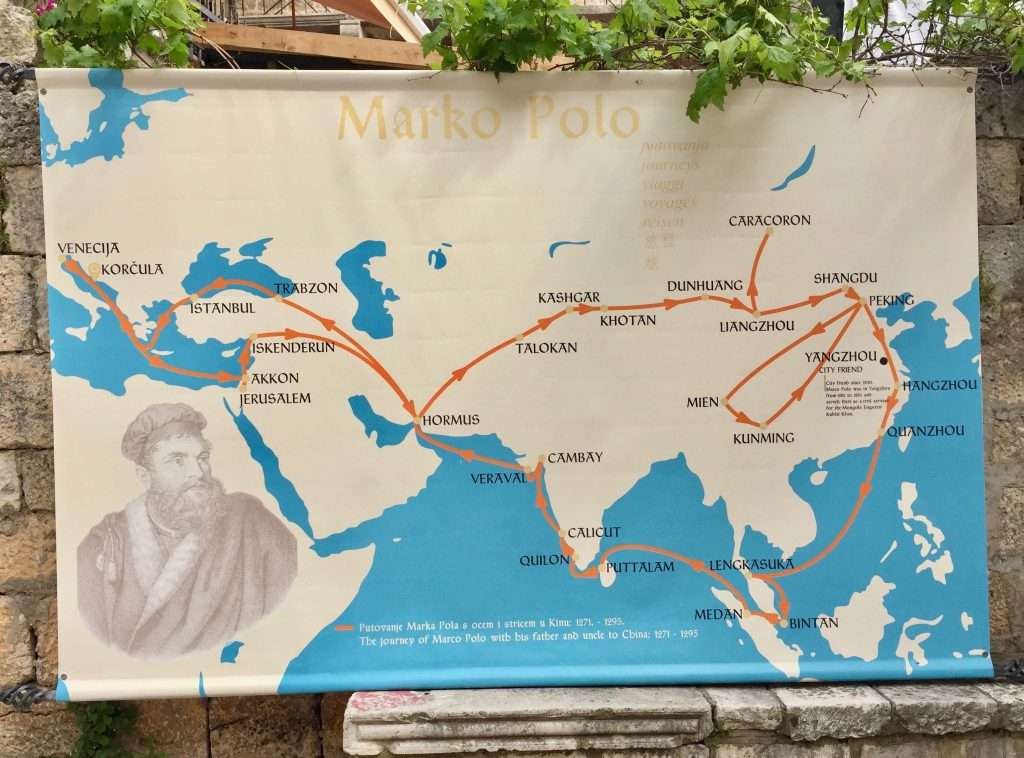
Marko Polo came from Korcula.
Walking around the town.
Interesting architecture.
The asparagus festival lunch.
Sailing out of Korcula.
A fast 34 nm sail to Vela Luka followed, ending in a robust rain storm which must have worried our guests, before we tied up to a town mooring. Two quiet nights at Duboka Vela followed before we wrapped up Reini and Lynne’s visit at Trogier Marina, 25 km west of Split. They kindly helped us clean the boat and do the laundry, before they flew back to Berlin on the 8th May. The weather could have been better during their visit, but they confirmed that they enjoyed Croatia and their sailing experience.
We now continue our sail north through the Croatian islands and will report again in due course.
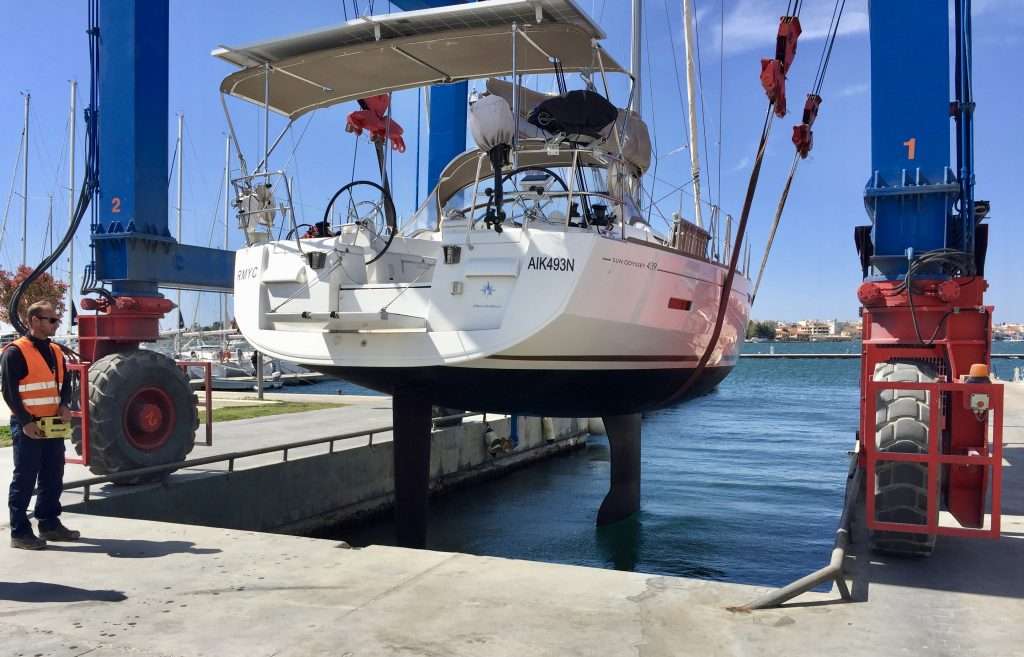
Esprit was re-launched at Cleopatra Marina in Preveza, Greece on Friday 29th of March 2019. She was looking as good as new after the anti-fouling, ding repairs and hull polishing that was done during our absence.
Esprit relaunch.
We motored across to Preveza Marina, a mile away and tied up to one of their new refurbished pontoons for the weekend. Saturday morning was spent buying provisions for the boat for the next three months. The anchor was covered in rust after 4 months of idleness, so I treated it with 3 coats of rust converter in the afternoon, followed up with 2 coats of cold galvanising on the Sunday. We also re-packed all the lockers.
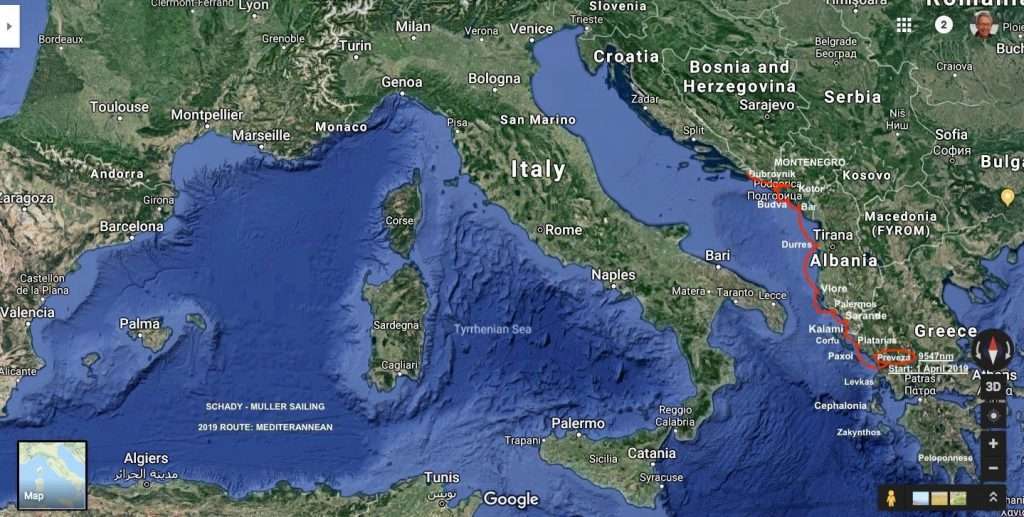
Esprit’s track through Albania and Montenegro.
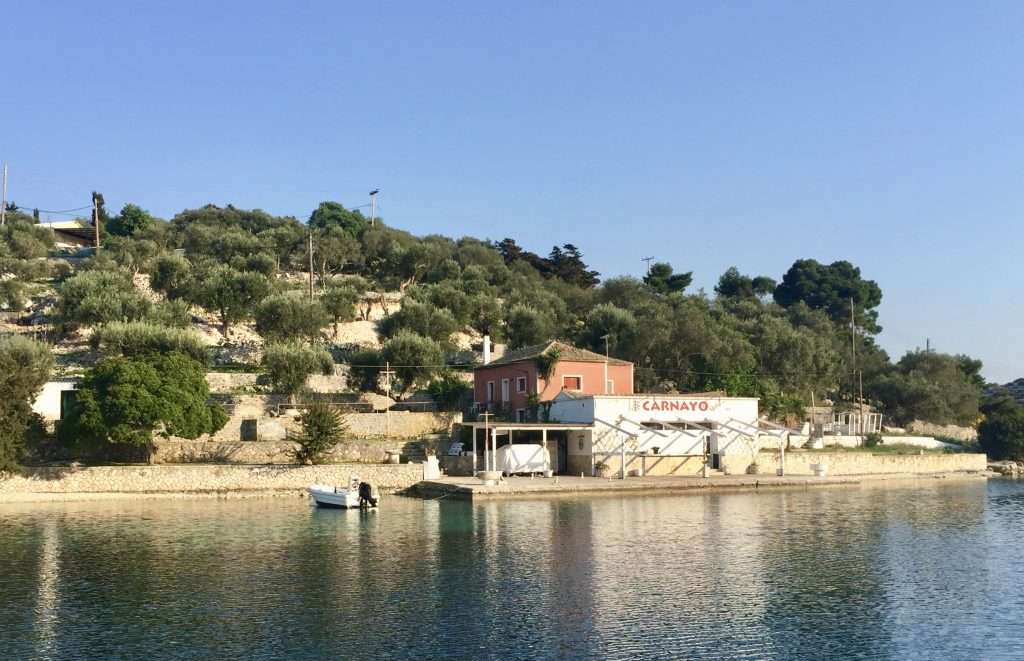
Mogonisi – no tavernas open yet.
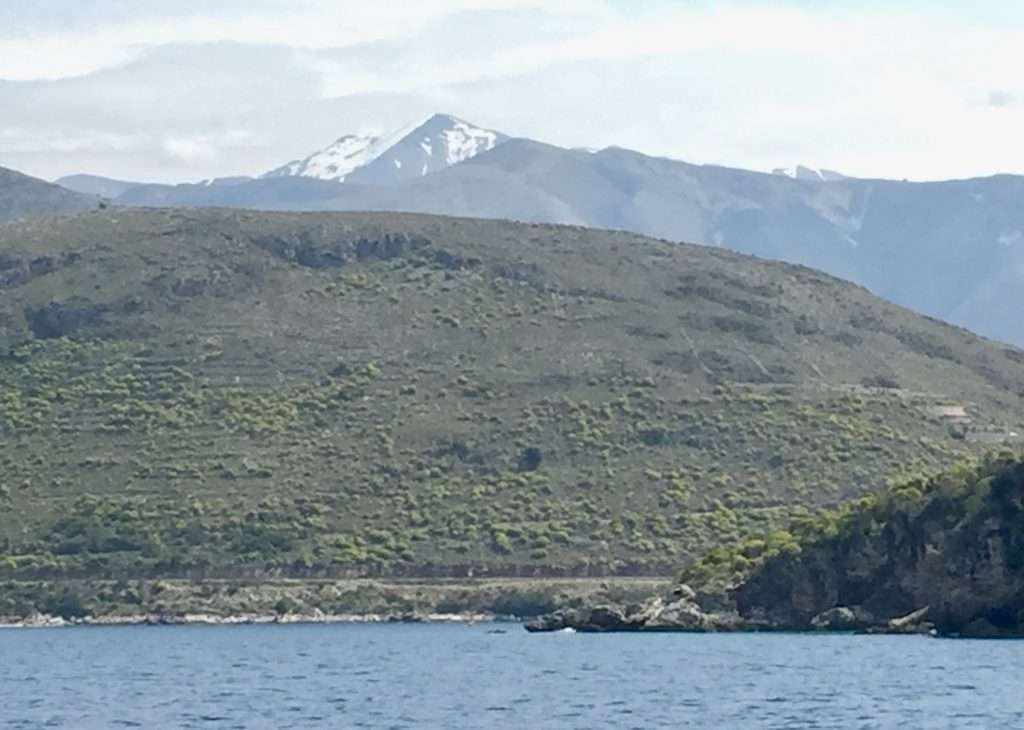
After checking out with immigration at the police, customs and the port police on Monday morning, we set sail in bright sunshine and a light breeze for Paxoi island, 37 nm to the northwest. We anchored in the quaint bay of Mongonisi for a BBQ and celebratory bottle of wine. Two more days of relaxed sailing and overnighting in Platarias and Kalami followed, before crossing from the Ionian Sea to the Adriatic and into Albanian waters where we checked into Albania at Sarande. There was still some snow on the Albanian mountains.
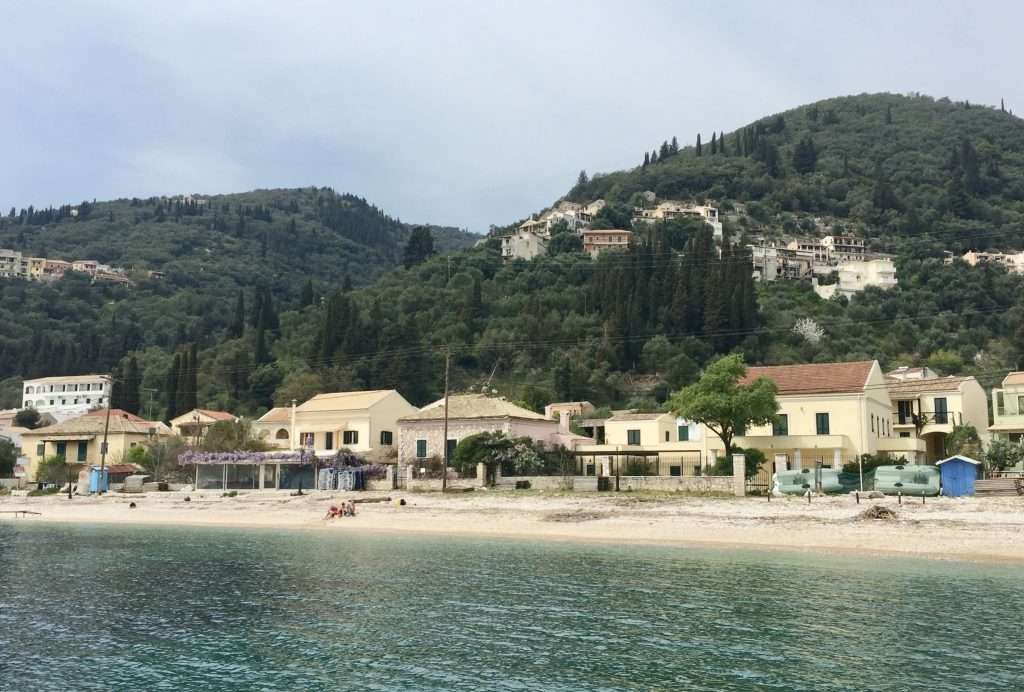
Platarias harbour.
Kalani in the north of Corfu.
A cold wind off the snow capped Albanian mountains,
Albania
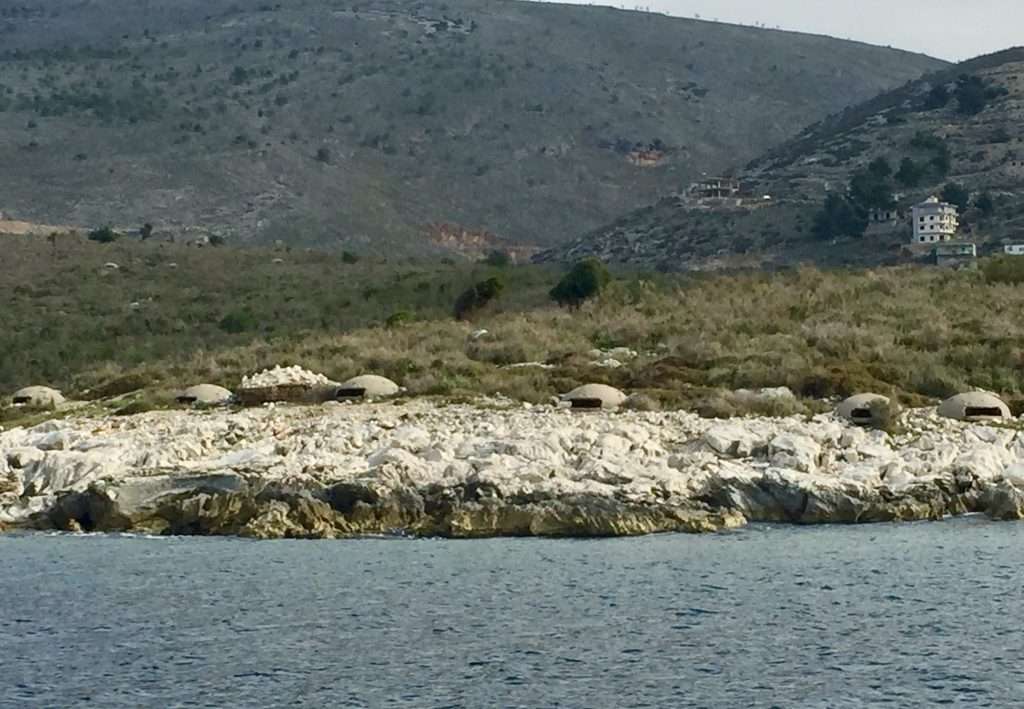
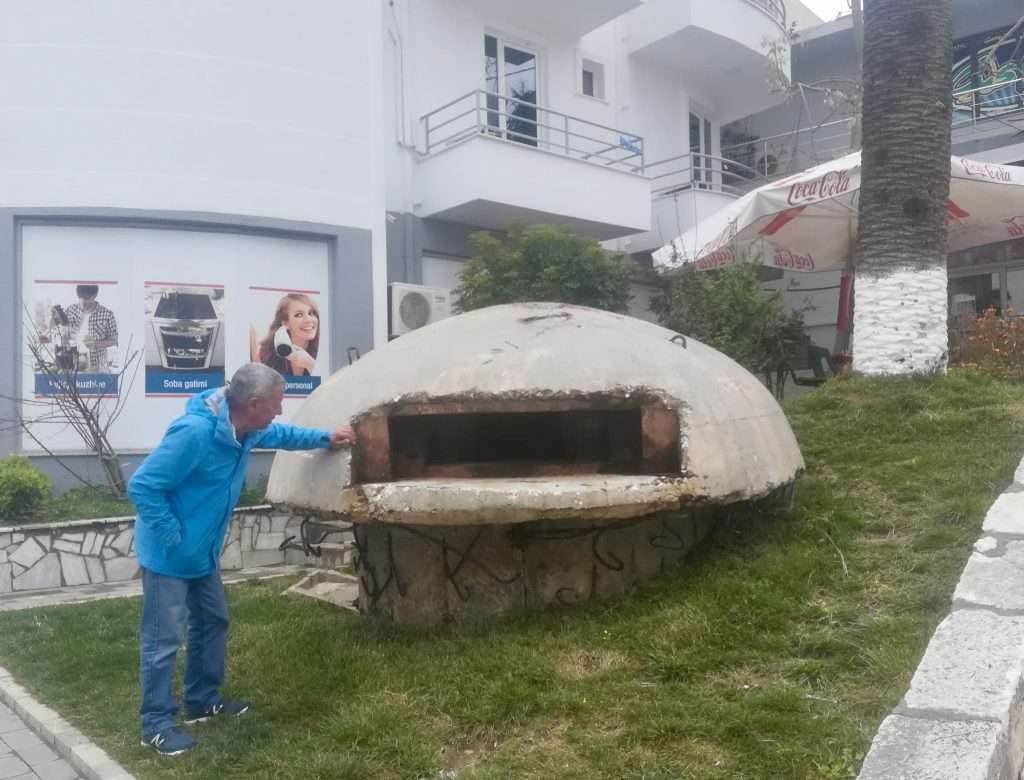
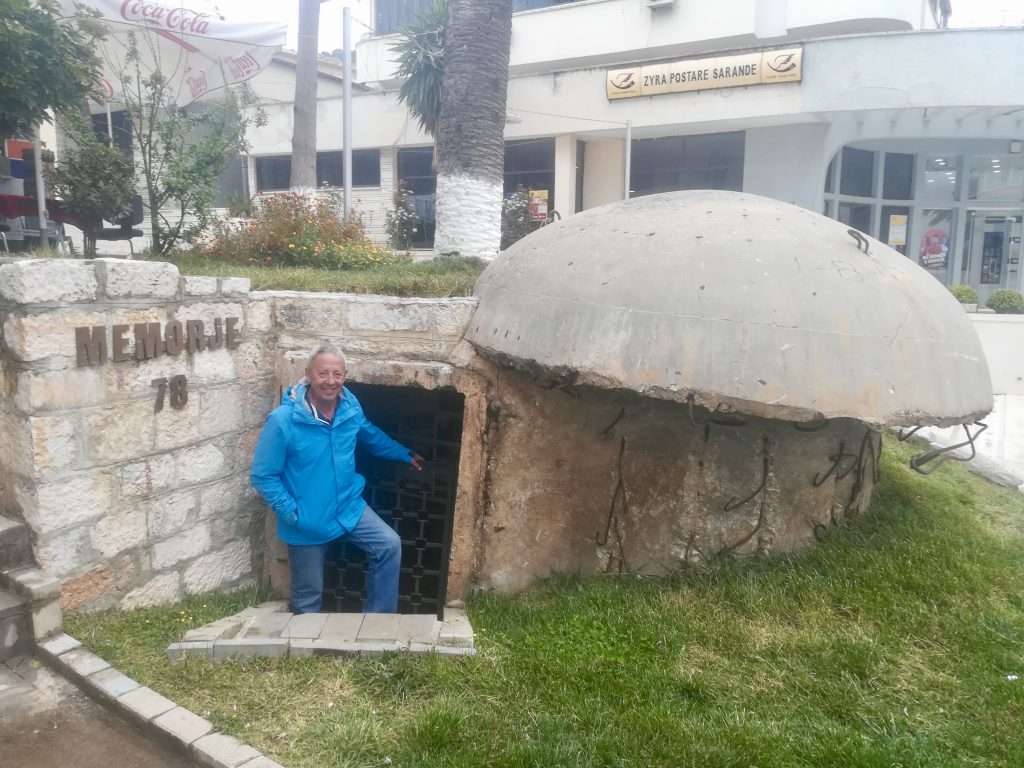
Albania has been settled, invaded and occupied by many nations since the 8th century BC. Albania’s history during the 20th century has continued to be turbulent, with characters like President Zogu, who declared himself King Zog in 1928. At the end of World War 2 in 1945, the Communists under Enver Hoxha came to power. Hoxha ruled Albania with an iron fist until his death in 1985. Under his dictatorship 700,000 concrete bunkers were built along the coast and minefields were laid offshore, in case the country was invaded.
A few of the concrete bunkers.
Close up of a bunker.
Cramped quarters below.
Popular movement of disaffection and protest finally led to the election in 1992 of Sali Berisha of the Democratic Party. Unfortunately, he lost the next election to the Socialist Party (the former Communist Party with a new name). Finally, in 2005 the Democratic Party under Sali Berisha came back to power, shaking off the shackles of Communism. The country is gradually improving despite many problems.
Old systems persevere and the government bureaucracy requires sailors to employ agents at considerable expense at every harbour, to obtain entry and exit permits. Hopefully, this will change in time, bringing more sailors to Albania and growing their tourism industry. After employing Agim Zholi as our agent to do all the paperwork, we were free to go ashore and caught a bus to visit the historic site of Butrint which has been inhabited since the 8th century BC.
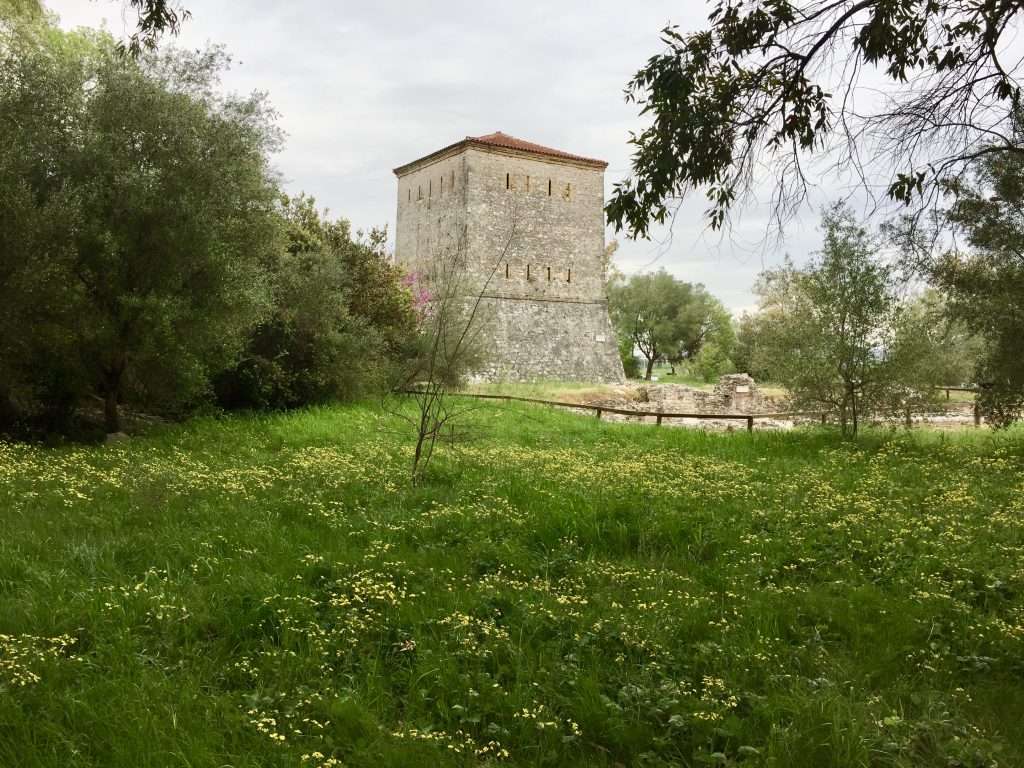
A Venetian tower at the entrance, built in the 15th and 16th centuries.
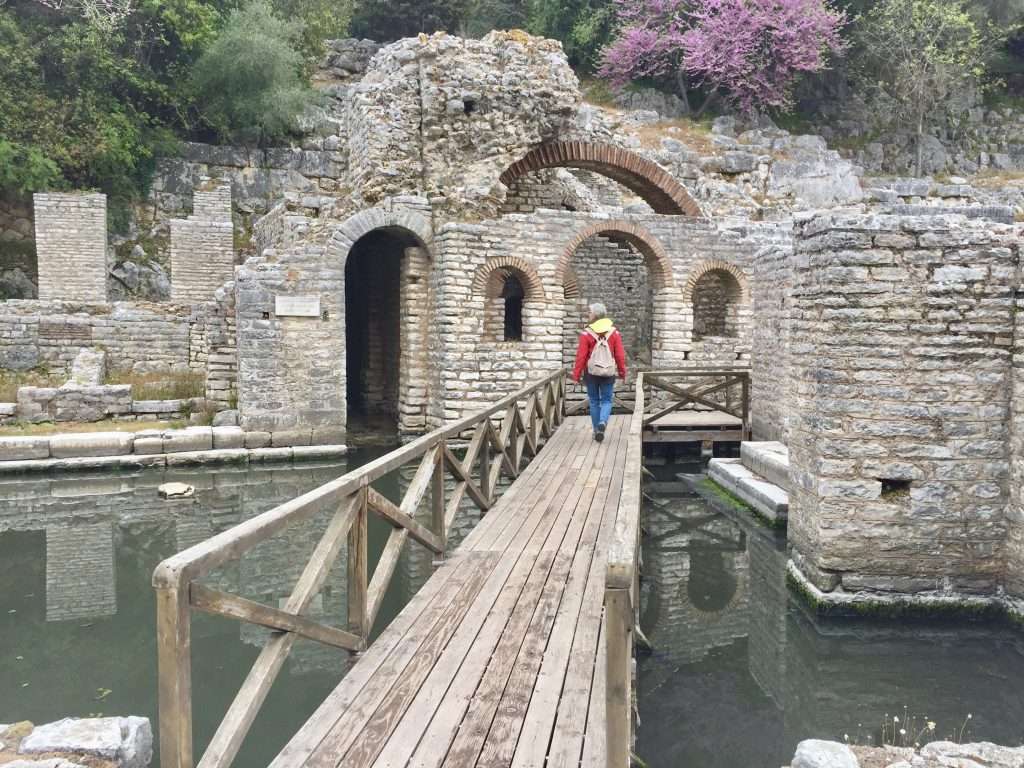
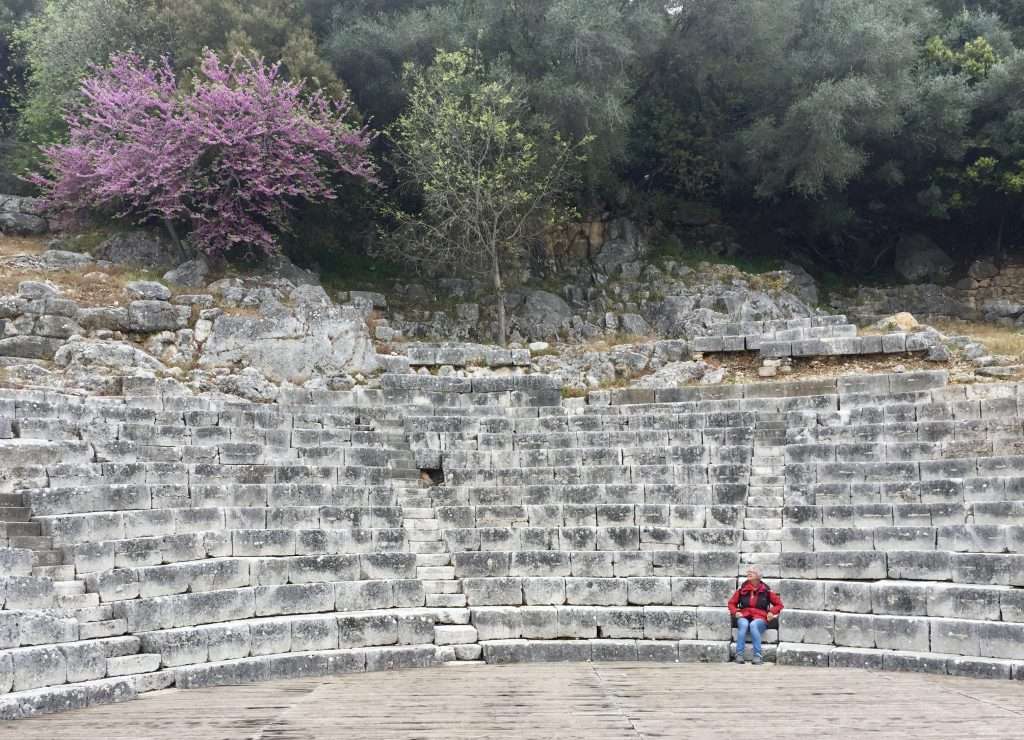
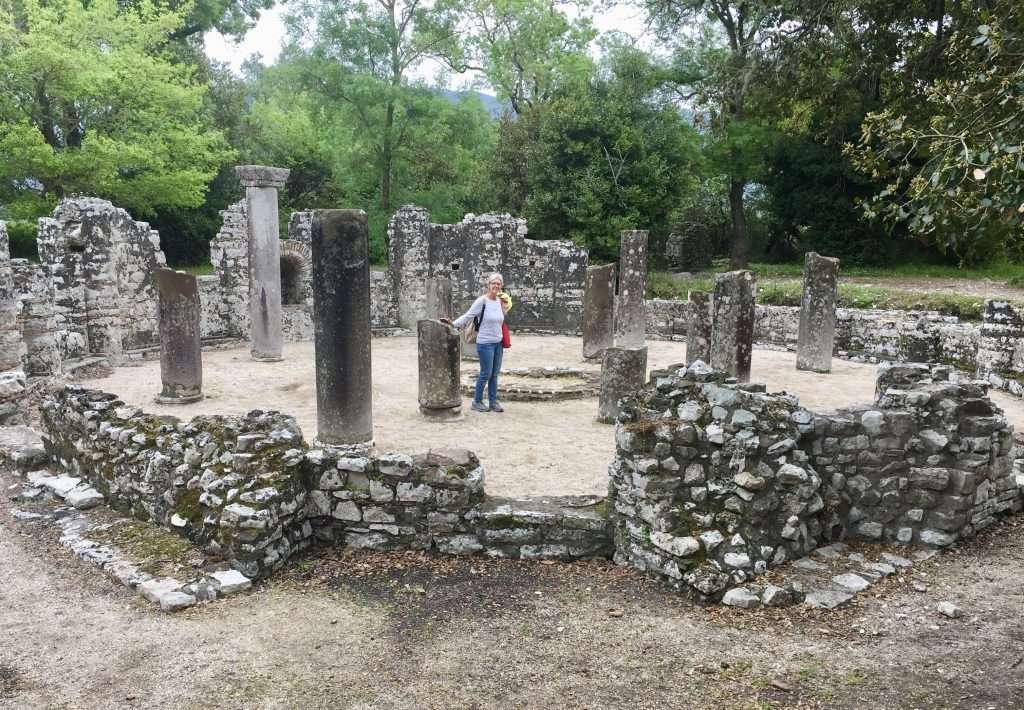
Butrint, a UNESCO world heritage site, offers a remarkable journey through the ages of history and its structures bear testimony to the Hellenistic, Roman, Byzantine, Venetian and Ottoman cultures and civilizations which occupied this place at some time in history. Most of these monuments have been discovered by the Italian archaeologist Luigi Ugolini who excavated the site from 1928 to 1939.
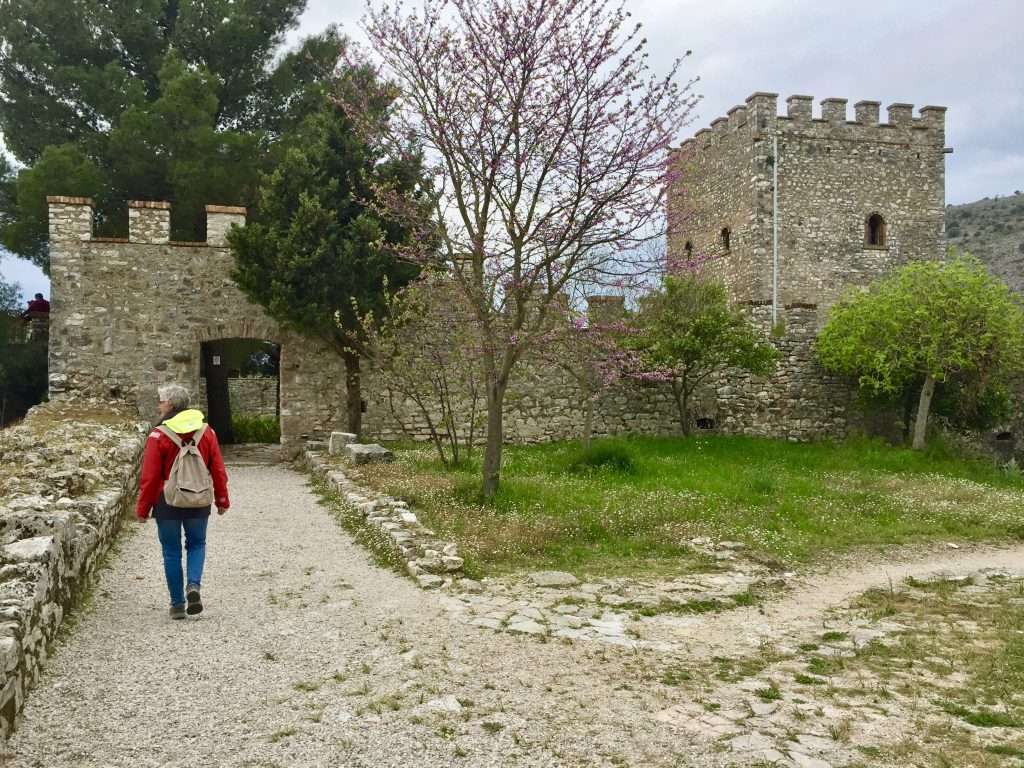
The Venetian castle, built in the 14th and 15th century. Reconstructed in the 1930s.
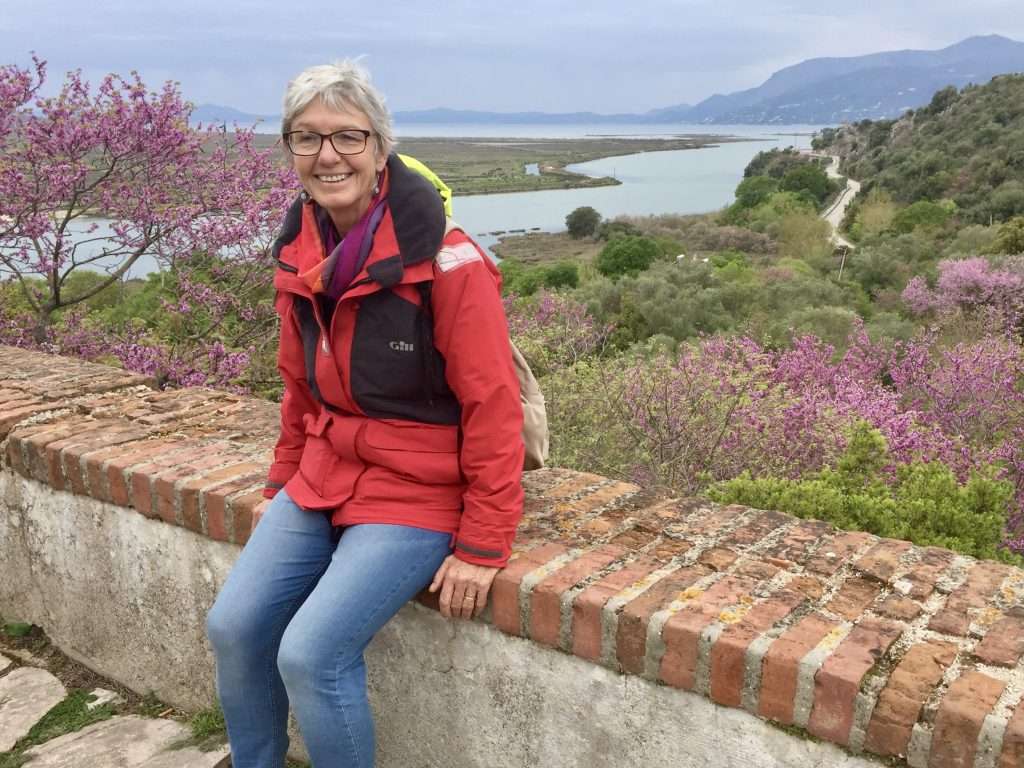
View from the top of the castle.
A chapel dedicated to the god Asclepius – 4th century BC.
Ancient theatre – 3rd century AD.
Roman baths – 2nd century AD.
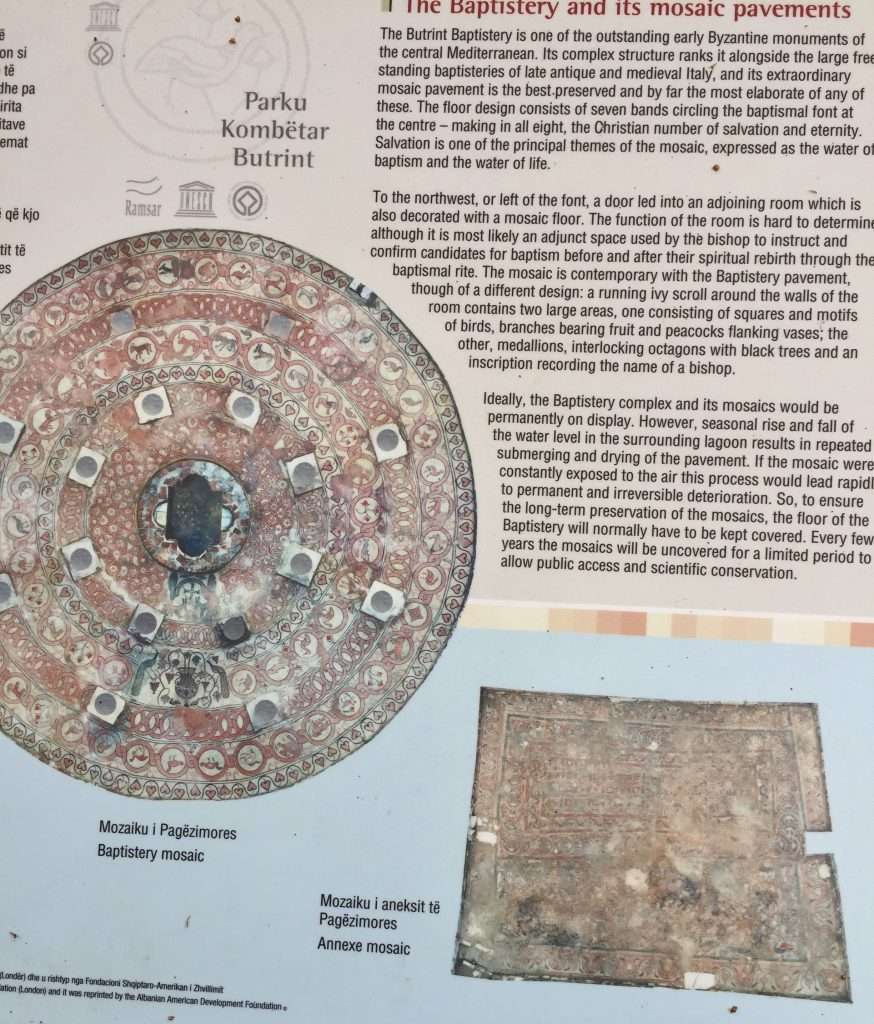
The baptistery – early 6th century AD. The mosaic floor is covered in sand to protect it.
The mosaic floor below the sand – read the text.
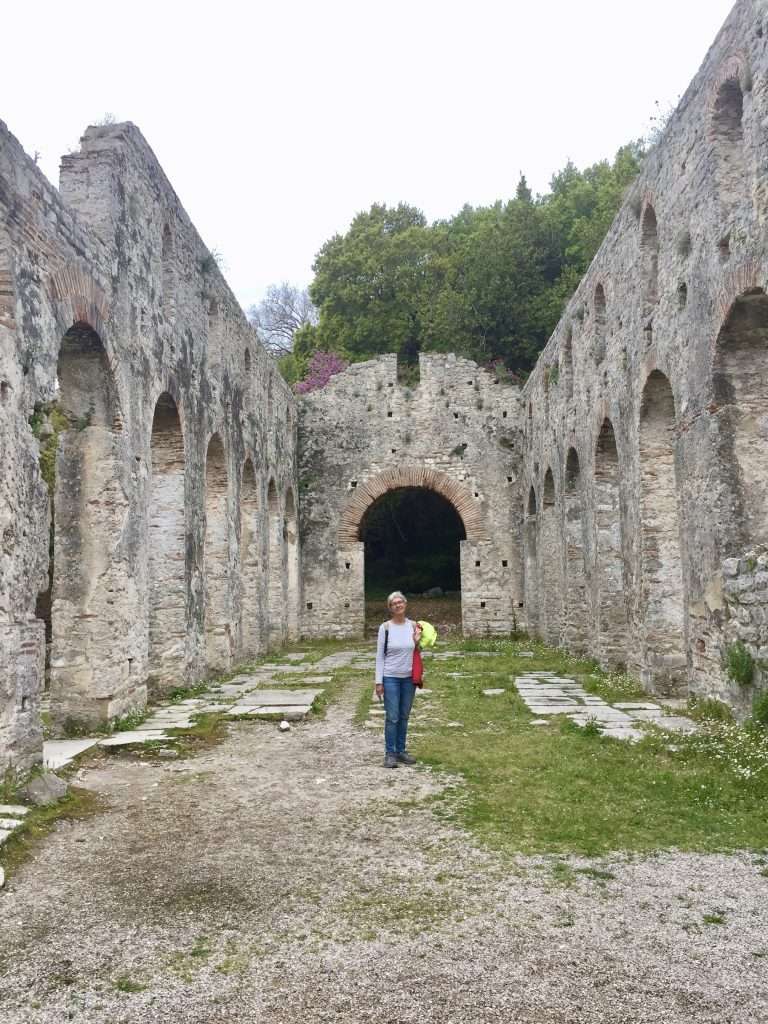
The great basilica – early Christian period, built in the 6th century AD.
After a pleasant afternoon walking through the site, we returned by bus, collected the approved documents from our agent and got back to the boat just as the rains came down for the night.
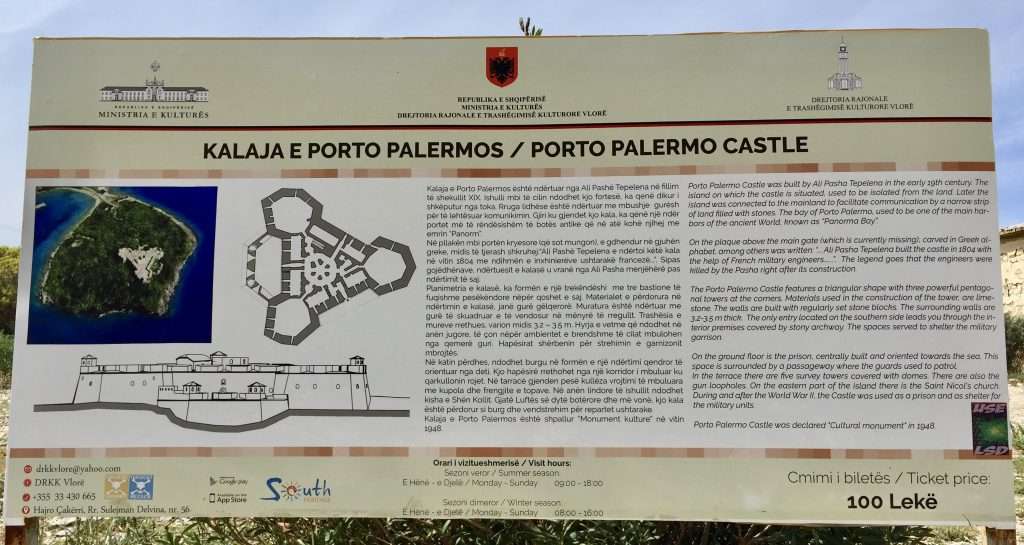
The following day we set off in bright sunshine for the 20 nm passage to anchor at Palermos. This wide bay is separated in two by a peninsula, which is dominated by one of Ali Pasha’s castles which was built around 1807 to ensure his protection against the French attacks coming from Corfu. This castle, being relatively new, is still in excellent condition, despite it having been used as a storage facility for fuel and armaments during the communist regime. We anchored off the peninsula for the night, after our visit to the castle.
Approaching the castle from the sea.
Plan of the castle.
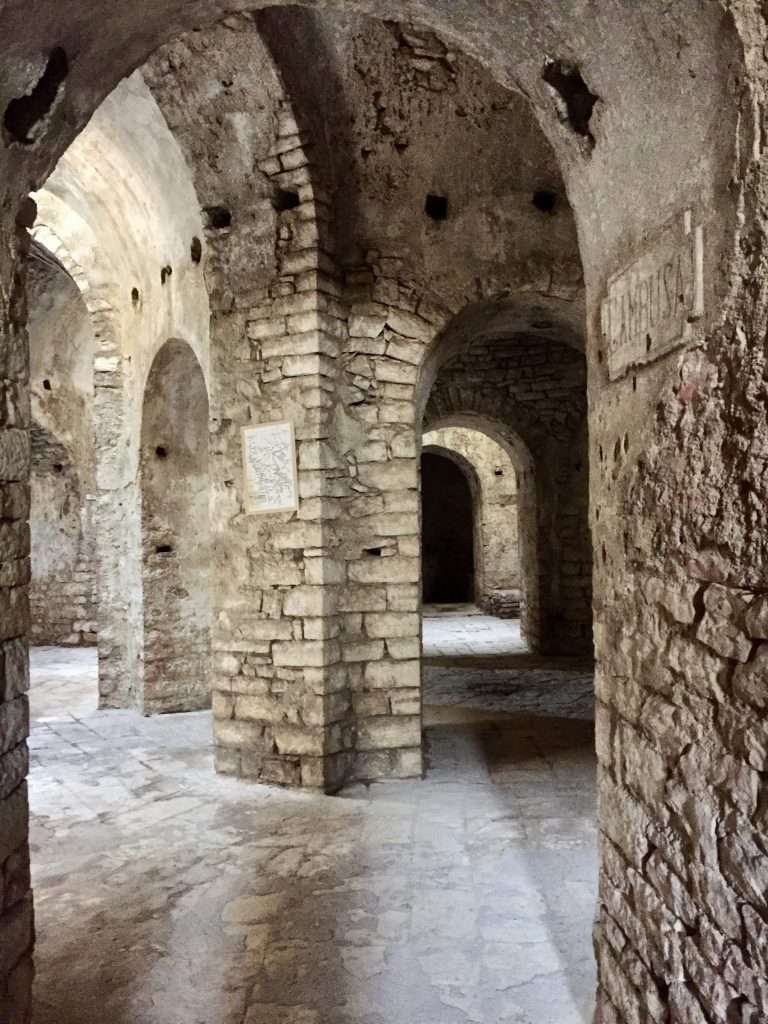
Castle interior.
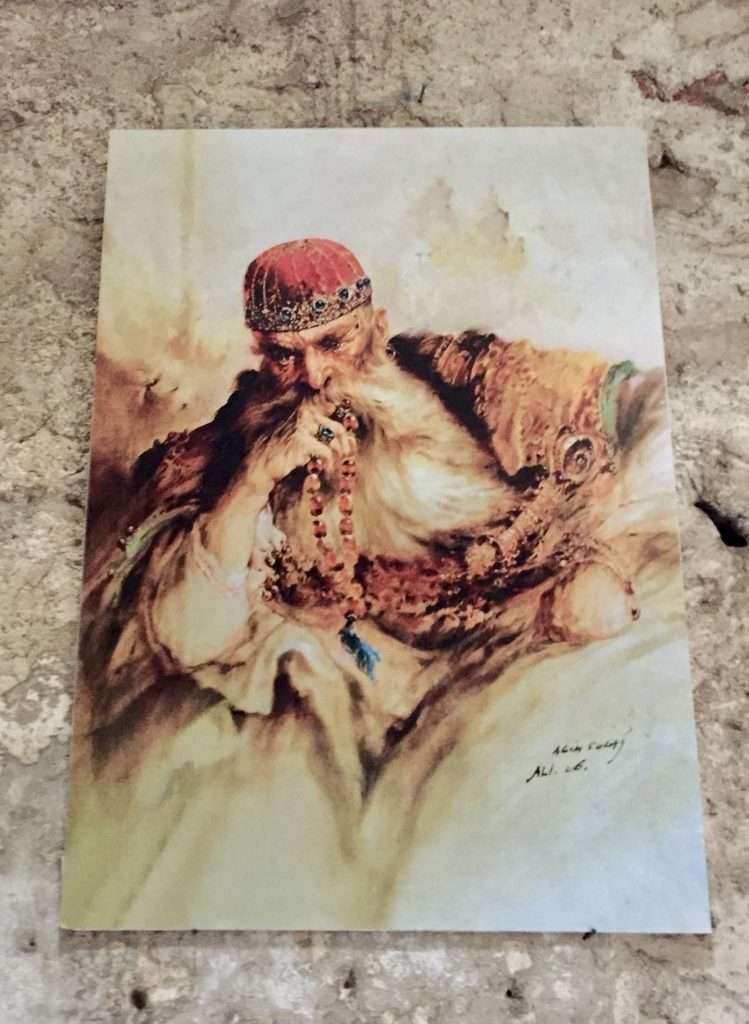
Ali Pasha.
The weather prediction for Sunday indicated freshening southerlies, so we set off early and had a fast, cold and wet sail sail to Vlore, 38 nm to the northwest. At this point, the distance to the east coast of Italy is only 39 nm and this narrow gap creates a venturi effect on the wind. We anchored in the lee of a north facing bay and by 6 pm the wind was pumping at 30 knots with the rain bucketing down, requiring a close watch on our anchor. I was also developing a persistent and irritating cough.
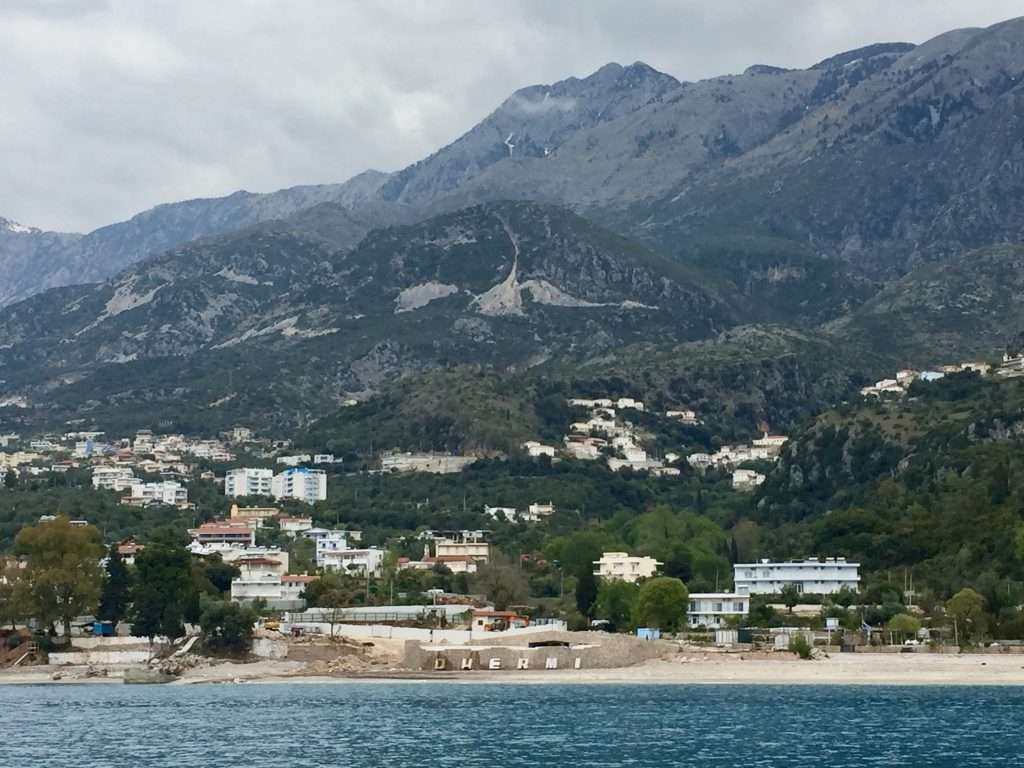
Sailing past Dhermi, where Karen enjoyed a music festival last year.
Anchored in the lee of the land at Vlore, just before the wind and the rain came.
There was no point in sitting out the heavy winds and rain the next morning, so we set off for Durres, the main Albanian harbour further north, covering the 56 nm passage at an average speed of 7 knots. We were totally drenched and freezing cold due to the continuous rain following us from the south. We anchored off the harbour wall and consumed a few calming brandies. I woke up the next morning with a serious cold – my first cold in 3 years of sailing!
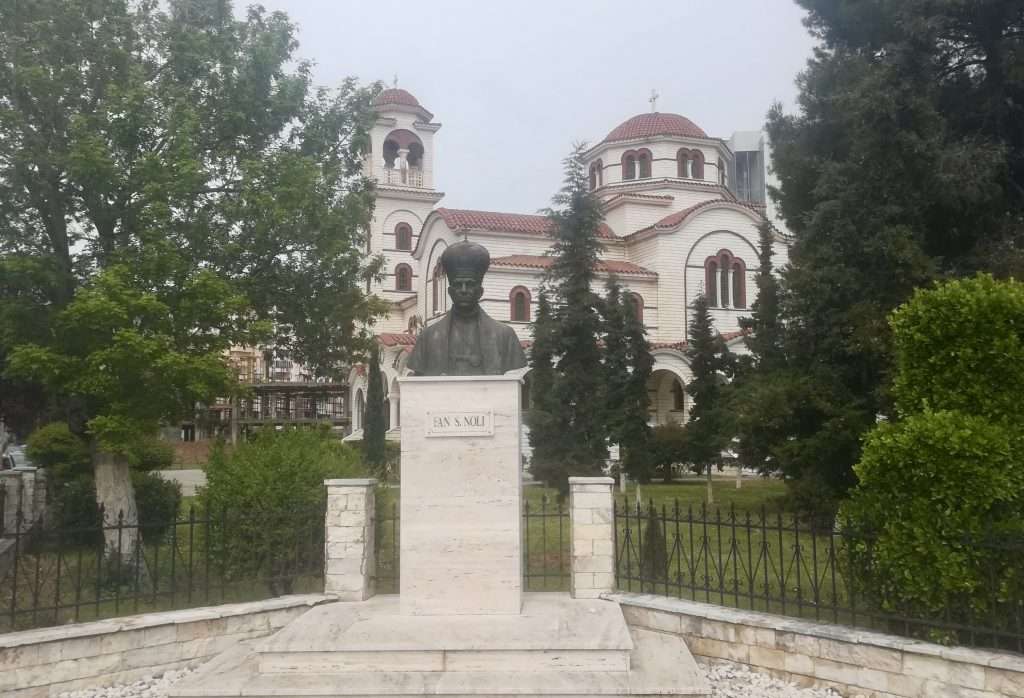
Beautiful Orthodox church in Durres.
Our new agent in Durres, Ilir Gjergji took care of the paperwork in the record time 0f 2.5 h and pointed us to a chemist for medications, supermarket and fruit and veg shops. It turns out I had contracted an upper respiratory tract infection, which could potentially turn into pneumonia. So, a 5-day course of antibiotics was called for, plus Bisolvon to clear mucus from the chest. The next four days was a blur of continuous coughing and very little sleep.
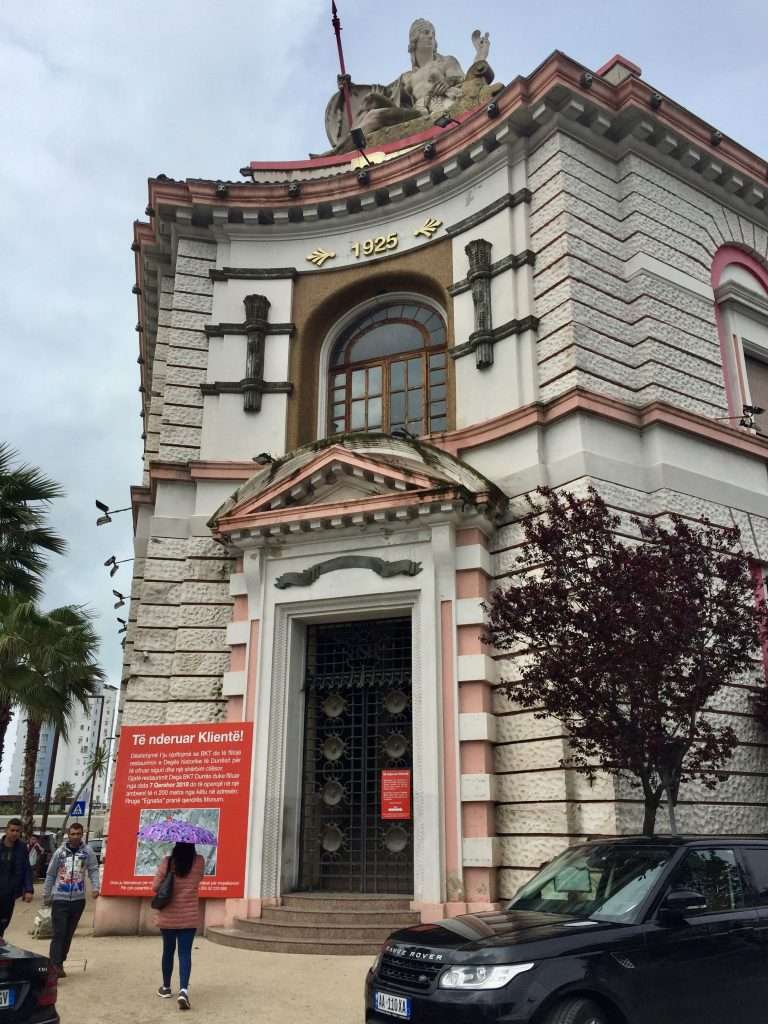
“Can’t quite place this style” in Durres.
On Wednesday the 10th April (our wedding anniversary) we departed Durres, Albania for Bar in Montenegro. It wasn’t the best anniversary we have had, what with me down below under a duvet, suffering coughing fits and Annie above in the pouring rain and wind, sailing the boat singlehandedly for 55 nm to Bar.
Montenegro.
Over the past few decades this area has experienced considerable turbulence, from major earthquakes in 1979 which devastated Kotor and Budva, to the knock-on effects of the wars in Croatia and Kosovo in 1991-1992, when the former Yugoslavia fell apart.
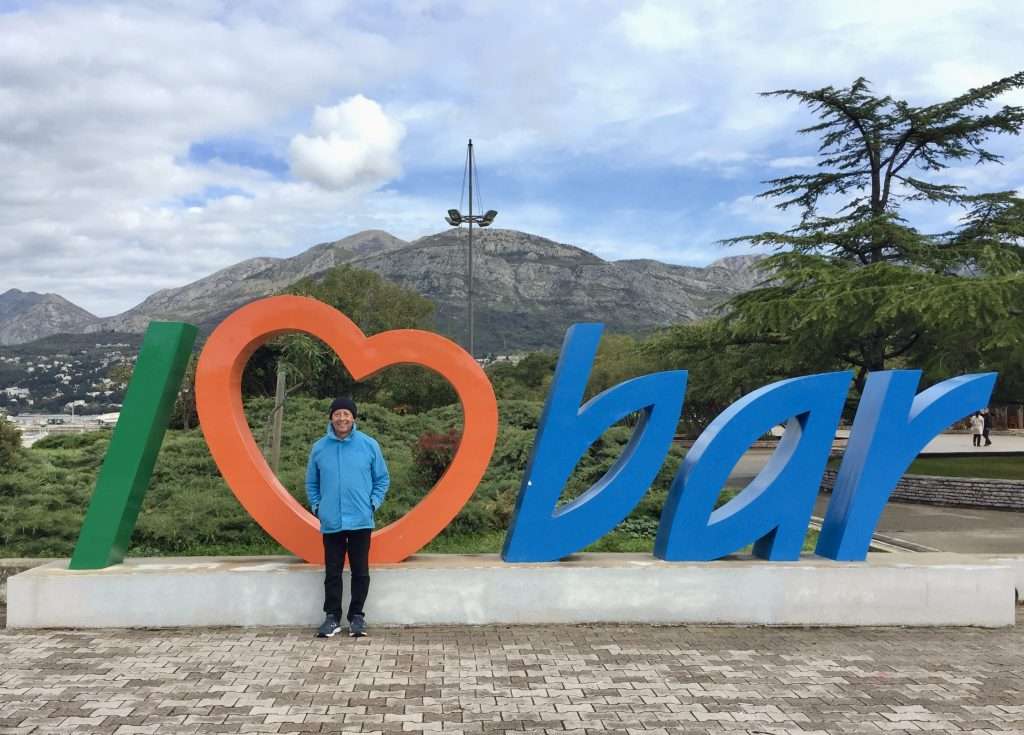
Bar is the principal port of Montenegro. The city is modern, having largely been rebuilt after the second world war. The officials at the harbour master’s office and the police were pleasant and helpful. We paid EU60 for a two-week vignette – cruising permit. Despite advice to the contrary, the marina is smart and clean with water and electricity included in the steep EU71.50 daily berthing fee.
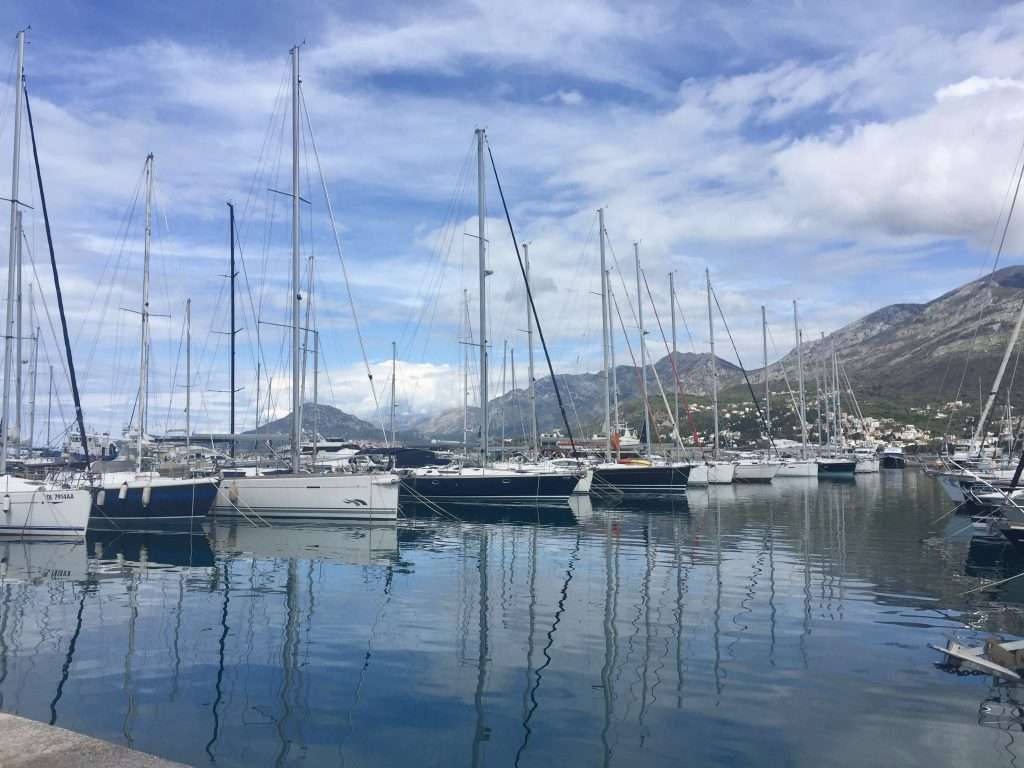
Entrance to Bar marina.
Bar marina.
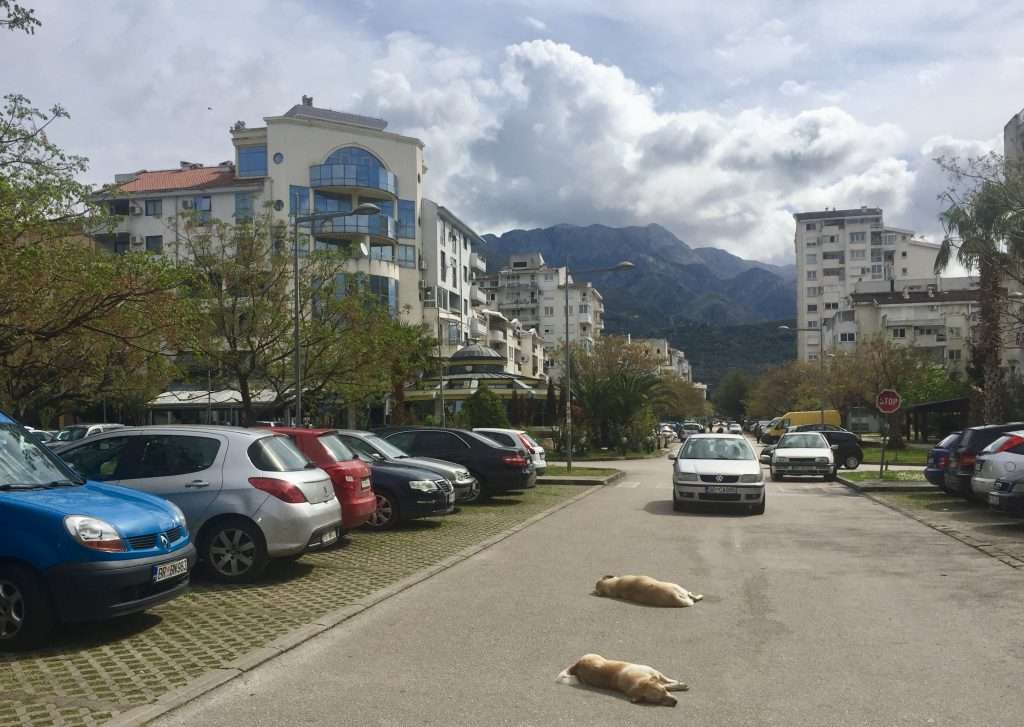
Sleeping dogs in Bar.
Annie had by now, also picked up a cold, so rather than duelling banjos, we had duelling phlegm and snot coughing fits. After two days, we headed north to Sveti Stefan, where we anchored off this beautiful little island for another two days of recovery.
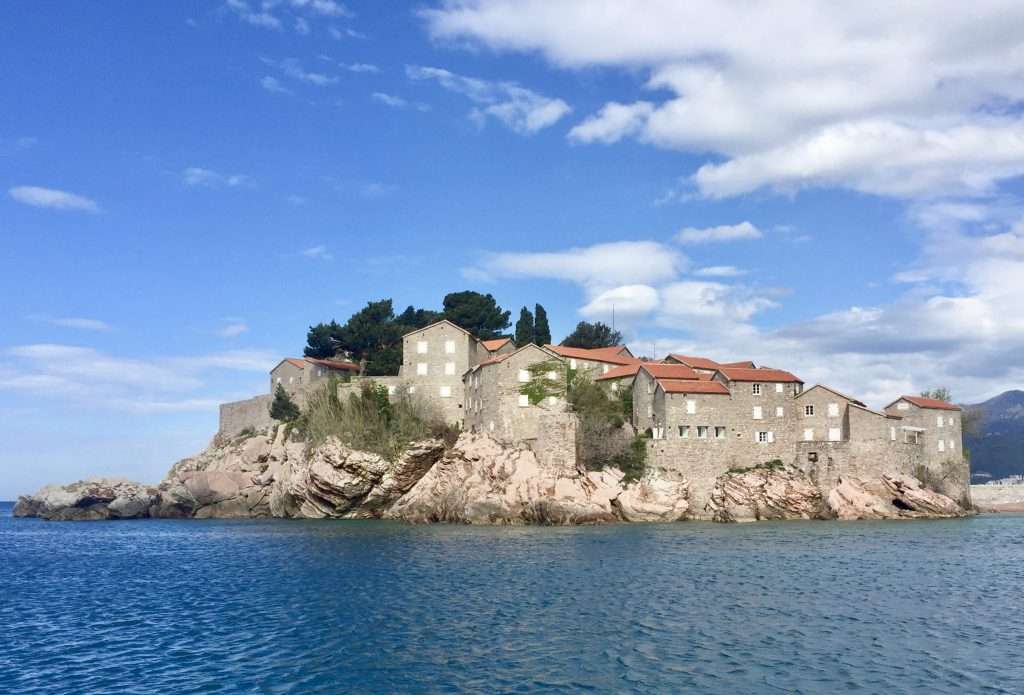
Sveti Stefan.
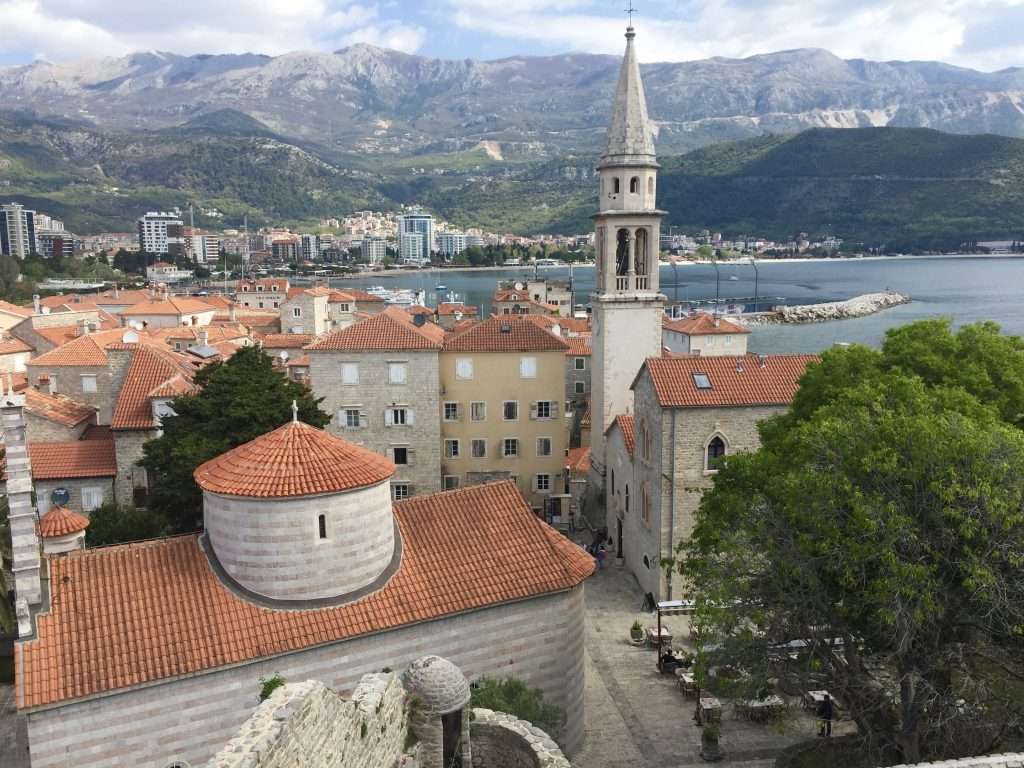
Suitably refreshed, we motored to Budva, a large holiday town and anchored off the marina in the bay. The old town in Budva has been well restored and we enjoyed walking through the narrow streets and up the fortifications. Budva justified a two-day visit before we sailed on.
Budva old town.
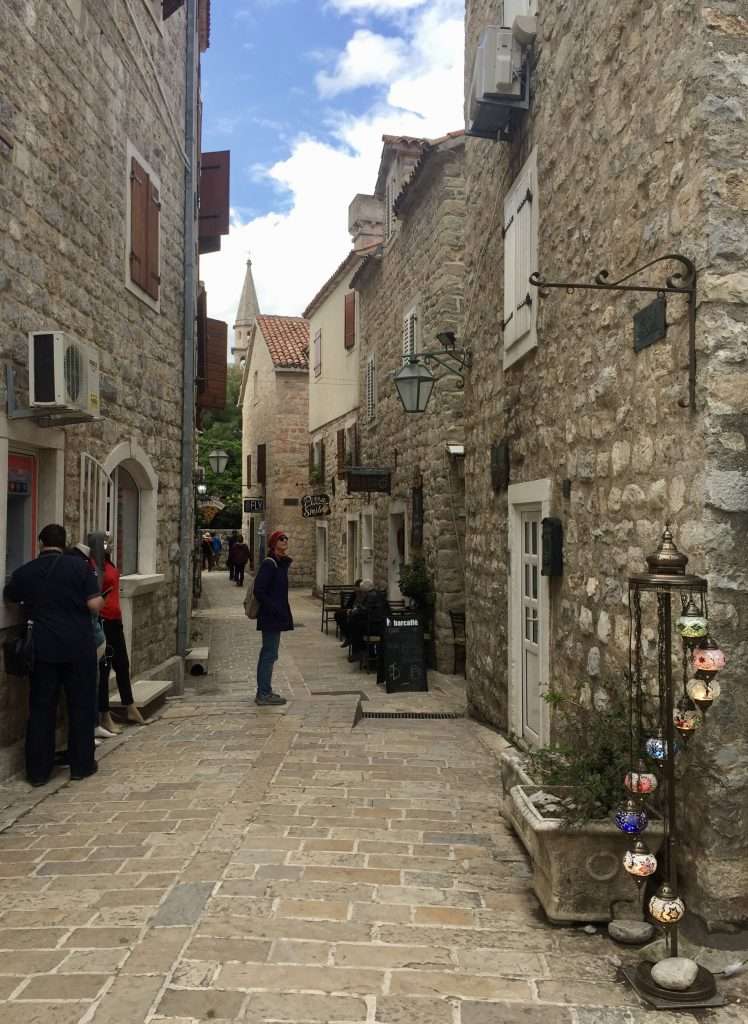
Old town street.
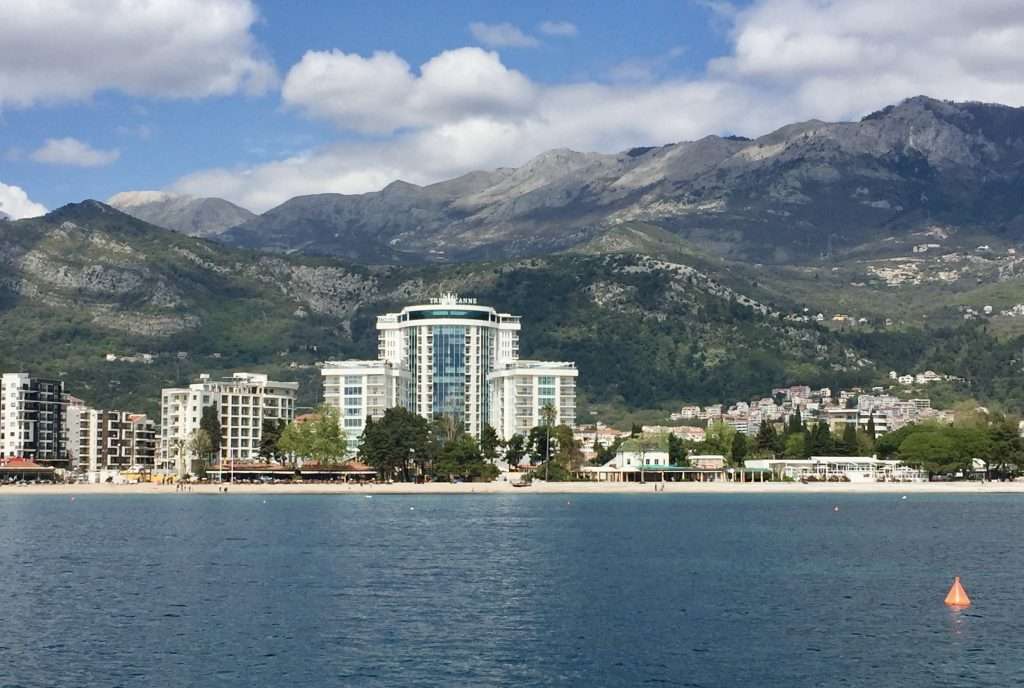
Budva new town.
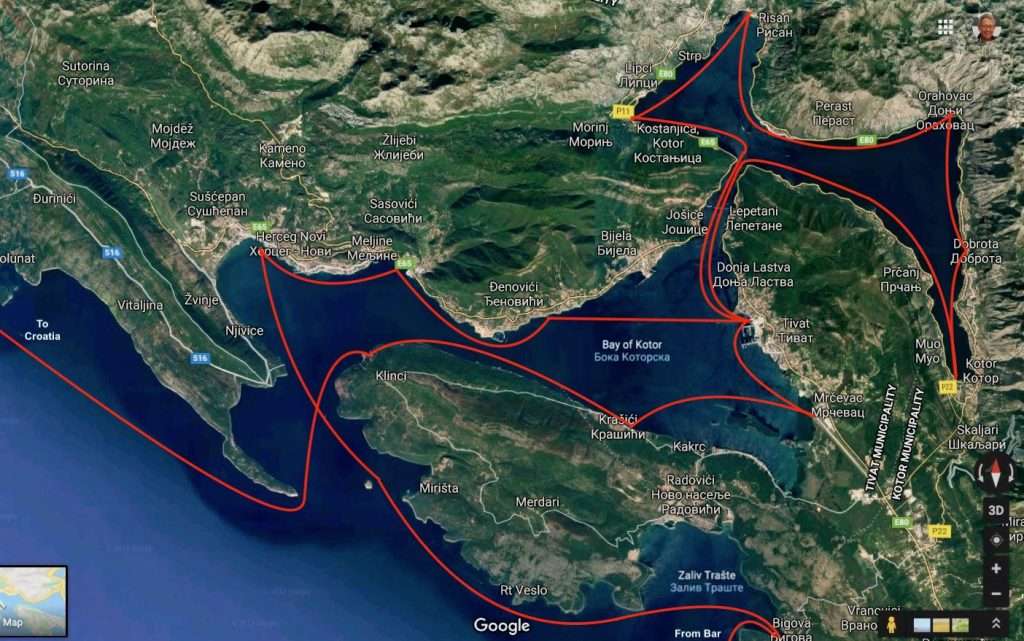
Next stop was the Bay of Kotor, just south of the border with Croatia. This extensive waterway is a cruising paradise and we spent the next 9 days exploring all the little bays and villages along the shore. If you only have a week for cruising in Albania and Montenegro, come and spend it here. Another plus was, we could buy duty free diesel at Porto Montenegro marina before departure to Croatia. At EU0.67/l, we filled Esprit’s tank as well as our 10 x 20l jerry cans.
Esprit’s cruise in the Bay of Kotor.
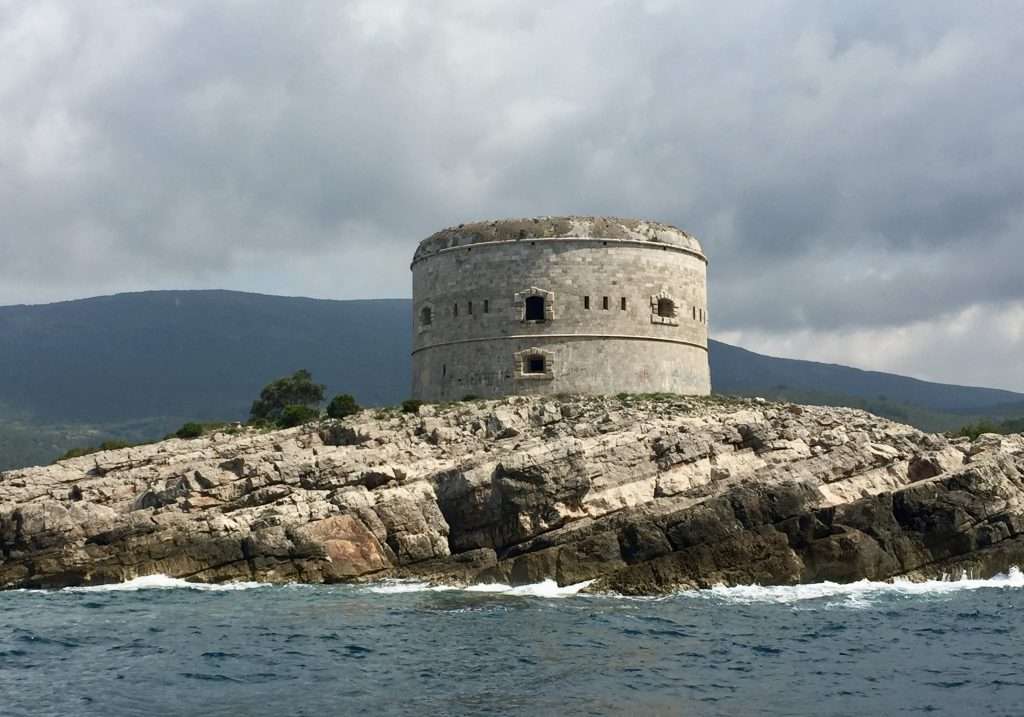
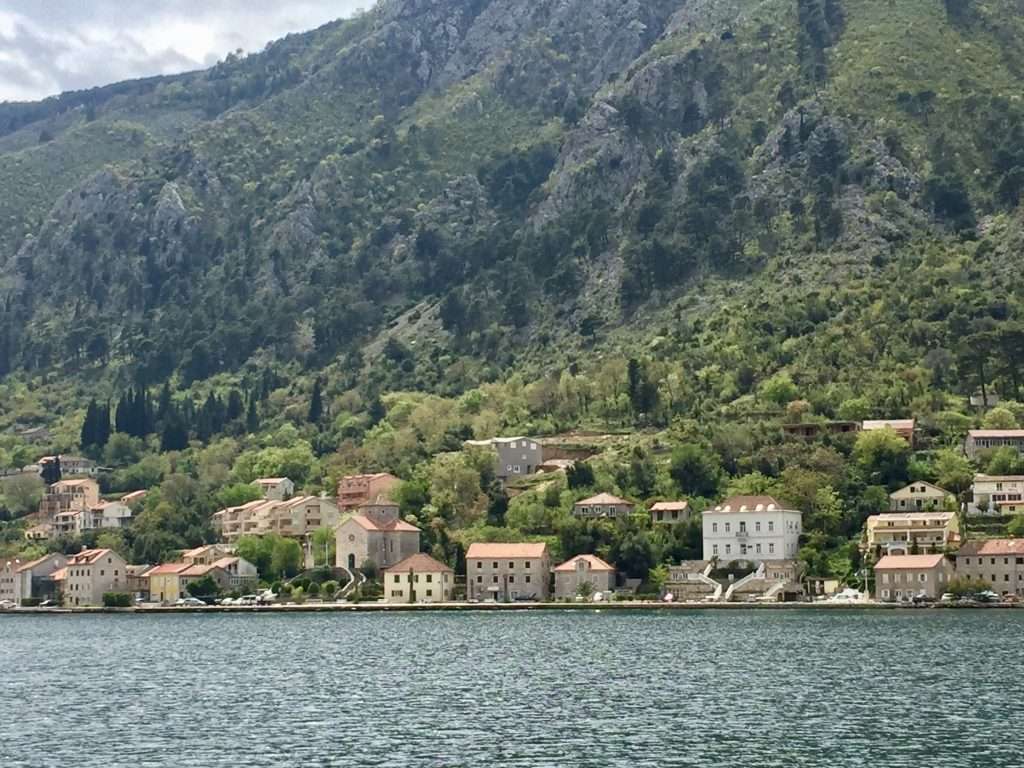
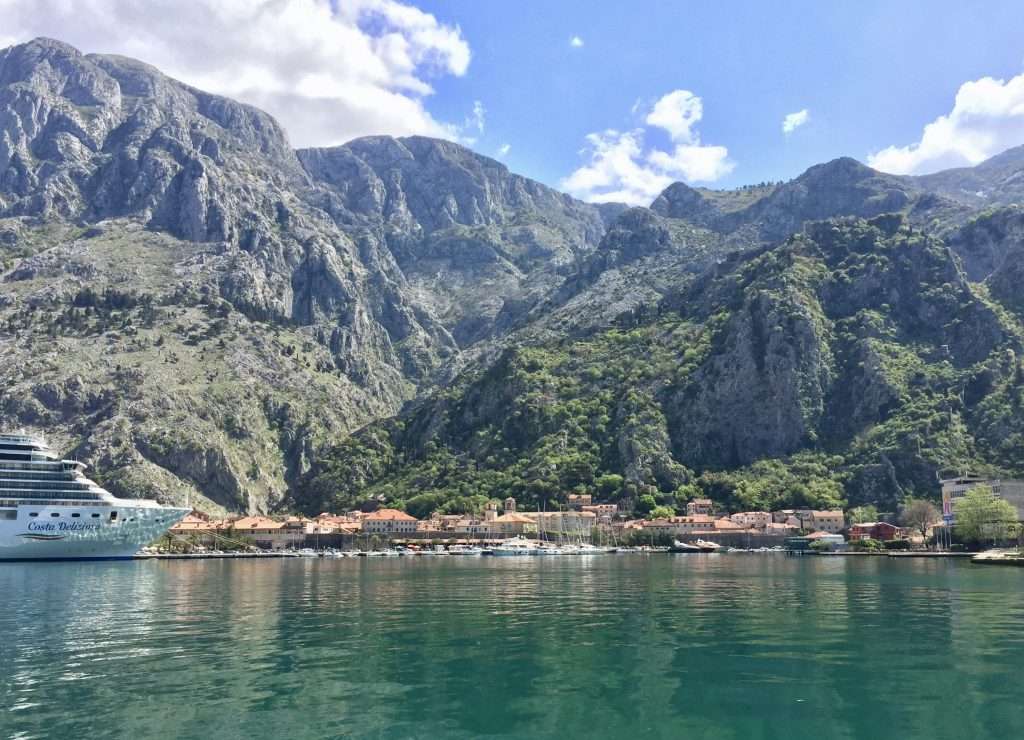
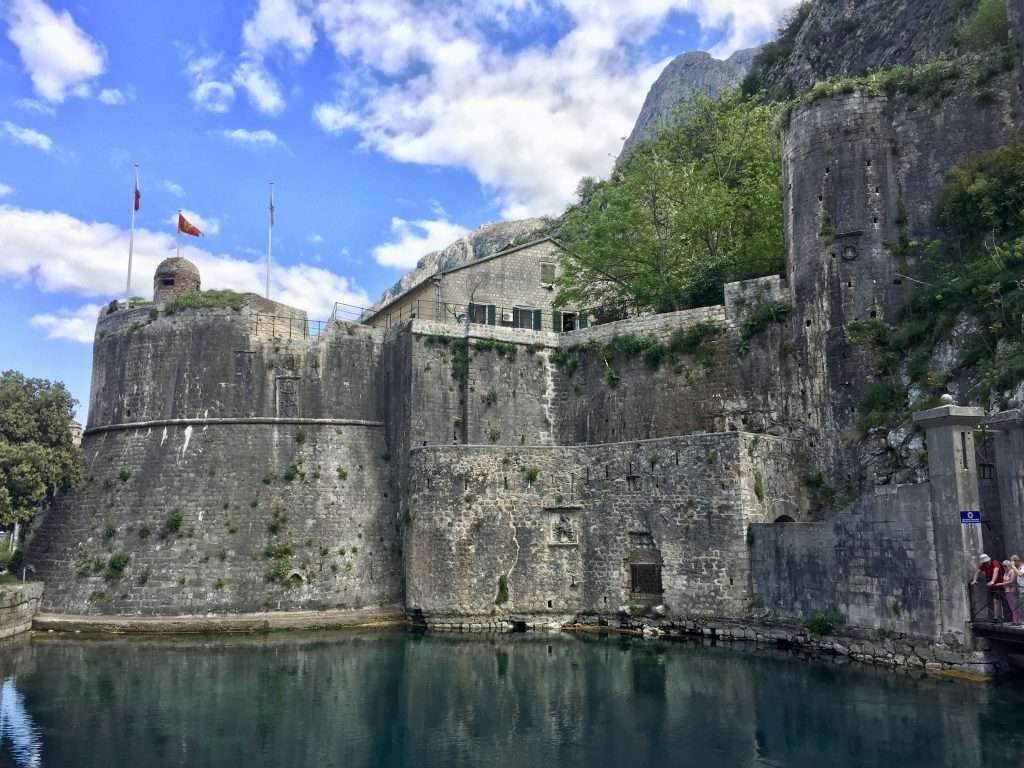
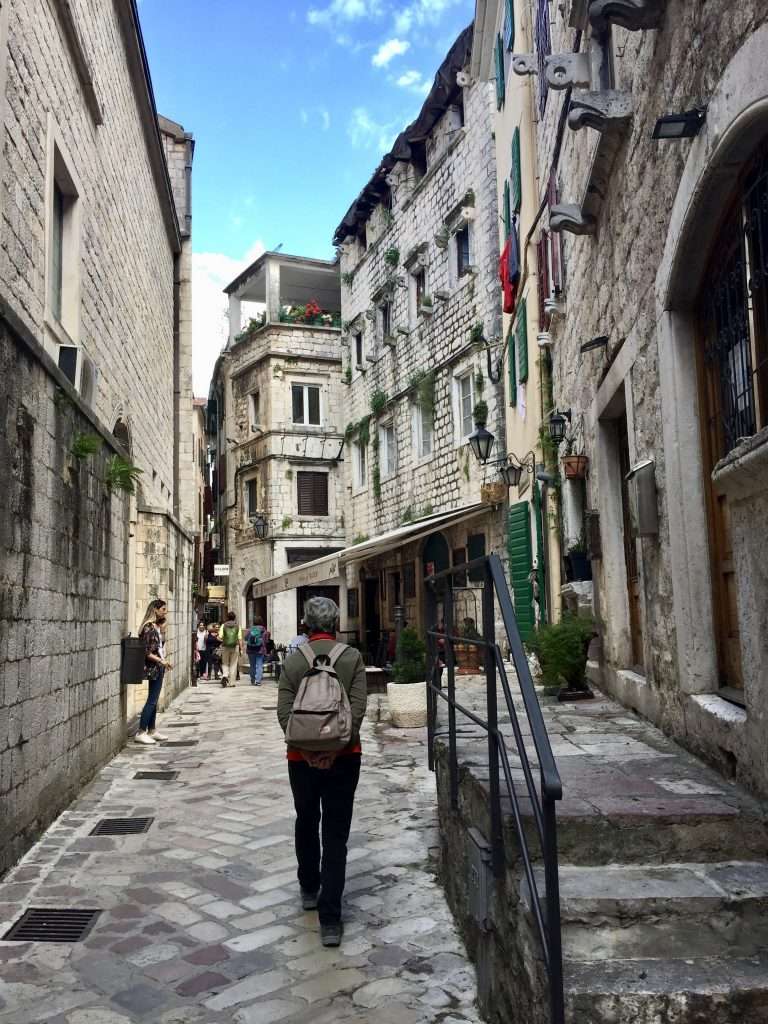
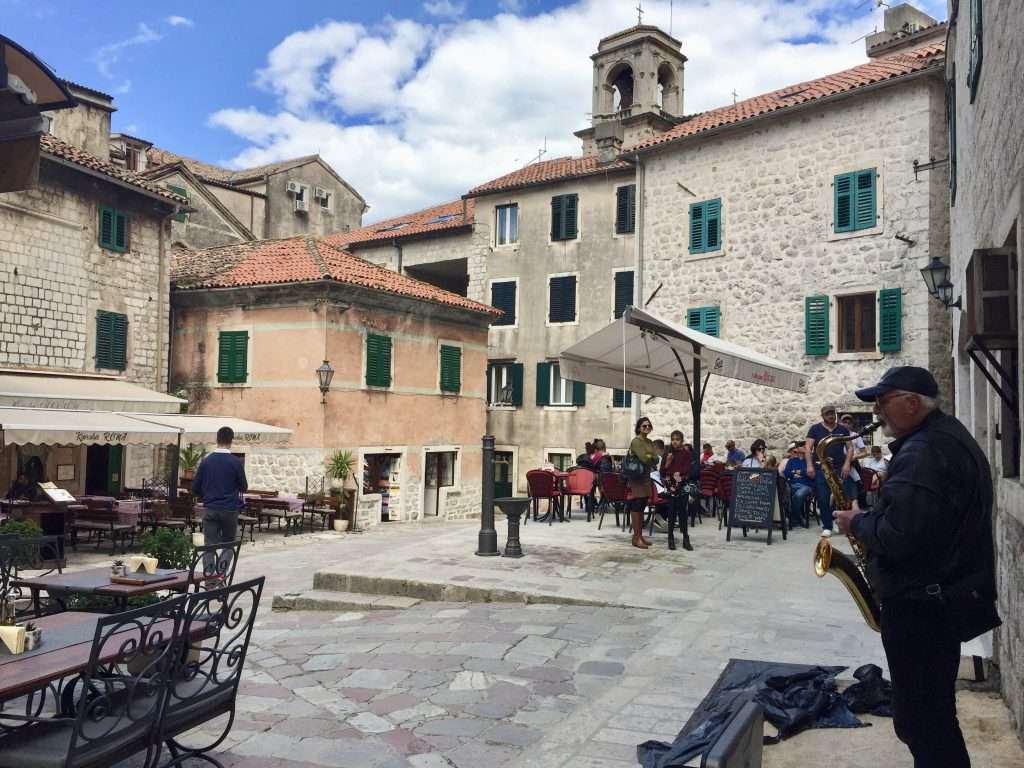
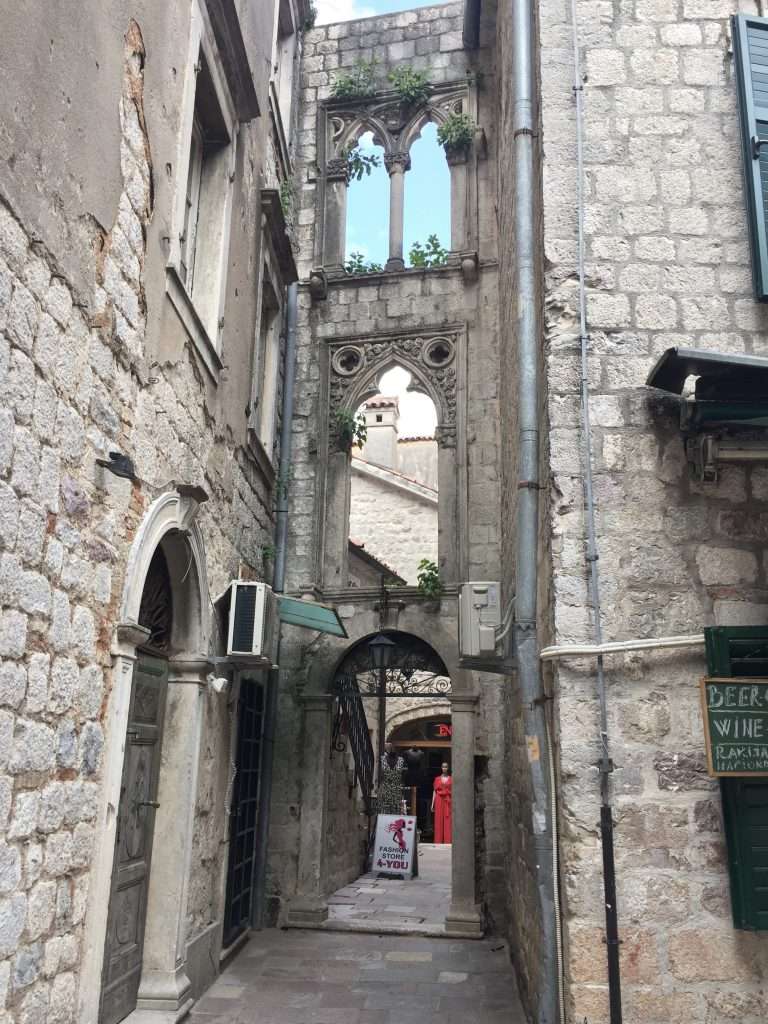
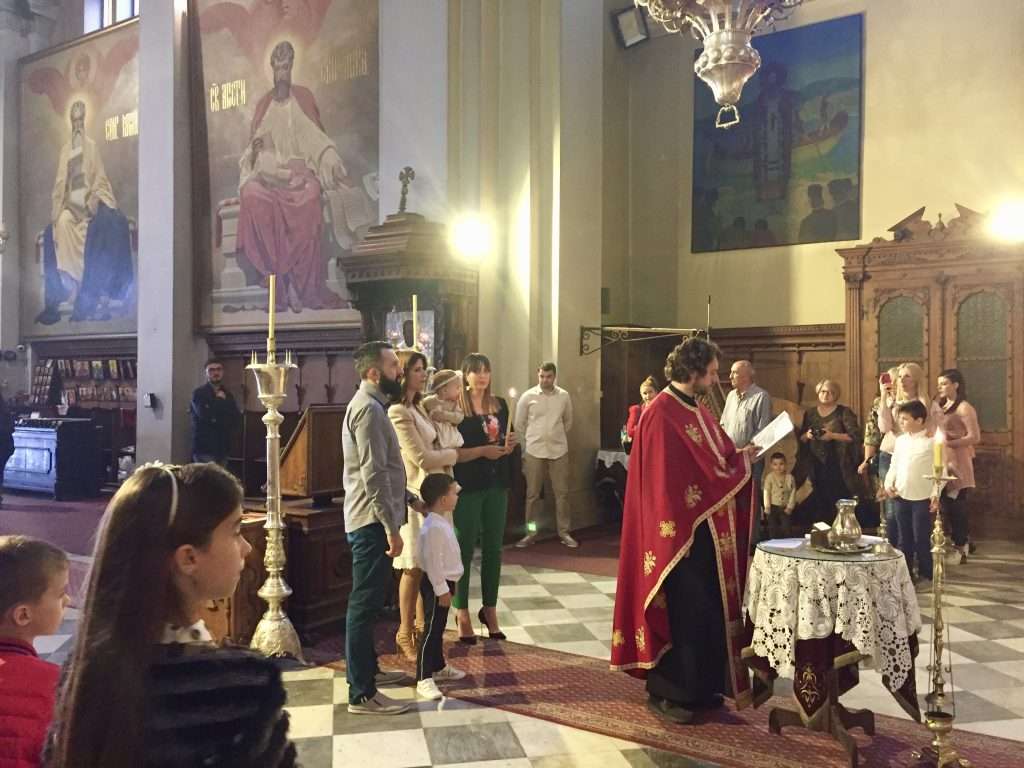
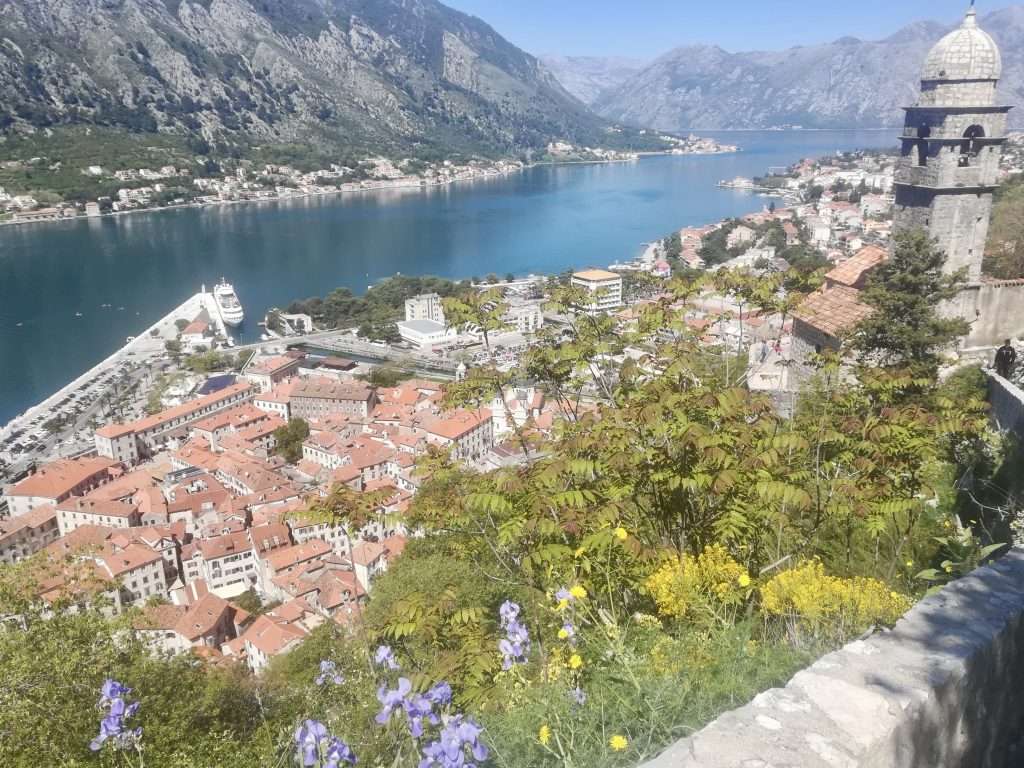
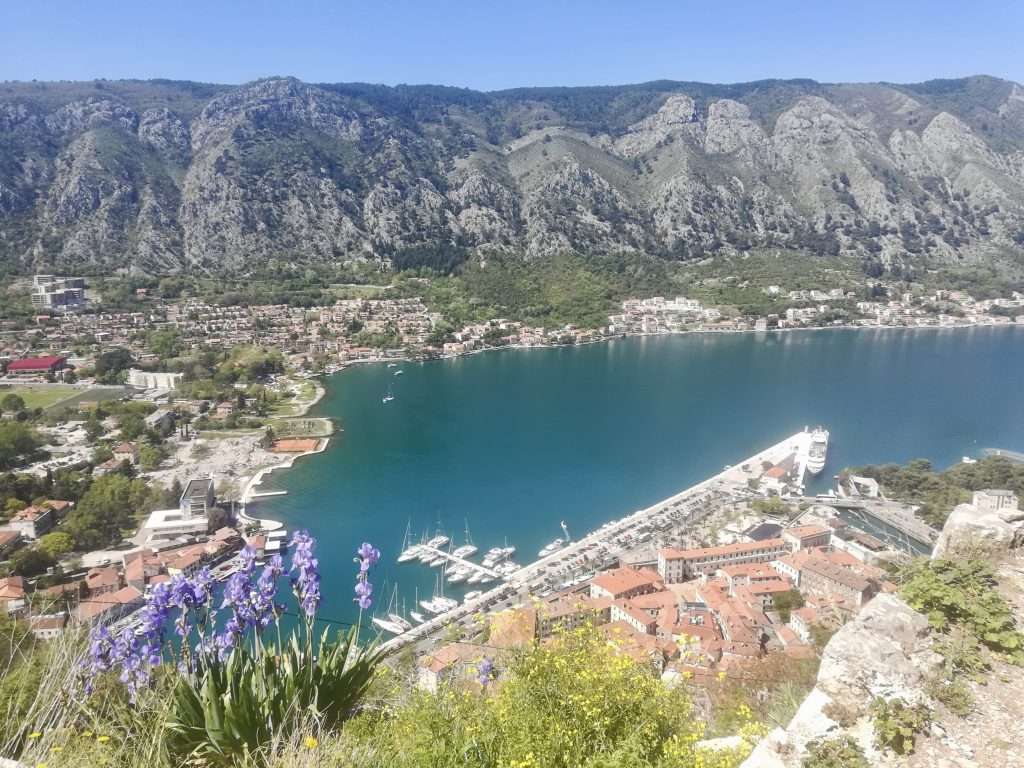
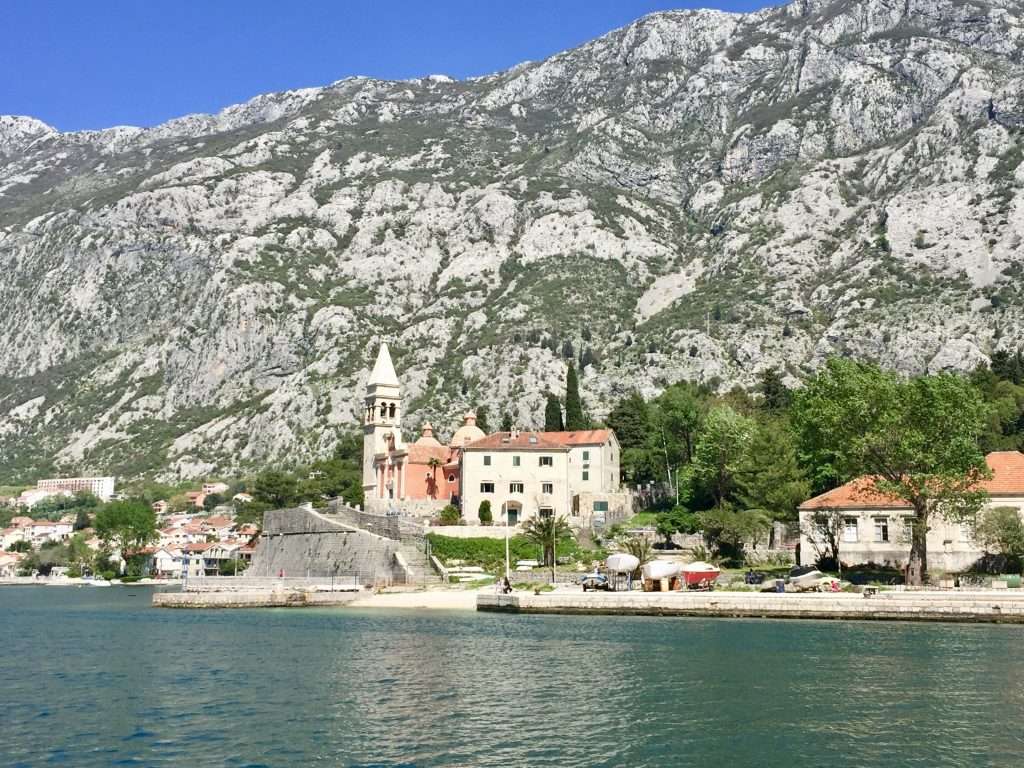
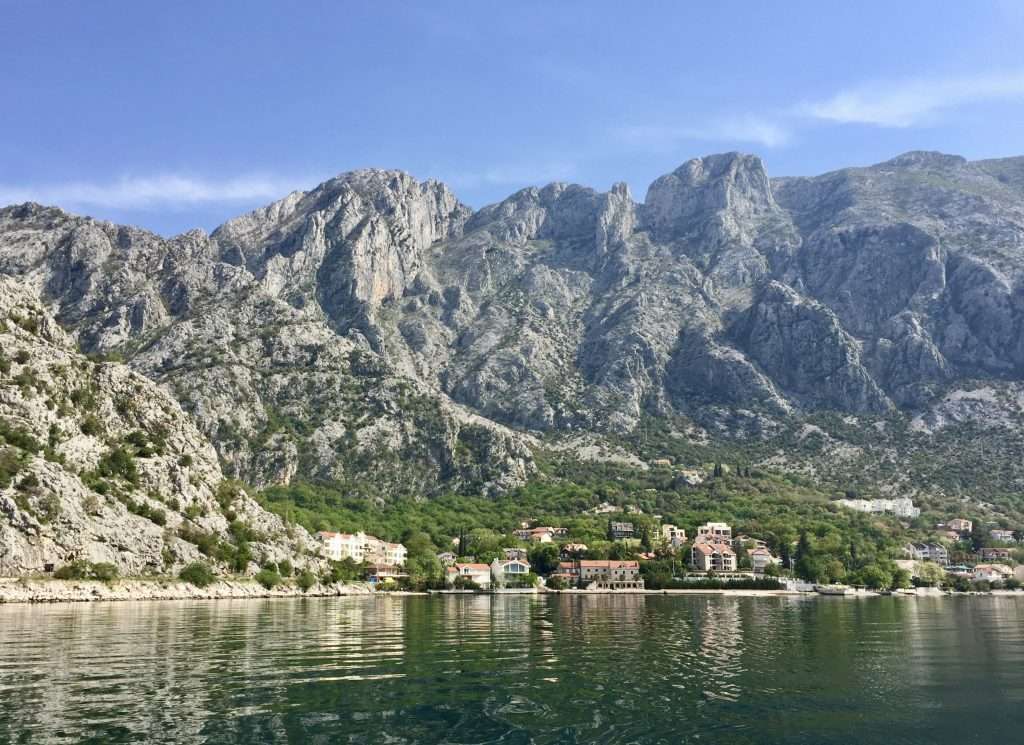
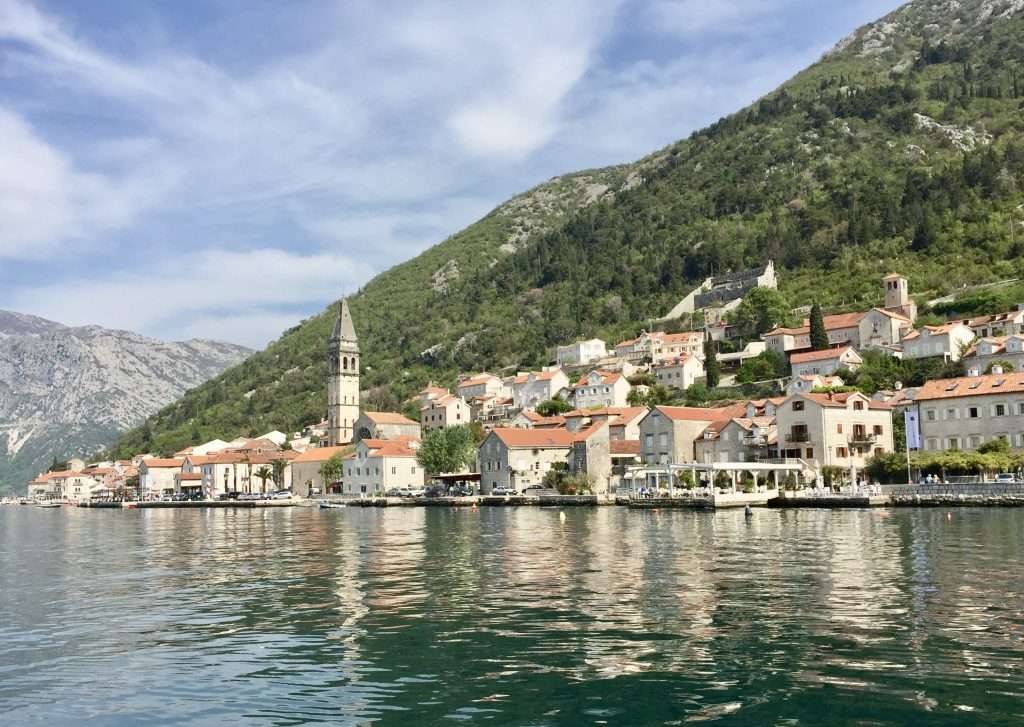
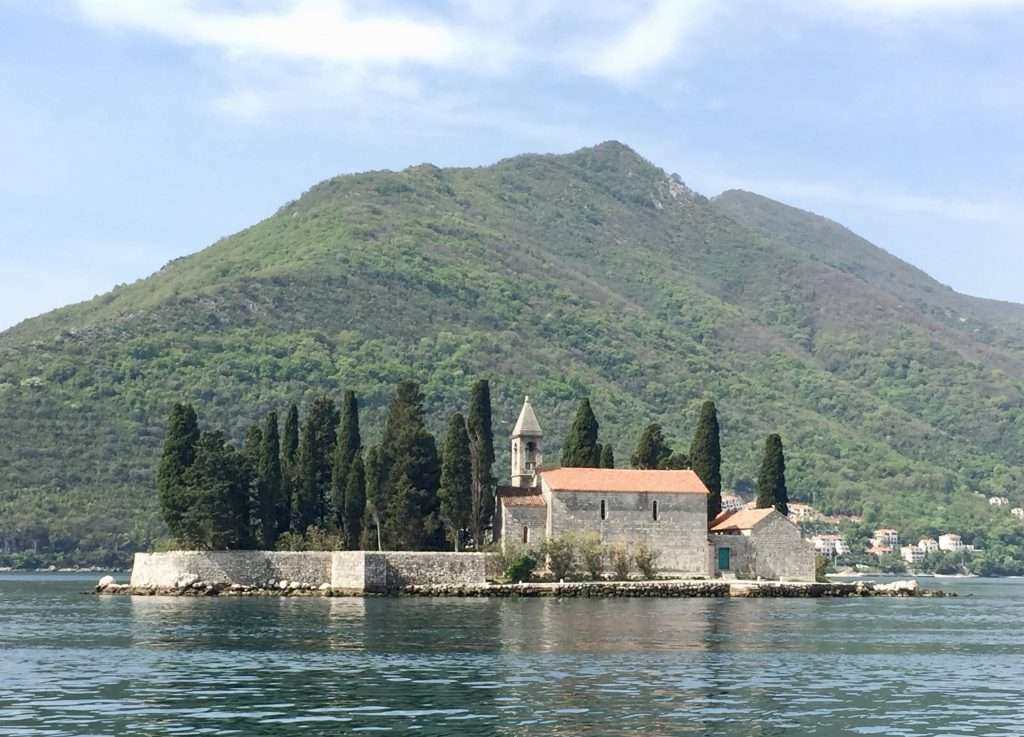
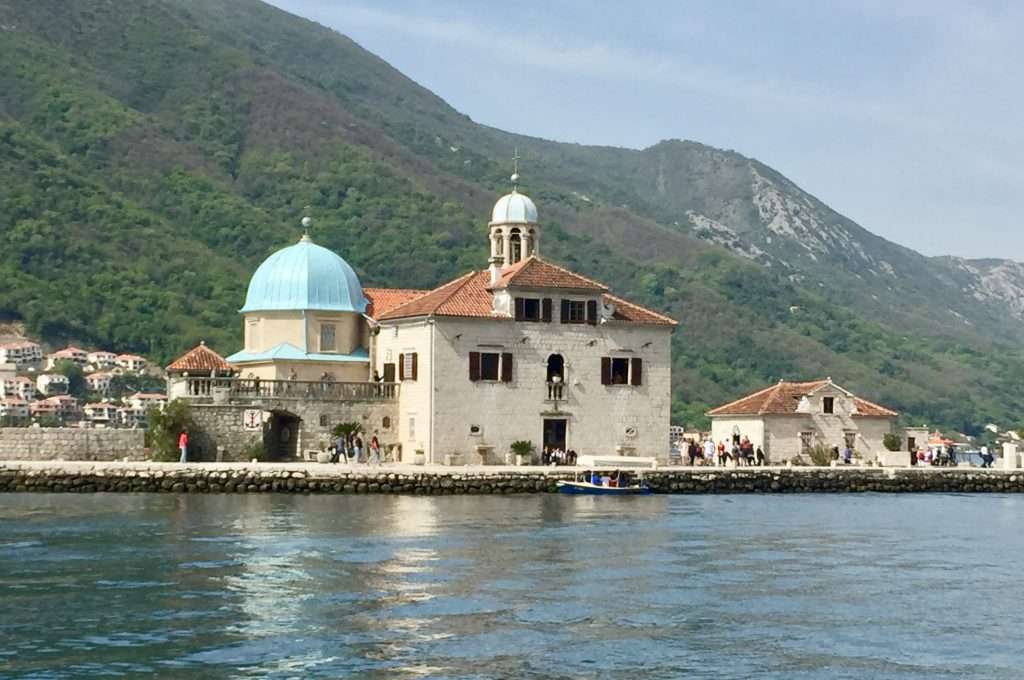
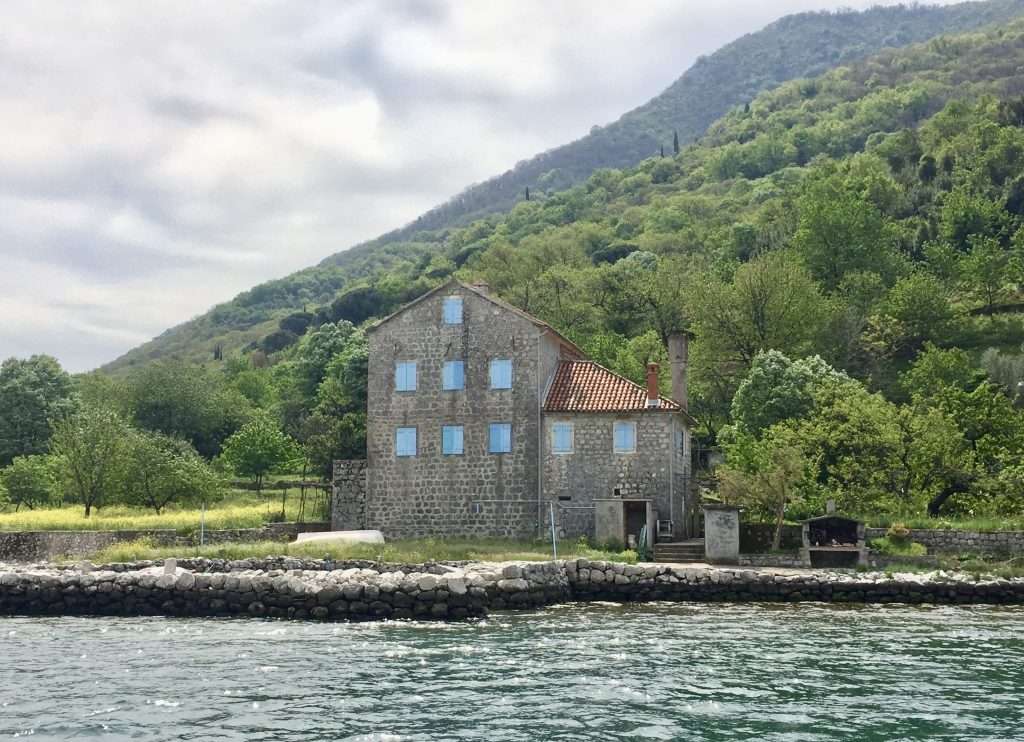
I attach some of our photos of the beautiful Bay of Kotor – untitled, as most of the place names are unpronounceable. From beautiful mountains, to small islands with churches and even a baby christening.
As a farewell gift, we were sent a dust storm from Egypt, the day before we left Porto Montenegro, This covered the boat in dust before a light drizzle turned the dust into mud. Amazing to see that the southerlies can carry dust this far up the Adriatic sea, but evidently it is not unusual. At least we had the opportunity to wash the boat down in the marina before we set sail for Croatia.