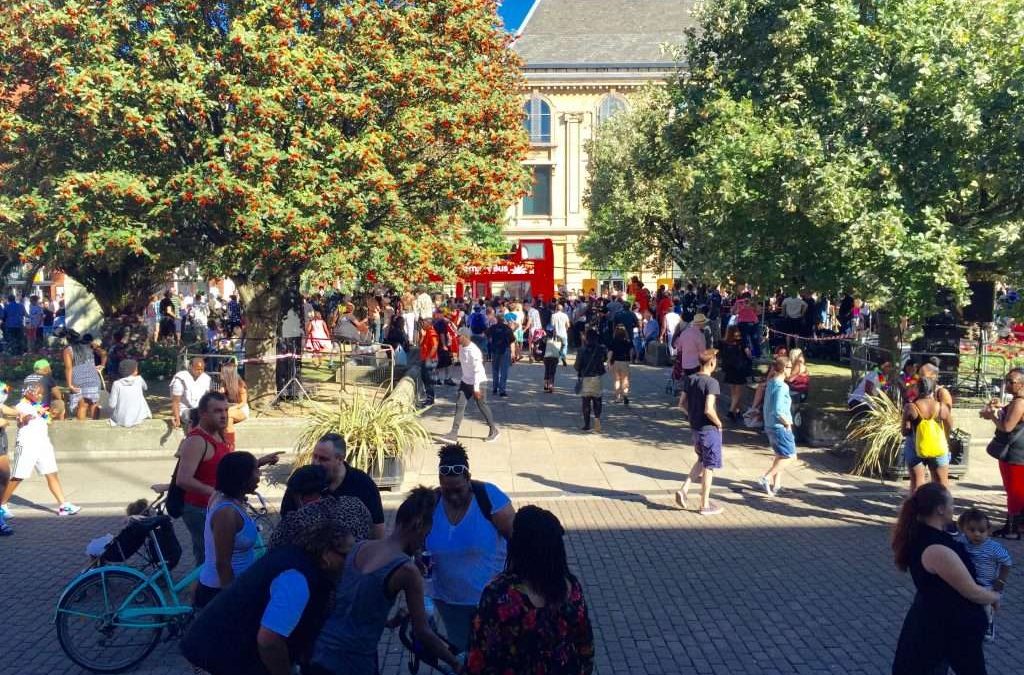
Our last evening in London with Michelle was at the Dalston Eastern Curve Garden, a community urban garden on an old railway site, to listen to some live music and eat pizzas. It was an opportunity to hear about Michelle’s work at her NGO, as a specialist in abused and sex trafficked women. She is passionate about her work in this field and apart from support to these women, she liaises with the Metropolitan Police task force on trafficked persons and spends time in court with lawyers to support the victim’s cases. On this subject, she is doing additional work on her master’s dissertation to have it published. She will be interviewed by the BBC on this work next week. We are very proud of her.
When this beast get’s going, the shit flies, as is evident!
Annie, having just bought a Metro 10 ticket deal.
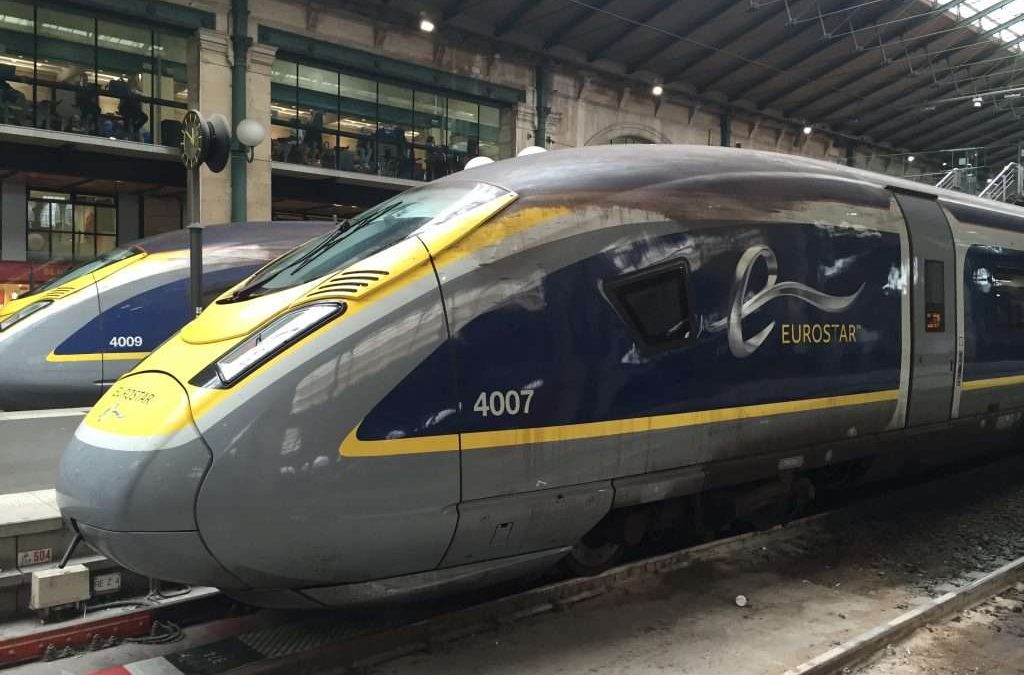
The Eurostar is a quick and comfortable train under the English Channel from London to Paris, travelling at a top speed of 335km/h and taking about 2 hours. We got on the Metro at Gare du Nord and found our way to our modest Hotel le Manhattan near Garibaldi station. After a Nanna nap we caught the Metro to Montmartre, the artist quarter and did the steep walk up to the Sacre Coeur Cathedral.
Sacre Coeur cathedral.
Portrait artists at work.
A walk down past the Moulin de la Galette with a few beers at a street bar to quench our thirst, brought us to the Moulin Rouge to take the obligatory photo. Annie did not pass the audition for the chorus line-up as she was too voluptuous.
Montmartre.
Calming ale.
OK, you have seen this place before, but Annie is devo about her audition.
Friday was a busy day starting with the Metro train from Garibaldi to Champs-Elysees station. From here we launched the big walk (in hindsight we should have utilised the rental bikes available all over Paris – with the first 30 minutes free!). First, the Grand and Petit Palais’, then the Invalides bridge, past the Place de la Concorde to the Musee de l’Orangerie.
Invalides bridge.
Monet donated his 8 panels of “Grandes Decorations”, Water Lilies, to France and designed this beautiful vestibule to house the culmination of a lifetime’s work. Breathtaking! The lower level houses the Paul Guillaume collection of works by Cézanne, Matisse, Picasso, Modigliani, Derain, Renoir, Utrillo and Soutine. This small gallery has a quality collection, worth visiting.
Monet’s water lilies.
From here, a relaxing stroll through the Tuileries gardens to the Louvre. The queues of people waiting to enter, stretched around I.M. Pei’s glass pyramid. Having visited the Louvre before, we continued along the Seine and turned into the Marais district to visit the Pompidou Centre.
Rodin’s lovers outside the Musee de l’Orangerie
Tuileries gardens
This Piano and Rogers designed building was quite revolutionary in the 70’s, expressing its structure and services on the facades. Sadly, as with other similar Rogers designed buildings in London, it hasn’t aged well. The pigeons have a field day with all the perches it provides, and the pollution settling on the ducting and services, makes it look tatty. High maintenance!
Pompidou centre.
Pompidou centre
Not far from here is the National Picasso Museum, where we spent some time after lunch viewing the extensive Picasso collection, curated in sequence from his early days in Spain to his final years in Paris, as well as the works of other artist’s he had collected.
Picasso’s sketchbook
After crossing the bridge onto the Ile de la Cite, we visited Notre-Dame cathedral, my favourite French Gothic cathedral.
Notre-Dame’s flying buttresses.
Notre-Dame interior.
Getting foot sore, we caught the Metro to the Museum d’Orsay. Michelle our daughter, recommended this museum and I must agree, this former railway station has the best collection of western world art from 1848 to 1914. It has the most extensive collections of Impressionists like Monet, Manet, Renoir, Degas, Cezanne, Pissarro, Sisley, Gauguin and Van Gogh; Neo-Impressionists like Seurat, Signac, Cross, Bonnard, Vuillard and Denis; Art Nouveau like Degas and Toulouse-Lautrec. This is a breathtaking museum and we spent the whole afternoon there, until they closed at 6pm.
After Michelle.
Museum d’Orsay interior.
Van Gogh.
Degas.
We arrived back at Garibaldi metro station at 6:30pm and bought cheese, wine and salads to have in our room, as we were too knackered to go out for dinner. A good night’s sleep and we were ready to take the fast train to Bordeaux on Saturday.
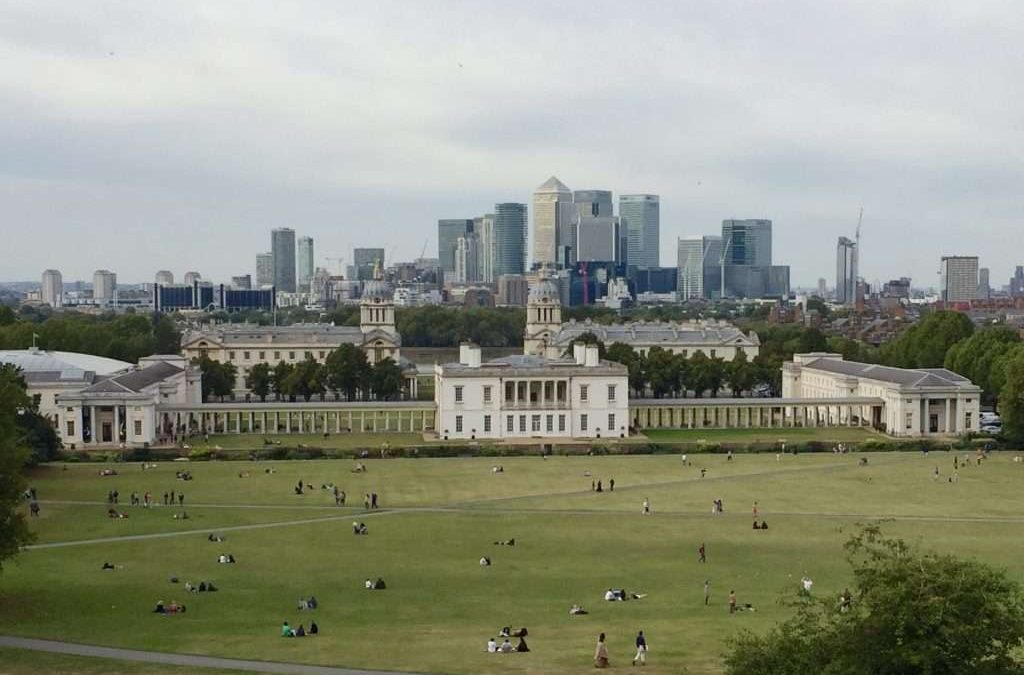
The Friday night get together with Annie’s old school friends left us feeling a bit ordinary on Saturday morning. The girls were somewhere in Hackney after their catch up with friends, so we decided to take the train out to Greenwich for a relaxing day out. We couldn’t have asked for better weather – families were out in force enjoying the sunshine and picnicking in the park.
Greenwich Park with the Canary Wharf development behind, across the Thames.
The Docklands light rail took us through the Canary Wharf redevelopment of the docklands East of London. This is now a new city where a lot of the banks and corporates have built their new headquarters. Quite a change from 40 years ago! The light rail train is driverless and computer controlled, which is a bit disconcerting at first sight.
Since my last visit to Greenwich, Sir Francis Chichester’s yacht “Gipsy Moth 4” with which he circumnavigated the world in 1966-67, has been restored and relocated to Plymouth. The fast tea clipper “Cutty Sark” in the dry dock, had been damaged twice by fire since 2007 and has now been restored and enclosed in a glazed structure below her waterline.
The Cutty Sark.
Greenwich is a world heritage site which includes Greenwich Park, the old Royal Naval College, the National Maritime Museum and the Royal Observatory. The red ball on the roof of the observatory drops at 1pm every day for ships on the Thames to set their chronometers. The Prime Meridian or Greenwich Meridian (longitude zero), was established at the Royal Observatory. A very pleasant day out, ending with an early night, while the girls caught up with their friends.
The painted dining room.
Figureheads at the National Maritime Museum.
The Royal Observatory.
Annie with the Prime Meridian between her legs.
Sunday was spent exploring the Brick Lane markets and the flower markets. This area is packed with people over weekends and food from around the world is available at the street stalls. A variety of buskers play along the streets, which in itself, is more than a day’s entertainment. I attach a few videos to enjoy.
Our squat on Brick Lane above Gandhi’s curry shop.
Street hip hop.
We revisited the Victoria and Albert museum to take our time individually to explore the collections. I particularly enjoyed the large collection of Rodin sculptures – 20 in all, 18 of which he donated to the V&A during the first world war for safe keeping. The rest of the week was a whirlwind of visits to the Tate Modern Gallery, St Paul’s Cathedral, Westminster Abbey, The Golden Hinde 2, Shakespeare’s Globe theatre, etc. London has so much to see!
Karen did her surgery course at St Thomas’ teaching hospital during the week before flying back to Sydney. On our last day in London, we visited the Queen Elizabeth 2 Olympic complex.
The Aquatic centre.
A strange structure.
Tomorrow, we take the Eurostar to Paris. We will report on France in our next post.
Since my last visit to London in 1975, the city has changed remarkably in demographics. English is occasionally heard on the streets and the multi-cultural mix is quite vibrant.
We were quite knackered on returning from our road trip, so to Michelle’s great disappointment, we opted for a quiet evening with a bottle of wine on our first night back.
Victoria and Albert museum.
After a good night’s sleep we were ready to go again on Thursday and so, set forth to visit the Victoria and Albert museum in Chelsea around 10am. This is a museum with an amazing collection, which we plan to visit again before we leave. On the way to a lunch date, we passed Harrods, the temple of ostentatious consumerism. The girls wanted to have a sticky beak, but I bolted back onto the pavement when confronted by the special of the week: a $365,000 diamond encrusted ladies watch. I watched a guy doing a sand sculpture on the sidewalk, for $2 in his collection box.
Sand sculptor outside Harrods.
We joined Pedro Roos, a prominent architect in London for a pleasant lunch at the Saatchi gallery in Chelsea. Pedro was a classmate of Annie’s at University. He lives in Surrey and has a weekender in Normandy, France.
Annie, Pedro and Michelle.
Karen our eldest daughter arrived in London after lunch and found her way to our place in Brick Lane by about 3pm. She will be in London for a week to catch up with friends and to do a surgery course at St Thomas’ hospital, across the Thames from parliament. It is great to have the whole family together again in more than a year and a half.
Annie and Karen with Michelle navigating the tube system for us.
The girls have stamina, so despite Karen’s long flight from Oz, we hit the tiles to celebrate her arrival. First, it was drinks at a Speakeasy pub in Whitehall, with an excellent trio playing jazz. Then it was dinner at Michelle’s favourite music venue, The Jazz Kitchen, with a six-piece brass outfit playing.
Kaz and Shel together again at the Speakeasy.
Great brass section at the Jazz Kitchen.
On Friday while the girls did their own thing, Annie and I set out on our own tour visiting some contemporary buildings, like the Gherkin, in our area. We visited the 36th floor of the “Walkie talkie” building to check out the 360-degree view of London and have a beer on the 35th floor terrace. We walked to the Tower of London and the Tower bridge, before taking the tube to Soho.
The Gherkin.
The 35th floor atrium terrace.
View across the Thames to the Shard.
Annie and the Tower bridge.
At six-thirty, we were in Soho to meet for drinks with Shirin Elahi architect, who studied with us at Pretoria university. Shirin has been living in London since 1980 and has two daughters the same age as ours. By 7pm we were joined by more old school and Uni friends of Annie’s and had a great dinner and evening in Soho. We managed to stumble home by 1 am.
Shirin and Annie.
Larry, Annie, Dirk, Derek, Dawn and Nushin.
Dawn, Derek and Annie late night.
Next instalment: Recovery on Saturday and a visit to Greenwich.
Driving North from Kent, we had to travel through the Dartford tunnel on the very busy M25 freeway to Cambridge. This was the only congested section of road we encountered – due to many trucks joining the road, enroute from the continent. We arrived at our B&B in Cambridge by late morning and spent the afternoon exploring the old city centre. Compared to Oxford, the colleges were bigger and each of them had an imposing church attached to it. Again, lots of history and a lovely relaxed ambiance.
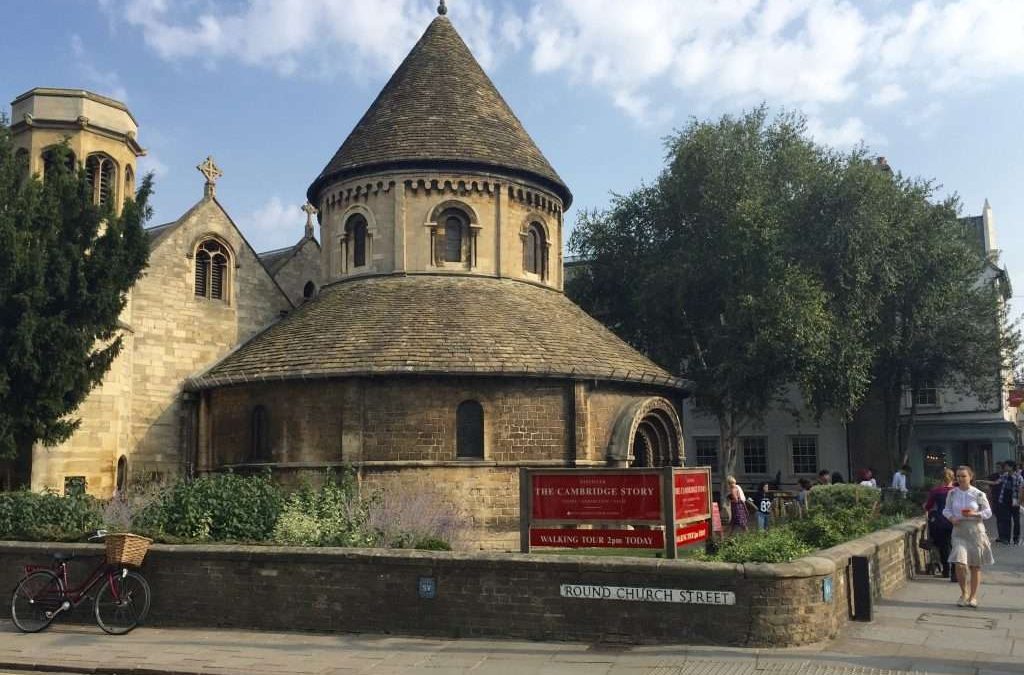
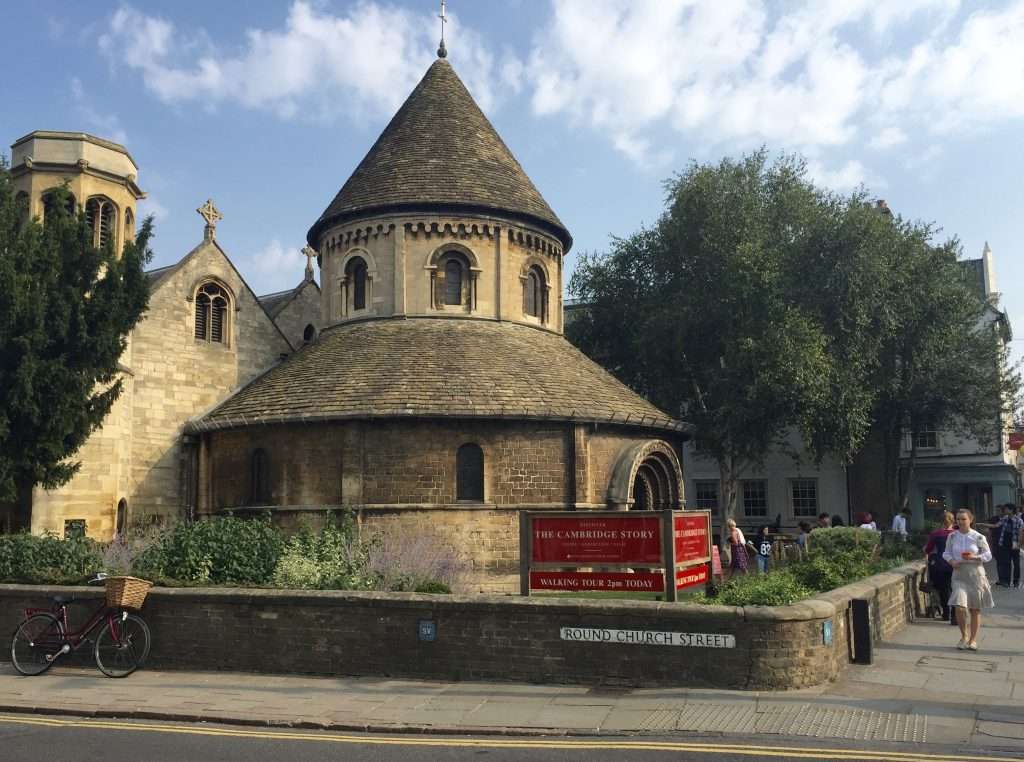
Cambridge: The Round church, an early Norman building
King’s College
St. Catherine’s College on the left, Corpus Christi College on the right.
The next morning at 8:30 we set off on the longish 7-hour drive to Edinburgh in Scotland (350 miles/560km). We had about 2 hours of heavy rain on this section, which was the only rain encountered on our 10-day road trip. We were very lucky and happy with the good weather.
Edinburgh: View from Edinburgh castle.
St. Margaret’s chapel: Built in 1130, the oldest building in edinburgh castle.
Another excellent Airbnb near the centre of Edinburgh and the following day we explored the historic castle dating back to 1083 and the old town, before driving through the highlands to Inverness in the North. The Castle pub in Inverness had haggis on the menu, which was excellent, served with mash, sweet potato chips and a whisky sauce, washed down with Guinness.
Guinness and haggis at the Castle Tavern.
View of Inverness from the castle.
The famous castle of Urquhart on Loch Ness.
The drive from Inverness along Loch Ness down to Oban was spectacular, to the point of my eyes watering. We arrived at my old friend Murdoch MacDougall (Jock’s) place by midday on Sunday. We met back in 1970 when he, as a young 22-year-old, arrived in South Africa and spent 30 years there before returning to Scotland. Being from the island of Barra, he speaks Gaelic, which he teaches at the local high school. We had a pleasant day catching up, with Jock showing us around town and having dinner at an excellent seafood restaurant.
Dirk and Jock.
View of Oban.
We were sad to leave the next day, but still had a few places to visit. Jock’s son Michael has settled in Sydney and Jock promised to come and visit us sometime. On the way South along the west coast of the UK, we stopped at the Falkirk wheel near Falkirk. Designed by the architect Tony Kettle, it is a rotating boat lift connecting the Forth and Clyde canal with the Union canal. It was opened in 2002 and lifts boats 24 metres, replacing 11 locks.
Annie and the Falkirk boat lift.
The lift rotating.
How it works.
Not far from the wheel, are the beautiful 30m high sculptures called the Kelpies, completed in 2013. The Kelpies represent the lineage of the heavy horse of Scottish industry and economy, pulling the wagons, ploughs, barges and coal ships that shaped the geographical layout of the Falkirk area. We stayed overnight in Gretna Green, just North of the Scottish border.
The Falkirk Kelpies.
The following day was a short drive to Liverpool where I had to go and pay homage to the Beatles, the group that swept a 16-year-old teenager from Benoni in South Africa, off his feet in the early sixties. An emotional time was spent at the Cavern club, where we had a couple of beers with a crowd of people of similar vintage, from all corners of the world. We were listening and singing along to a young fellow, who not only knew every song composed by the Fab Four, but also sang the Lennon and McCartney vocals in a Merseyside scouse accent.
Entrance to the Cavern.
Dirk and John.
View across Albert dock to the modern Liverpool museum and the Three Graces buildings.
Outfitted with a new collection of Cavern and Beatles tee shirts, a contented Muller drove back to London. We dropped the car off at the rental company having travelled 1,821 miles (nearly 3000 km) in 10 days. We moved into an Airbnb in trendy Brick Lane near Petticoat Lane for the next 10 days.
Before our next post, some thoughts on our British driving experience: The Brits are very patient and good drivers, whether you are driving along a narrow country lane at 40 miles/hour or along the freeways at 80m/h. The roads are in very good condition for the most part and we didn’t see one accident. Compared to nanny state NSW in Australia, where all cars have to park in the same direction in the parking lane, here they can face either way.
It is unnecessary to fit indicators on British cars, as nobody uses them – you become very good at reading minds on roundabouts and intersections. Similarly, they could save the expense of green and red pedestrian signals at intersections, as jaywalking is an Olympic event in the UK.
All 469 seats on the British Airways Airbus A380 were occupied on the flight from Singapore to Heathrow. Despite the full house, the service on this flight, even in cattle class, was excellent. The unflappable crew were friendly and retained their sense of humour.
We landed at Heathrow at 5:30 am on Friday the 9th September and caught the train into London, changing lines twice to arrive at Hackney central where Michelle our daughter welcomed us at around 7:30. A short walk to the terrace house she shares with three young friends, a quick shower, breakfast and then the sight-seeing started – she had an orientation itinerary lined up for us.
First, a walk through the local Victoria Park where she frequently jogs or cycles along the Regent’s canal, before taking the underground to St Paul’s. From here her tour involved a walk across the Millennium bridge to the South Bank, the Tate Gallery, the National theatre, the London Eye and the Houses of Parliament, before getting on the underground at Westminster back to Hackney.
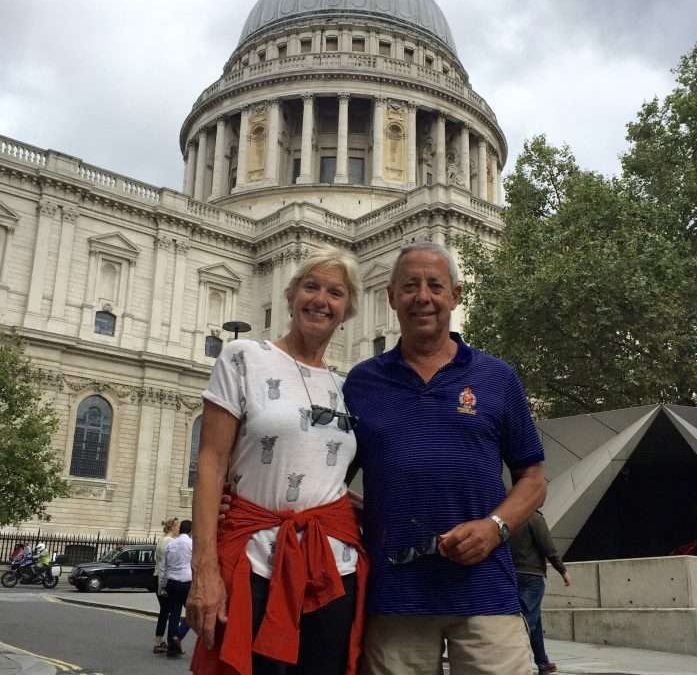
St Paul’s cathedral
Dirk, Michelle and the “Shard”
Buskers along the Thames.
No rest though, for the evening meant going to the Dalston Jazz Bar to listen to a jazz trio. This venue is a social enterprise venue for training people in hospitality and after a five course meal, you pay what you think the meal and the service was worth!
A swinging Jazz trio.
Kitchen with aspiring chefs in training.
Saturday morning, a brisk walk to the Broadway markets for coffees and a look around. Then it started raining.
Truth in advertising at the Broadway markets!
Plan B kicked in: let’s visit the British Museum. I was relishing this opportunity, as I always wanted to see the Elgin marbles and the Rosetta stone. I must admit that I thought the marbles were just that, maybe a bit bigger than what we played with at school. In my first year of architecture, I learned in architectural history that these were the marble friezes from the Parthenon in Athens “rescued” by Lord Elgin.
The British museum courtyard.
The Parthenon marble friezes.
Frieze detail.
The story behind the friezes/marbles.
The Rosetta stone, which enabled Young and Champollion to decipher the Egyptian hieroglyphs.
We attended the Hackney Empire theatre in the evening for the final night of Macbeth, funded by the Hackney council and the Andrew Lloyd Webber trust.
Ceiling detail in the beautiful Hackney Empire theatre.
On Sunday morning we took the underground to Vauxhall, to have breakfast with Michelle’s cousins, Paulo and Julia.
Paolo, Michelle & Julia.
This was followed by a bus ride to Buckingham Palace, from where we walked through Green park to Hyde Park and Speaker’s corner, to listen to some nut case oratory. We then caught the tube at Marble Arch, back to Hackney for a drink at Michelle’s local, the Pub in the Park. We had dinner prepared by Michelle for us and her housemates, Andrew, Tim and Naomi.
Speaker’s corner: Repent or perish!
Housemates.
Michelle arranged the hire of a compact Vauxhall Corsa and on Monday we set off on a 10 day road trip, starting with Oxford and the Cotswolds. This is a really beautiful part of England.
Oxford: Balliol and Trinity colleges
The Radcliffe camera and All Souls college.
Punts on the Cherwell river at Magdalen bridge.
We were bowled over by Cotswold towns like Bourton-on-the-water and Stow-on-the-Wold, where we stayed over at Jim and Carol, our first Airbnb hosts. This couple, our ages, are motoring enthusiasts and competed at Nurburgring just last month in their Mazda MX5. Different strokes for different folks!
Lunch at the Duke of Wellington: Bourton-on-the-water.
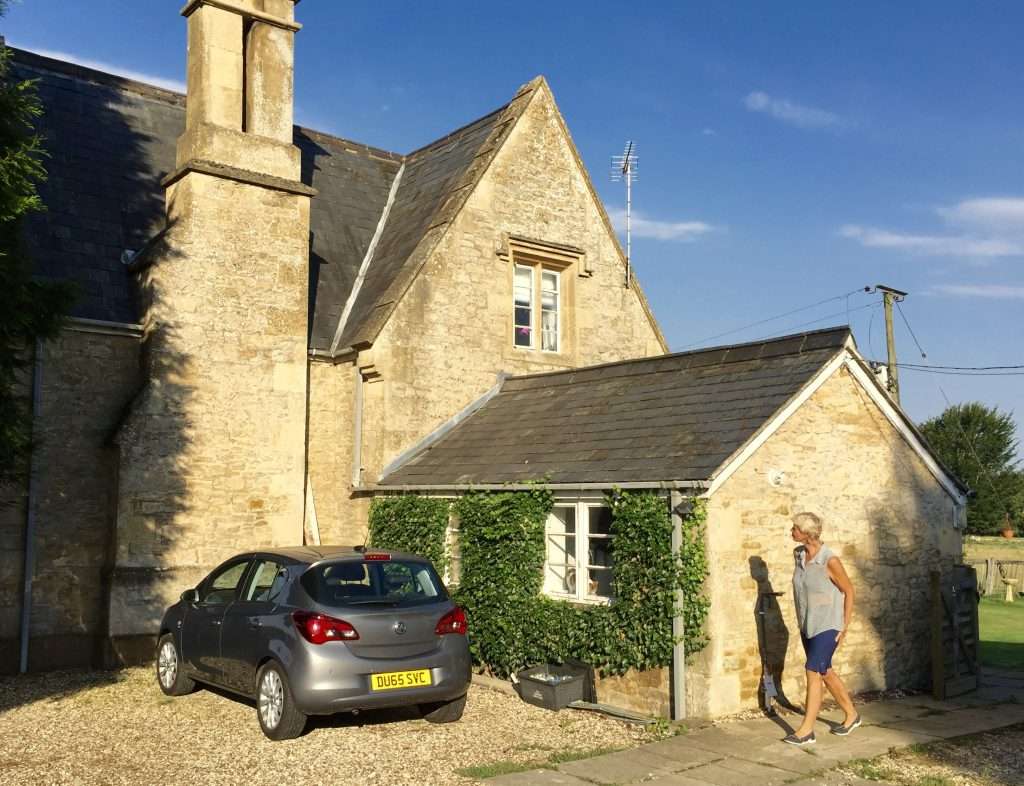
Jim and Carol’s house at Stow-on-the-Wold.
Jim and Carol racing at Nurburgring.
Continuing through the Cotswolds, we visited Bibury, Painswick and Castle Combe, before staying over in Bath at Nick and Madeleine, in their beautiful 200-hundred-year old sandstone terrace house, overlooking Bath.
Annie at Castle Combe.
View of Bath from our room at Nick and Madeleine’s airbnb.
The following day we visited the Roman baths, the pump house and the Royal Crescent terraces, before driving on to Stonehenge where the management of the hordes of tourists has been improved substantially since my last visit. We stopped off for tea and scones in Salisbury, before visiting the cathedral, still one of my favourite cathedrals.
The Roman baths.
Bath: The Royal crescent.
Annie at Stonehenge.
Salisbury cathedral.
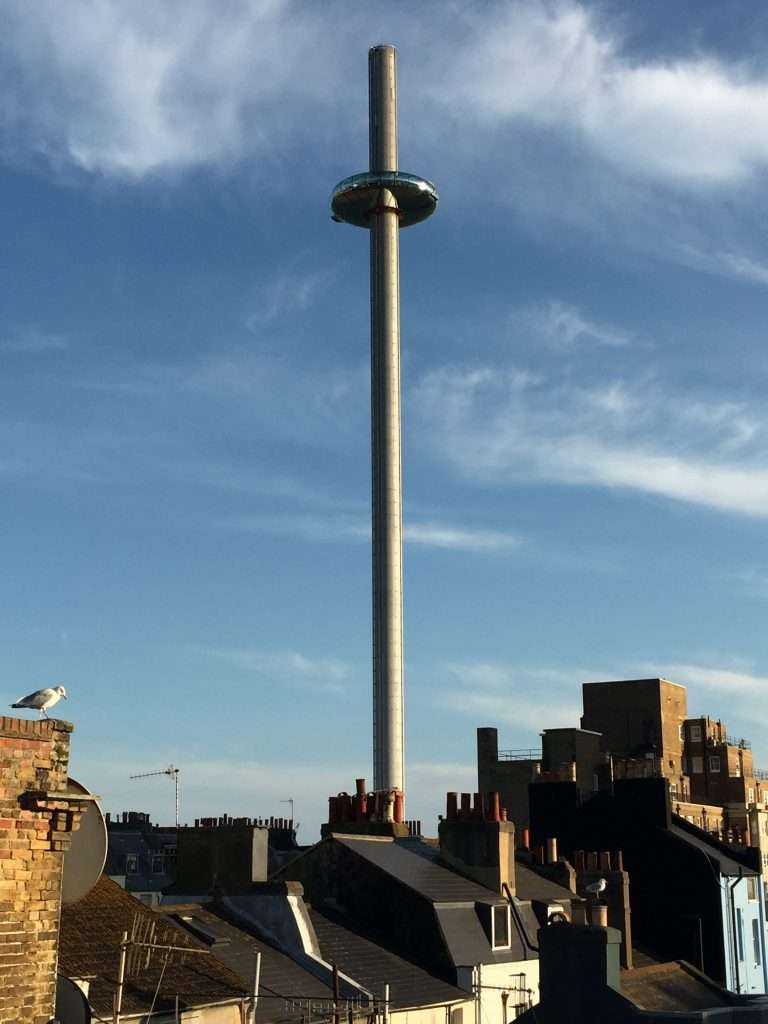
We stayed over in Brighton, the seaside resort on the South coast where the burnt out pier has been replaced by the controversial British Airways i360 vertical pier.
The British Airways i360 doughnut.
Our travels then took us into Kent “the garden of England” and towns like Royal Tunbridge Wells from where we headed North on a very busy freeway to Cambridge. More will follow in our next post.